
If your AC seems to run nonstop but the house still feels sticky, humidity may be the real problem. When homeowners compare whole home dehumidifier vs portable units, they are usually trying to solve one of two issues: a single damp trouble spot or moisture that affects the entire house.
In Southwest Florida, that distinction matters. Our climate puts a heavy load on air conditioning systems, and high indoor humidity can make a home feel warmer, smell musty, and create conditions that are hard on both comfort and indoor air quality. The right choice depends on how widespread the moisture problem is, how much maintenance you want to handle, and whether you want a short-term fix or a long-term solution.
Whole home dehumidifier vs portable units: the core difference
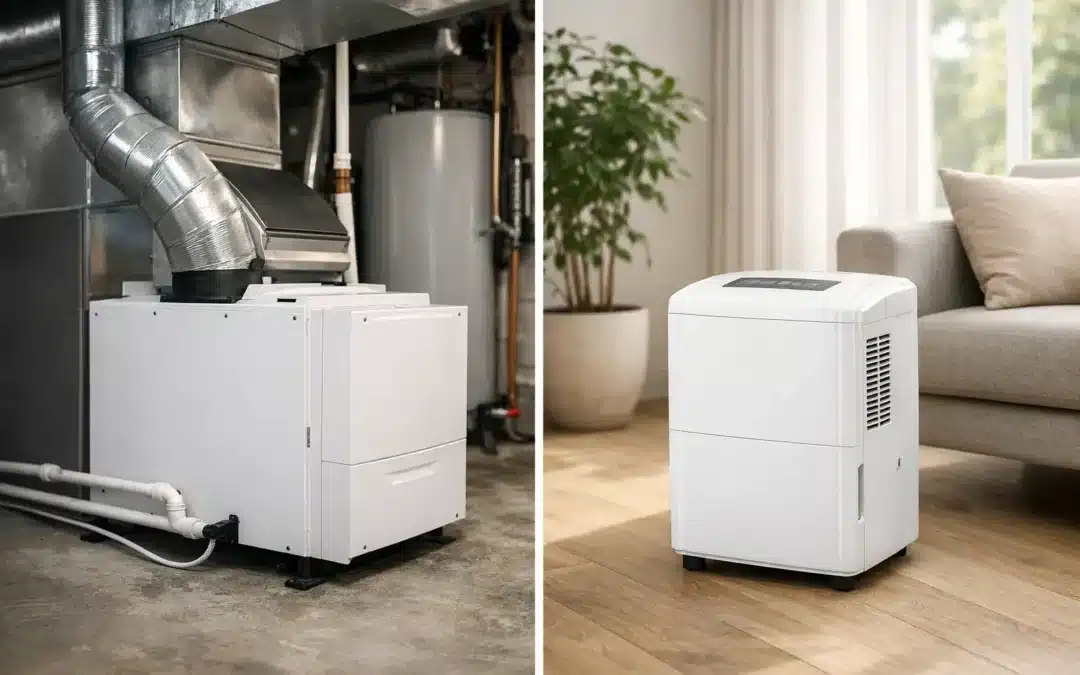
A portable dehumidifier is a standalone appliance designed to remove moisture from one room or a limited area. It pulls humid air in, removes water, and either stores that water in a bucket or sends it through a drain hose. It is easy to buy, easy to set up, and useful when the problem is isolated to a garage, bedroom, laundry room, or other small space.
A whole-home dehumidifier is integrated into your HVAC system or installed as a dedicated ducted unit. Instead of treating one room at a time, it manages humidity across the home. That gives you more consistent control, especially if the sticky feeling is not limited to one area.
This is why the comparison is not really about which option is better in general. It is about scale. If the moisture issue is local, a portable unit may be enough. If the problem follows you from room to room, a whole-home system is usually the more effective answer.
When a portable unit makes sense
Portable units appeal to homeowners for a simple reason: they are accessible. You can purchase one quickly, plug it in, and start reducing moisture without changing your HVAC system. For a guest room that feels damp in summer or a back room with poor airflow, that can be a practical step.
They also work well for temporary conditions. If you have had a minor water event, are drying out a room, or want extra moisture control in one problem area, a portable unit can help without a major investment.
But there are limits. Portable dehumidifiers only treat the air around them, and performance drops off once you expect them to handle large open areas. In many homes, especially those with open floor plans, one unit may not reach far enough. Homeowners often respond by adding a second or third unit, which can create more noise, more power use, and more maintenance than expected.
The maintenance is not trivial either. Buckets need to be emptied unless the unit has a reliable drain setup. Filters need cleaning. If a unit shuts off when the bucket is full, moisture control stops until someone notices.
When a whole-home dehumidifier is worth it
If your entire home feels humid even when the AC is working, a whole-home system usually addresses the problem more directly. It removes excess moisture throughout the house and helps maintain a stable indoor humidity level, rather than chasing room-by-room symptoms.
That matters for comfort. High humidity makes indoor air feel heavier and warmer, so homeowners often lower the thermostat to compensate. A properly sized whole-home dehumidifier can make the home feel more comfortable at a normal temperature setting. In some cases, that helps reduce strain on the AC system because you are not relying on overcooling just to feel dry.
It also matters for the house itself. Persistent moisture can affect wood materials, encourage musty odors, and contribute to mold growth in the right conditions. In a humid region like Fort Myers or Cape Coral, managing indoor moisture is not just about comfort. It is part of protecting the home.
A whole-home system is the stronger long-term option when humidity is a consistent, house-wide issue. The trade-off is upfront cost. Installation is more involved, and proper sizing matters. This is not the kind of equipment you want guessed at.
Cost is only part of the equation
On the surface, portable units look far less expensive. That is true at the point of purchase. For a homeowner trying to solve one damp room, the lower initial cost can make perfect sense.
But if you are using multiple portable units across the home, the math changes. Several units can add up quickly, and they continue to demand attention. You may also see more noticeable electrical use if they are running often, especially during the most humid months.
A whole-home dehumidifier costs more to install, but it is also doing more. It handles the entire house, runs as part of a designed system, and generally requires less day-to-day interaction from the homeowner. If you plan to stay in the home and humidity is a recurring problem, the higher initial investment may be the more efficient choice over time.
This is one of those areas where the cheapest option and the best value are not always the same thing.
Performance in Florida homes
Florida homes create a few specific challenges. We deal with long cooling seasons, high outdoor humidity, and homes that are opened and closed frequently throughout the day. Add in ductwork conditions, insulation issues, or short-cycling AC systems, and humidity can become a bigger problem than many homeowners expect.
Portable units can help in enclosed spaces, but they are not designed to solve systemic humidity issues caused by the way the house operates as a whole. If your windows feel clammy, certain rooms smell musty, or the home feels damp despite cool air from the vents, the issue often goes beyond what a single appliance can fix.
Whole-home dehumidifiers are better suited for these broader conditions because they are designed to support the HVAC system instead of working around it. They can remove moisture even when cooling demand is lower, which is important during times when the AC does not run long enough to pull out enough humidity on its own.
Noise, convenience, and day-to-day living
This is where many homeowners make their final decision. Portable units are visible and audible. Some are quiet enough for occasional use, but many create background noise that becomes more noticeable in bedrooms, home offices, or living areas. They also take up floor space and need regular attention.
A whole-home dehumidifier is much less intrusive in daily life. Once installed, it works in the background. There is no bucket to empty in the middle of the week and no machine parked in the corner of the room. For busy homeowners, that convenience has real value.
If you want a set-it-and-manage-it solution rather than a plug-it-in-and-check-it solution, whole-home equipment usually fits better.
Whole home dehumidifier vs portable units for air quality
Humidity control affects more than comfort. It plays a role in indoor air quality, especially in homes where excess moisture supports mold, mildew, or dust mite activity. Portable units can improve conditions in a limited area, but they do not create balanced humidity control from one room to the next.
A whole-home dehumidifier provides more uniform moisture removal, which can help reduce the conditions that allow those issues to spread. It is not a cure-all, and it does not replace proper ventilation or filtration, but it is an important part of a healthier indoor environment when high humidity is a recurring problem.
For homeowners with allergy concerns, musty odors, or repeated moisture issues, a house-wide approach often makes more sense than treating symptoms one room at a time.
So which one should you choose?
If the problem is limited to a single room, a portable unit is often a reasonable and cost-effective answer. It is especially useful when you need a quick solution or you are dealing with a temporary moisture issue.
If the whole house feels humid, if your AC is struggling to keep indoor comfort consistent, or if you are tired of managing multiple standalone units, a whole-home dehumidifier is usually the better fit. It gives you more consistent results, less daily maintenance, and better moisture control where Florida weather tends to challenge homes the most.
The key is being honest about the scope of the problem. A small fix works well for a small issue. But when humidity is affecting your comfort, your air quality, and your home as a whole, it usually makes sense to solve it at the source.
If you are not sure which category your home falls into, that is where a professional evaluation helps. A trusted HVAC team can look at how your system is performing, whether humidity is tied to equipment sizing or airflow, and whether a portable unit is enough or a whole-home solution would serve you better. For many homeowners, getting that answer early is the difference between living with the problem and actually fixing it.