
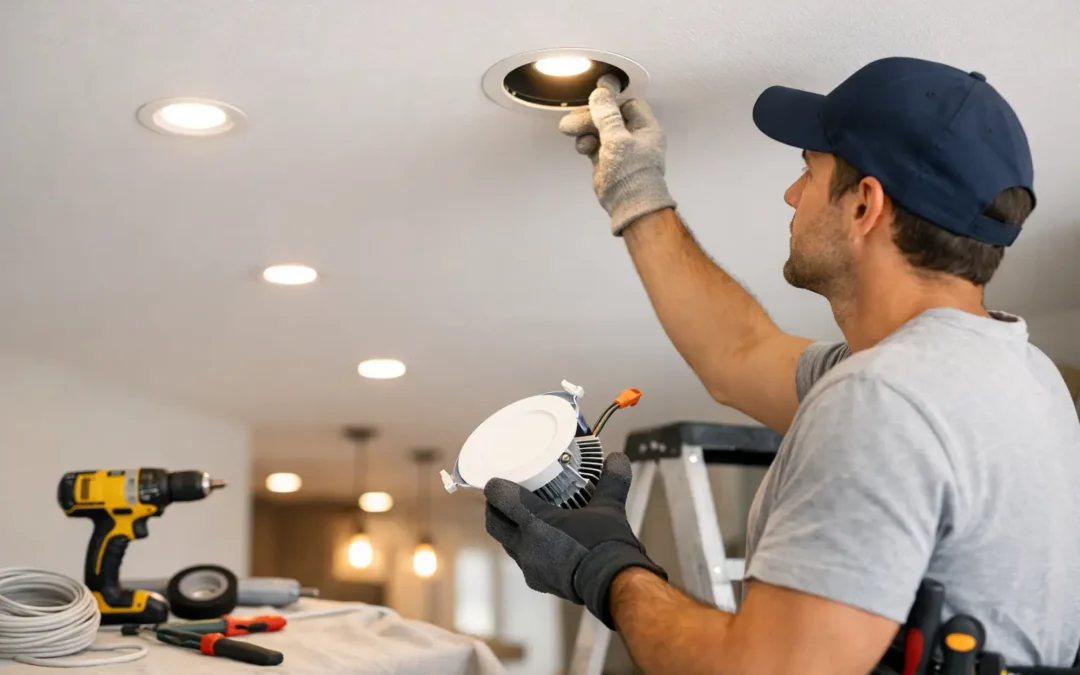
A dark kitchen corner, a shadowy hallway, or a living room with one oversized ceiling fixture can make an otherwise well-kept home feel dated. LED recessed lighting is a clean, practical upgrade, but the LED recessed lighting installation cost depends on far more than the price of the lights themselves. The electrical work behind the ceiling is usually what determines the final investment.
For homeowners in Southwest Florida, a professional installation also needs to account for attic conditions, insulation, ceiling construction, existing wiring, and local electrical requirements. A clear estimate should explain those details before work begins, not leave you guessing after the fixtures are installed.
What Does LED Recessed Lighting Installation Cost?
Most homeowners can expect a straightforward recessed lighting project to range from roughly $200 to $500 per light when an electrician can access existing wiring and the ceiling cavity without major obstacles. Installing several lights at once is often more cost-effective per fixture because the electrician can complete layout, setup, wiring, and cleanup in one visit.
A small project with four to six recessed lights may fall around $1,500 to $4,500, depending on the room and electrical conditions. Larger projects, high ceilings, difficult attic access, concrete ceilings, new circuit requirements, or premium controls can increase that number. A single fixture replacement is different from adding new lights where no wiring or switch location currently exists.
These are planning ranges, not a substitute for an on-site quote. The only reliable way to price your project is to have a licensed electrician assess the space, electrical panel capacity, wiring path, and fixture plan.
The Biggest Factors Behind the Price
Number of fixtures and room layout
More fixtures mean more materials, wiring connections, ceiling cuts, and installation time. But the layout matters as much as the count. A simple row of lights in a kitchen is generally easier to install than a custom pattern across a vaulted great room.
Your electrician should help determine spacing based on ceiling height, room use, beam angle, and the light output of the chosen LEDs. Installing too few fixtures can leave dark areas. Installing too many can create glare, unnecessary energy use, and a ceiling that feels visually crowded.
Access above the ceiling
Attic access can make a major difference in labor. When an electrician can safely reach the space above the ceiling, running cable and securing junction boxes is generally more efficient. Tight attics, heavy insulation, truss framing, or a second-story ceiling can make the work more involved.
In many Florida homes, heat and attic conditions also affect how long a project takes. A professional will plan the work safely and avoid damaging insulation, ductwork, plumbing, or existing electrical lines while accessing the ceiling cavity.
Existing wiring and switch locations
If the room already has a properly sized lighting circuit and a convenient switch location, installation may be relatively simple. If the existing wiring is outdated, damaged, overloaded, or not configured for the new design, additional electrical work may be needed.
Adding a new switch, relocating a switch, installing a dimmer, or creating separate lighting zones can improve how the room functions. Those upgrades add cost, but they can be worthwhile. For example, separate controls for kitchen task lighting, island lighting, and dining-area lighting give homeowners more flexibility than one switch operating every fixture at once.
Fixture type and trim selection
Modern recessed fixtures come in several styles, from economical integrated LED wafers to adjustable gimbal fixtures, wet-rated units, and color-selectable models. The fixture price can vary considerably based on quality, rating, appearance, and control compatibility.
Slim LED wafer lights are popular because they require less clearance than traditional recessed cans. They can be a practical option where ceiling space is limited. However, the right fixture still needs to be approved for the location and installed with its listed junction box and wiring method.
Bathrooms, covered patios, and other damp or wet locations require appropriately rated fixtures. Choosing the wrong product to save a little upfront can create safety concerns and lead to replacement costs later.
Electrical panel capacity and circuit needs
LED lighting uses much less power than older incandescent fixtures, but every new installation still needs to be evaluated as part of the home’s electrical system. If an existing circuit has available capacity, the project may not require panel work. If the panel is full, outdated, or already supporting too many loads, the electrician may recommend a new circuit, added breaker space, or a panel upgrade.
This is especially relevant in homes that have added major loads over time, such as a new air conditioner, pool equipment, electric vehicle charger, or generator connection. Recessed lighting may be the project that reveals a larger electrical issue that should not be ignored.
Why Professional Installation Is Worth Considering
Recessed lighting looks simple from below, but each fixture involves more than cutting a circular hole in drywall. The electrical connections must be protected in approved junction boxes, cable must be routed and secured correctly, and fixtures must be compatible with the surrounding ceiling conditions.
A licensed electrician can also identify issues that are easy to miss, including old aluminum wiring, overloaded circuits, ungrounded wiring, damaged insulation, or previous do-it-yourself work that does not meet current standards. Those findings may affect the scope, but they help protect your home and the people in it.
Professional layout is another benefit. The goal is not simply to put more lights in the ceiling. It is to create comfortable, useful illumination without harsh shadows or excessive brightness. In kitchens, recessed lights should support food preparation without casting your shadow across countertops. In living rooms, dimmable lighting can provide brighter light for cleaning and softer light for relaxing.
Ways to Control Costs Without Cutting Corners
Start with a clear lighting plan before installation day. Changing fixture locations after holes are cut or wiring is run can add avoidable labor and repair work. Consider what each area needs: task lighting for a kitchen, general lighting for a hallway, or adjustable accent lighting for artwork or architectural features.
Grouping the work into one project can also help. If you are considering recessed lights in the kitchen now and the living room later, asking about both areas during the same estimate gives you a better picture of the total scope. It may be more efficient to complete related electrical work during one scheduled project.
Choose quality fixtures that are compatible with your preferred dimmer or smart control. A lower-priced light that flickers, buzzes, changes color unexpectedly, or fails early is not a bargain. Look for reliable LED fixtures with the appropriate rating, a comfortable color temperature, and a manufacturer warranty.
For many homes, 2700K to 3000K creates a warm, inviting appearance, while 3500K to 4000K can feel cleaner and brighter for work areas. Color preference is personal, so it is smart to discuss the intended look before all fixtures are installed.
Questions to Ask Before Approving an Estimate
A good recessed lighting estimate should make the scope understandable. Ask whether the price includes fixtures, wiring, switches or dimmers, patching expectations, permits if required, and removal of old fixtures. You should also know whether the quoted fixtures are dimmable, wet-rated where necessary, and compatible with any smart-home system you plan to use.
It is equally reasonable to ask what could change the price. Hidden wiring problems, inaccessible areas, and unexpected framing can affect a project, but a professional should explain likely variables upfront and communicate before proceeding with additional work.
If your home has frequent power fluctuations during storms, ask whether whole-home surge protection is appropriate for the electrical system. It will not change the lighting installation itself, but it can help protect sensitive LED drivers, dimmers, appliances, and connected electronics throughout the home.
Plan the Lighting Around How You Live
The best recessed lighting project is not necessarily the one with the lowest number on the estimate. It is the one that gives your home safer wiring, dependable controls, and light that works well every day. If you are planning an upgrade in Cape Coral, Fort Myers, or nearby communities, a licensed electrician can evaluate the room and provide transparent recommendations based on your home rather than a one-size-fits-all price.