
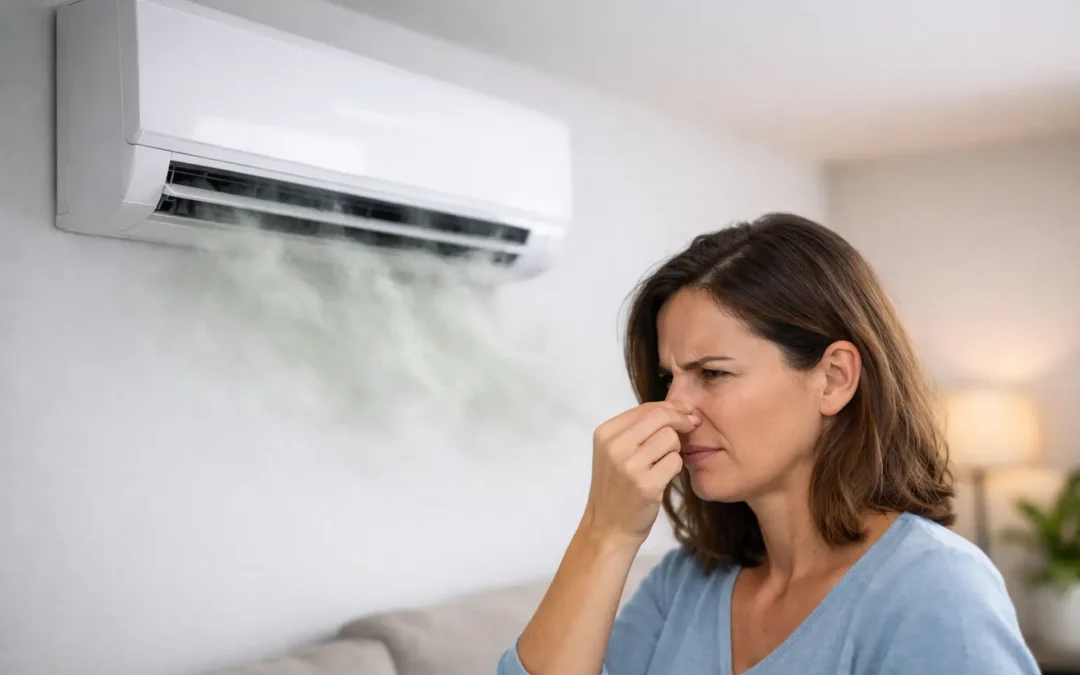
You turn on the AC, expecting cool relief, and instead get hit with a damp, stale smell that reminds you of an old towel or a closed-up room. If you’re asking, why does my AC smell musty, the short answer is usually moisture. Somewhere in the system, water is lingering long enough for mold, mildew, or bacteria to grow.
In Southwest Florida, that problem tends to show up faster than homeowners expect. Our heat and humidity put air conditioners under constant pressure, and even a small drainage or airflow issue can create the perfect environment for musty odors. The smell may seem minor at first, but it often points to a maintenance problem that can get worse if it’s ignored.
Why does my AC smell musty in the first place?
Air conditioners naturally remove moisture from indoor air. As warm air passes over the evaporator coil, condensation forms and should drain away through the condensate line. When everything is working properly, that moisture leaves the system before it causes trouble.
A musty smell usually means that process is not happening cleanly. Water may be collecting in the drain pan, the drain line may be partially clogged, the coil may be dirty, or the filter may be restricting airflow enough to keep parts of the system damp. In some cases, the smell is actually coming from ductwork, especially if there is dust, biological growth, or excess humidity inside the ducts.
That is why there is not always one single answer. The odor is a symptom, and the source can vary depending on your equipment, your home’s humidity level, and how consistently the system has been maintained.
The most common causes of a musty AC smell
Mold or mildew on the evaporator coil
The evaporator coil stays cold while your AC runs, and it is one of the most common places for microbial growth to develop. Dust and moisture together create a film on the coil surface, and once that happens, every cooling cycle can push that smell through the house.
This issue is common in Florida because systems run so frequently. More runtime means more condensation, and if regular maintenance has been delayed, buildup can happen faster than many homeowners realize.
A clogged condensate drain line
Your AC removes gallons of moisture over time, especially during humid months. That water needs a clear path out of the home. If the drain line starts clogging with algae, sludge, or debris, water can back up into the system.
When water sits where it should not, musty odors often follow. In some homes, you may also notice standing water near the indoor unit or a safety switch shutting the system down.
A dirty air filter
A neglected filter does more than reduce efficiency. It also restricts airflow, which can make the evaporator coil stay too cold and remain damp longer than it should. Limited airflow can contribute to odor problems, and a filter loaded with dust and moisture can smell bad on its own.
This is one of the simplest issues to check, but it is not always the only one. If you replace the filter and the smell stays, there is likely a deeper source inside the system.
Dirty ductwork or excess humidity in the ducts
Sometimes the AC itself is not the only problem. If return ducts pull in dust from unconditioned spaces, or if humid air is getting into the duct system, odors can build up and spread whenever the blower turns on.
Duct issues are a little more complicated because the smell may come and go. You might notice it most after the system has been off for a while, then detect it again when cooling starts.
A full or contaminated drain pan
The drain pan is designed to catch condensation before it exits through the drain line. If that pan stays wet, cracked, dirty, or partially blocked, it can become a source of mildew smells. Older systems are especially prone to this because pans can corrode or collect buildup over time.
Oversized AC equipment or short cycling
This is a less obvious cause, but it matters. If an AC system is too large for the home, it may cool the space quickly without running long enough to remove enough humidity. The house feels cold, but still damp. That lingering indoor moisture can contribute to musty odors both in the system and in the home itself.
This is one of those it-depends situations. Not every musty smell means the equipment is oversized, but poor humidity control should always be part of the conversation.
What you can check safely at home
Before assuming the worst, there are a few things homeowners can check without taking apart equipment.
Start with the air filter. If it looks dirty, replace it with the correct size and type recommended for your system. A fresh filter can improve airflow and sometimes reduce odor if the problem is minor.
Next, check around the indoor unit for visible water. If you see moisture near the air handler, a clogged drain line or pan issue may be part of the problem. You can also pay attention to when the smell appears. If it is strongest right when the system starts, that often points to moisture or growth in the air handler or duct system.
Look at your thermostat settings too. Running the fan continuously instead of using the auto setting can sometimes keep moisture moving across the system and make odors more noticeable. In humid climates, auto is usually the better setting because it allows moisture to drain off instead of being blown back into the home.
What you should not do is spray cleaners into vents, pour random chemicals into the AC, or open panels if you are not trained to work on HVAC equipment. That can create safety issues and may damage components.
When a musty smell is more than a nuisance
A mild odor might seem easy to put off, but a musty AC smell is worth taking seriously. First, it often signals standing water or poor drainage, and those issues can lead to water damage if they continue. Second, mold and mildew inside HVAC equipment can affect indoor air quality, which is especially frustrating for households with allergies, asthma, or respiratory sensitivities.
There is also the efficiency side. Systems with dirty coils, poor airflow, or drainage problems usually have to work harder to cool the home. That can mean higher energy bills and more wear on the equipment during the hottest part of the year.
If the smell keeps returning after you change the filter, or if you notice reduced airflow, water leaks, weak cooling, or frequent cycling, it is time for a professional inspection.
How professional AC service fixes the problem
A proper diagnosis goes beyond masking the odor. The goal is to find where moisture is collecting and why.
An HVAC technician may inspect and clean the evaporator coil, clear the condensate drain line, check the drain pan, test system airflow, and evaluate humidity control. If ductwork is contributing to the issue, that may require a separate inspection to identify leaks, contamination, or insulation problems.
This is also where local experience matters. In areas like North Fort Myers, Cape Coral, and nearby Southwest Florida communities, air conditioning systems deal with extreme humidity for much of the year. Solutions that work in drier climates do not always address the real cause here. A system may technically cool the home while still failing to manage moisture well.
That is why homeowners benefit from a technician who looks at the full picture, not just the smell itself.
How to keep the musty smell from coming back
The most reliable prevention is regular AC maintenance. A tune-up gives technicians a chance to clean critical components, check drainage, measure performance, and catch moisture-related problems before they turn into odor complaints.
Homeowners can help by changing filters on schedule, keeping vents open and unobstructed, and paying attention to indoor humidity. If parts of the home constantly feel damp, the issue may not be dirt alone. It may be system sizing, airflow, insulation, or a need for better humidity control.
If your home has gone through a long vacancy, storm-related moisture, or extended periods with the AC running inconsistently, it is also smart to have the system checked sooner rather than later. Florida weather has a way of turning small moisture issues into bigger ones.
If you have been wondering why does my AC smell musty, trust that the odor is telling you something useful. It usually means moisture is staying where it should not, and the sooner that gets addressed, the easier it is to protect your comfort, your air quality, and your system. When in doubt, having a licensed HVAC professional take a look can save you from a much bigger repair later.