
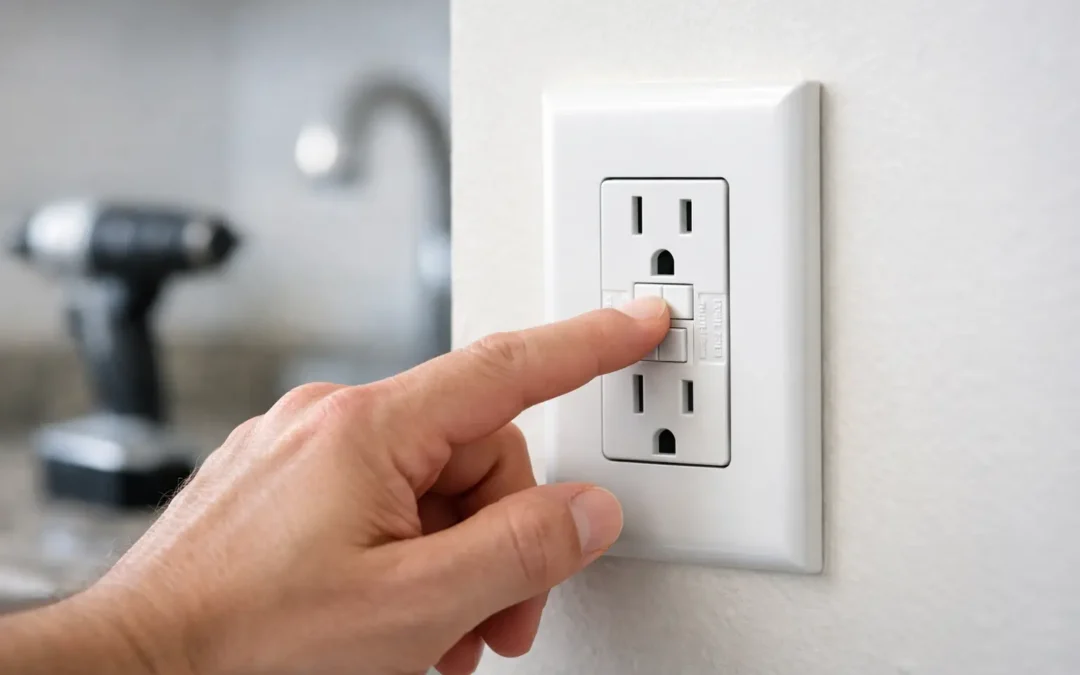
A GFCI outlet that trips once after a storm or a wet day can be annoying. A GFCI outlet that trips over and over is your home telling you something is wrong. If you are trying to reset GFCI outlet that keeps tripping, the goal is not just to get the power back on. The goal is to find out why it is shutting off and make sure the outlet is still doing its job safely.
In Southwest Florida homes, this issue shows up often in bathrooms, kitchens, garages, lanais, and outdoor areas where moisture, humidity, and weather exposure are part of daily life. Sometimes the fix is simple. Sometimes the outlet is reacting exactly the way it should to a more serious electrical problem.
How to reset a GFCI outlet that keeps tripping
Start by unplugging everything connected to the outlet that tripped, and if possible, unplug devices from any nearby outlets that may be protected by that same GFCI. Many homeowners do not realize one GFCI outlet can protect several outlets farther down the circuit.
Next, press the RESET button firmly. If it clicks and stays in, plug devices back in one at a time. If the outlet trips when a specific item is connected, that appliance or tool may be the real problem.
If the RESET button will not stay in at all, press TEST first and then press RESET again. If it still will not reset, check the electrical panel for a tripped breaker. A GFCI outlet may not reset properly if the breaker serving it has already shut off.
If the breaker is on and the outlet still refuses to reset, stop there. That usually points to a wiring issue, a failed GFCI, ground fault current somewhere on the circuit, or moisture inside the box.
Why a GFCI outlet keeps tripping
A GFCI, or ground fault circuit interrupter, is designed to shut off power when it senses electricity taking an unsafe path, often through water, damaged insulation, or a person. It does not wait for a major fault. It reacts fast, which is why repeated tripping should never be ignored.
One common cause is moisture. In Florida, outlets near sinks, pool equipment, garage doors, or exterior walls can collect humidity or direct water intrusion. Even when the outlet face looks dry, the box behind it may not be.
Another possibility is a worn-out appliance. Coffee makers, hair dryers, mini fridges, power tools, and outdoor equipment can develop internal leakage that causes the GFCI to trip. In that case, the outlet is often protecting you from a dangerous condition before you ever see sparks or smell burning.
Age also matters. GFCI outlets do wear out over time. If the outlet is older, feels loose, looks discolored, or resets inconsistently, replacement may be the safest answer.
Wiring problems are another major reason. A loose neutral, reversed line and load wiring, damaged insulation, or a fault elsewhere on the circuit can all trigger repeated trips. These are not guess-and-check repairs. They need proper testing.
When resetting is fine and when it is not
It is reasonable to reset a GFCI once after unplugging connected devices. It is also reasonable to test whether one appliance is causing the issue. Beyond that, repeated resets become a risk.
If the outlet trips immediately every time you press RESET, the device is sensing an active fault. Forcing it over and over does not solve the problem. It only delays a proper repair.
If the outlet trips only during rain, after washing down a patio, or when humidity is especially high, moisture is the likely trigger. That may sound minor, but moisture around electrical wiring is never something to shrug off.
If the GFCI protects a refrigerator, freezer, sump system, or essential equipment, there is a trade-off to consider. You want power restored quickly, but you also do not want to bypass a safety device just to keep something running. In those cases, a licensed electrician can determine whether the circuit setup itself needs to change.
Signs the problem is bigger than the outlet
Sometimes the outlet is not the true failure point. It is just the part of the system doing its job.
If other outlets stopped working when the GFCI tripped, the issue may be farther downstream. If the breaker also trips, you may be dealing with a larger circuit fault rather than a bad receptacle. If lights flicker, breakers feel warm, or you notice a burning smell, stop using the circuit immediately.
Homes with older electrical systems can also have recurring nuisance trips tied to aging wiring, overloaded circuits, or outdated devices. That is especially relevant in homes that have had additions, kitchen updates, garage conversions, or outdoor electrical work over the years. What was acceptable decades ago may not match current safety standards or today’s electrical demands.
Can you replace the GFCI outlet yourself?
For some homeowners, replacing a clearly failed GFCI outlet seems straightforward. The problem is that GFCI wiring has to be exact. The line and load terminals must be identified correctly, and if they are mixed up, the outlet may appear to work while failing to protect downstream devices properly.
That is why this repair is not always as simple as swapping one receptacle for another. If the outlet is on a multi-outlet circuit, in a damp area, or tripping for unknown reasons, the safer choice is professional diagnosis first.
This is also where local conditions matter. In homes around Fort Myers, Cape Coral, and nearby areas, exterior and garage outlets deal with heat, rain, salt air, irrigation overspray, and heavy humidity. Those conditions speed up wear and can create hidden corrosion inside devices and boxes.
What a licensed electrician will check
When a homeowner calls about a GFCI that keeps tripping, the first step is usually to confirm whether the outlet itself has failed or whether it is responding to a problem elsewhere. That includes checking voltage, inspecting the condition of the receptacle, testing downstream outlets, and looking for moisture or damaged wiring.
An electrician may also inspect the breaker, the grounding path, and any appliances connected to that circuit. In some cases, the fix is a new GFCI outlet. In others, the real solution may be repairing a damaged cable, correcting a wiring error, replacing an outdoor cover, or separating equipment onto a more appropriate circuit.
Transparent troubleshooting matters here. Homeowners deserve to know whether the issue is a simple device replacement or part of a larger electrical repair, and they should know the price before work begins.
How to prevent future GFCI trips
Some tripping cannot be prevented because the outlet is responding to a real hazard. That said, there are practical ways to reduce repeat issues.
Keep outdoor outlets properly covered and sealed. Replace worn appliance cords. Avoid plugging in devices that have already caused one trip until they are checked or replaced. If a bathroom, garage, or patio outlet trips often during wet weather, have it inspected before the problem grows.
It also helps to pay attention to age. GFCI outlets are not install-and-forget devices. Testing them periodically and replacing worn units before they fail outright is a smart part of home electrical maintenance.
If your home has frequent electrical oddities beyond one outlet, such as tripping breakers, dimming lights, or unreliable outdoor power, it may be time for a broader inspection. A recurring GFCI problem can be the first visible sign of a deeper issue.
When to make the call
If you have tried once to reset GFCI outlet that keeps tripping and it still will not hold, that is the point to stop troubleshooting on your own. The same goes for outlets near water, signs of heat damage, or circuits that power important equipment.
Electrical safety devices are supposed to be inconvenient when something is wrong. That inconvenience is what prevents shocks, equipment damage, and fire risks. A professional repair gets your power back the right way and gives you confidence that the outlet is protecting your home the way it should.
A good electrical system is not one that never trips. It is one that responds correctly, gets diagnosed properly, and keeps your family safe when conditions are less than ideal.