
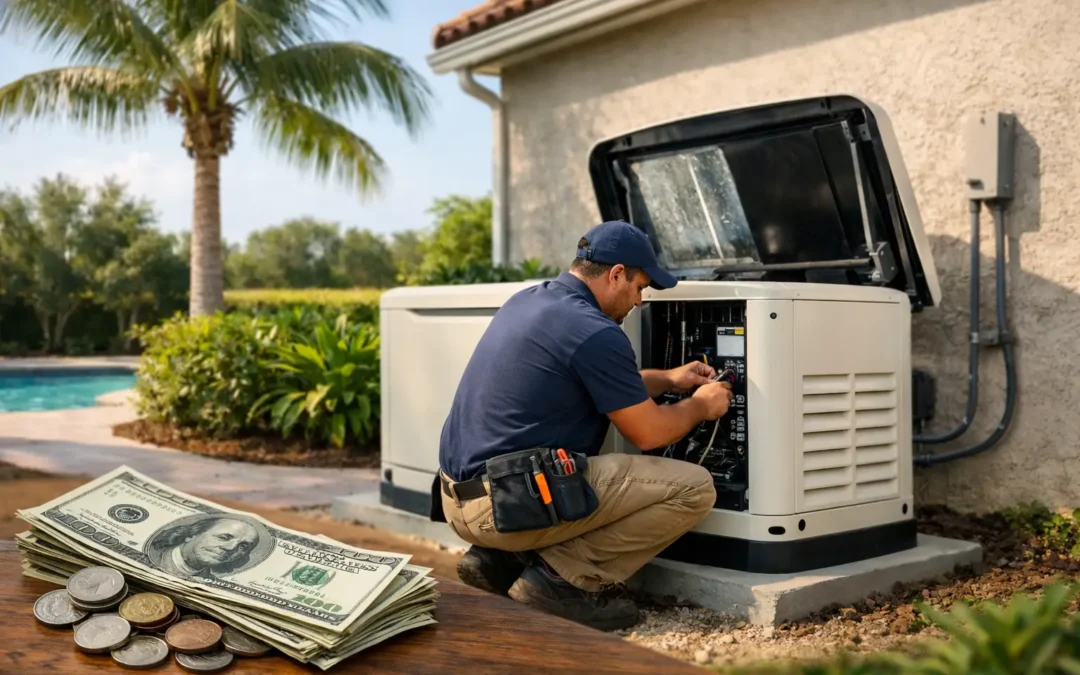
When a storm knocks out power, the question is rarely whether backup power would help. It is whether your home can support it safely and what the generator installation cost will actually include. For Southwest Florida homeowners, a reliable estimate must account for more than the generator itself. It should consider your electrical system, fuel source, permitting requirements, site conditions, and the circuits or appliances you want to keep running.
A whole-home generator is a meaningful investment, but it can protect far more than comfort during an outage. It can keep refrigeration running, support medical equipment, preserve food, power well pumps, maintain security systems, and help your home stay livable when utility restoration takes time.
What Does Generator Installation Cost Include?
A complete generator project combines equipment, electrical work, fuel connections, site preparation, permits, and labor. That is why two homes with similar square footage can receive very different quotes. The most useful price is not the lowest equipment number. It is the total cost to install a properly sized, code-compliant system that starts automatically and works when you need it.
For many homes, professionally installed standby generator projects commonly fall in the range of roughly $10,000 to $20,000 or more. Smaller systems serving selected circuits may cost less, while larger homes, higher electrical loads, complex fuel work, and panel upgrades can move the project above that range. A site visit is the only reliable way to price your specific home.
The main components of a generator installation typically include the generator unit, automatic transfer switch, electrical connections, concrete or composite pad, fuel piping or propane equipment, permits, inspections, and startup testing. Ongoing maintenance should also be part of your ownership plan, even though it is usually separate from the initial installation price.
The Factors That Change the Final Price
Generator size and the loads you want to power
Generator capacity is measured in kilowatts, or kW. A system designed to run essential circuits such as lights, refrigeration, internet equipment, a garage door opener, and a few outlets will cost less than one intended to power an entire home, including central air conditioning.
The goal is not simply to buy the largest unit available. Oversizing can increase the upfront cost and fuel consumption without adding practical value. Undersizing can leave you unable to run critical equipment or cause the generator to struggle under startup loads. Air conditioners, well pumps, pool equipment, electric ranges, dryers, and water heaters can place significant demand on a system.
A licensed electrician can perform a load calculation and discuss realistic priorities. Some homeowners choose whole-home coverage. Others prefer a managed-load setup that temporarily limits certain high-demand appliances while the generator supplies the rest of the home.
Your home’s electrical panel and transfer equipment
A standby generator needs a safe way to separate your home from the utility grid during an outage. This is the job of the automatic transfer switch. It detects a loss of utility power, starts the generator, transfers the selected load, and returns the home to utility power once service is stable.
If your existing panel has adequate capacity and is in good condition, installation may be more straightforward. An older, crowded, damaged, or undersized panel can require repairs or an upgrade before a generator can be connected safely. That additional work affects the total price, but it may also improve the safety and reliability of your electrical system long after the generator is installed.
Fuel type and distance from the supply
Most residential standby generators use natural gas or propane. The available fuel source often has a major effect on installation planning.
Natural gas can offer continuous fuel availability during an outage, provided local service remains available. However, the existing gas line must be sized correctly for the generator and other gas appliances in the home. A larger line or longer pipe run can add labor and material costs.
Propane is often a practical option where natural gas is unavailable. The project may require a properly sized tank, a suitable location, regulator equipment, and coordination with a propane provider. Tank size matters because a generator can use a substantial amount of fuel during an extended outage, especially when supporting air conditioning.
Site preparation and placement
Florida weather makes generator placement especially important. The unit needs a stable, level pad, proper drainage, manufacturer-required clearances, and a location that allows technicians to service it. It also must meet applicable code requirements related to doors, windows, vents, property lines, and fuel equipment.
A simple installation near the electrical service and fuel source generally costs less than one requiring long trenching runs, extensive conduit, landscaping adjustments, or a difficult route around the home. Flood-prone areas, tight side yards, and HOA requirements can also influence the design.
Permits, inspections, and local requirements
A professionally installed standby generator should be permitted and inspected. Permits are not just paperwork. They help confirm that the electrical, fuel, and placement work meets local safety requirements.
In communities across Cape Coral, Fort Myers, North Fort Myers, and nearby areas, requirements can vary by jurisdiction and property conditions. A clear estimate should explain whether permit fees, engineering needs, and inspection coordination are included. If a contractor cannot explain how permitting will be handled, that is a reason to pause before moving forward.
Comparing Generator Quotes the Right Way
When reviewing estimates, compare the scope of work before comparing the bottom line. A lower quote may omit necessary items that appear later as change orders, such as a transfer switch, gas line upgrades, a pad, permitting, or electrical panel work.
Ask each contractor whether the quote includes the generator model and kW rating, transfer equipment, fuel connection, pad and mounting, required wiring and conduit, permits, startup, inspection support, and owner orientation. It is also reasonable to ask how warranty service and future maintenance will be handled.
You should receive an explanation of what the system is designed to power. “Whole-home” can mean different things depending on the generator size, the home’s loads, and whether load management is included. A good contractor will explain the limits clearly rather than promising that every appliance can run at the same time under every condition.
Ways to Control Cost Without Cutting Corners
The best way to manage generator cost is to make thoughtful decisions early, not to skip safety-critical work. Start by identifying the loads that matter most during an outage. For some households, that means refrigeration, lighting, outlets, internet, a garage door, and one air conditioner. For others, medical needs, a well pump, or full-home comfort may justify a larger system.
Choosing essential-load coverage rather than full-home coverage can reduce equipment and installation costs. Locating the generator near the electrical service and fuel supply, when code and manufacturer clearances allow, may also reduce trenching and material needs.
Do not attempt to save money by connecting a generator directly to a panel without approved transfer equipment. Improper connections can backfeed utility lines, creating a serious risk for utility workers and your home. Portable generators have a role, but they also require safe outdoor placement, proper extension cords or an approved inlet, and careful fuel handling. They are not a substitute for a permanently installed standby system for every household.
Plan for Maintenance After Installation
Generator ownership does not end on installation day. Standby units need periodic exercise, oil and filter service, battery checks, inspection of electrical connections, and review of error codes. Fuel systems and transfer switches also need attention over time.
Regular maintenance helps catch weak batteries, low fluid levels, fuel issues, and controller faults before storm season. It also supports warranty requirements and gives you more confidence that the system will start automatically when utility power fails.
Is a Whole-Home Generator Worth the Investment?
The answer depends on how your household experiences outages. If you work from home, care for a vulnerable family member, rely on a well pump, keep temperature-sensitive medications, or simply want to avoid long periods without air conditioning during Florida heat, a standby generator can provide valuable peace of mind.
It is also worth considering the age and condition of your electrical system. Installing a generator may reveal an opportunity to improve panel capacity, surge protection, or other safety features that support the home as a whole.
The most dependable path is a site-specific assessment from a licensed professional. Infinite Electric & Air can evaluate your power needs, electrical equipment, fuel options, and property layout, then provide transparent recommendations that fit your home. A generator should not be a guess made after a storm warning. Planned correctly, it becomes one less thing your household has to worry about when the lights go out.