
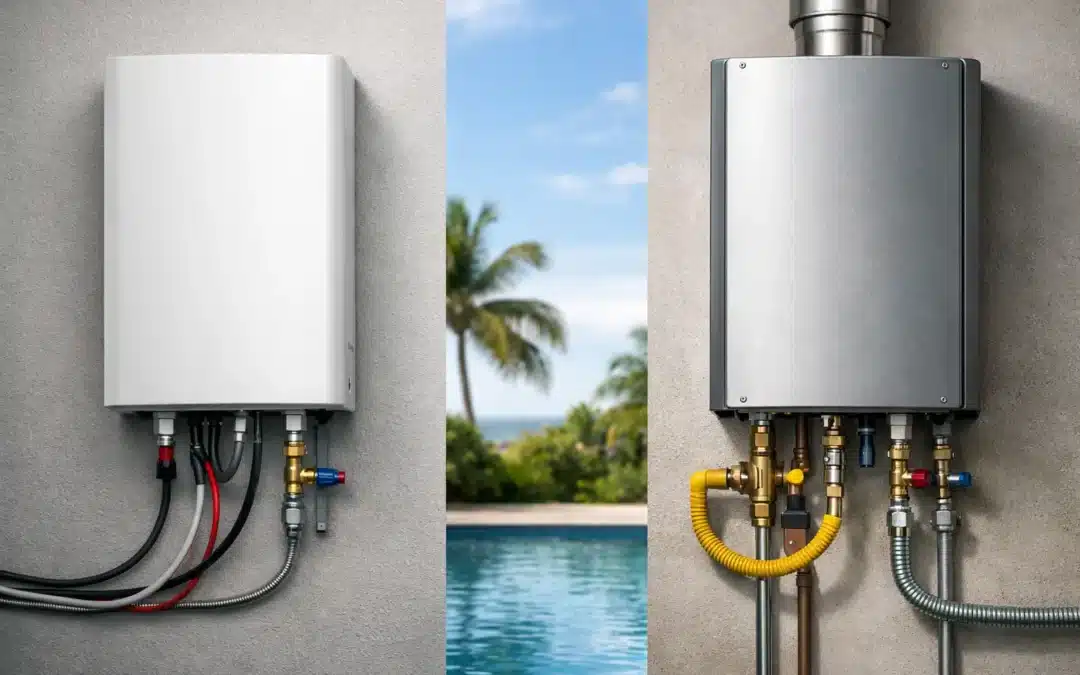
A tankless water heater can solve a familiar problem: the last person in the house gets a lukewarm shower, or a bulky storage tank takes up valuable space in the garage. But the tankless water heater electrical vs gas decision is not simply about picking the appliance with the lowest price tag. In Southwest Florida, your home’s electrical capacity, fuel availability, household hot-water habits, and storm-preparedness plans all matter.
Both options heat water on demand instead of storing 40 or 50 gallons around the clock. That can reduce standby energy loss and provide a long supply of hot water when the system is properly sized. The right choice comes down to the infrastructure already in your home and what you expect from the system.
Tankless Water Heater Electrical vs Gas: The Core Difference
Electric and gas tankless units accomplish the same job differently. An electric model uses powerful heating elements to warm water as it passes through the unit. A gas model burns natural gas or propane and transfers that heat to the water through a heat exchanger.
That difference affects installation, operating costs, output, maintenance, and what happens when the power goes out. Neither option is automatically better for every household.
Electric tankless water heaters
Electric tankless water heaters are compact, do not need combustion venting, and do not require a gas line. For a smaller home, guest suite, pool bath, or point-of-use application, they can be an excellent fit. A small unit installed near a sink or remote bathroom also reduces the wait for hot water to arrive.
The major consideration is electrical demand. Whole-home electric tankless heaters can require roughly 18 to 36 kilowatts or more while running. Many need multiple 240-volt double-pole breakers and dedicated circuits. That is a substantial load, especially in a Florida home already supporting central air conditioning, an electric range, a dryer, pool equipment, and other large appliances.
An older or fully loaded electrical panel may not have enough capacity for the upgrade. Installing the water heater without a proper load calculation can lead to nuisance breaker trips, overheated equipment, or an electrical system that is not designed for the demand. In some cases, a panel upgrade or service upgrade is the practical first step.
Gas tankless water heaters
Gas tankless units generally deliver more hot water at once than electric models of a similar size. That makes them attractive for larger households where someone may shower while the dishwasher and washing machine are running. A properly sized gas system can serve multiple fixtures with less concern about electrical capacity.
However, gas installation is more involved. The home needs an adequately sized natural-gas or propane line, proper venting, approved termination locations, and safe combustion-air considerations. Replacing a traditional tank-type gas water heater does not guarantee the existing gas piping or vent will work for a tankless unit. Tankless burners often have higher input requirements, and their venting materials and layout may be different.
Natural gas availability also varies by neighborhood in Southwest Florida. If gas service is not already present, adding it can change the project cost significantly. Propane may be an option, but it requires tank planning, fuel management, and correctly configured equipment.
Hot-Water Capacity Depends on Groundwater Temperature
A tankless unit is not rated only by how many bathrooms a home has. Its performance is based on gallons per minute and the temperature rise it can achieve. Temperature rise is the difference between the incoming water temperature and the temperature you want at the faucet.
Florida’s relatively warm incoming water is helpful. A unit does not need to work as hard to deliver a comfortable shower temperature as it would in a colder northern climate. Still, capacity must account for real household demand. A large rain-style shower, multiple showerheads, a soaking tub, and simultaneous appliance use can quickly increase the required flow rate.
A one- or two-person household may be well served by a modest unit. A family with three bathrooms and regular back-to-back showers may need a higher-capacity gas model, multiple electric units, or a carefully designed whole-home electric system. Sizing by square footage alone is not reliable. Fixture flow rates and how your household uses hot water provide a better answer.
Installation Costs Are About More Than the Heater
The appliance price gets attention, but installation requirements often determine the true project cost. Electric tankless systems may need new dedicated circuits, heavier-gauge wiring, breaker space, surge protection, or a panel upgrade. Gas systems may need a larger gas line, new venting, condensate drainage for high-efficiency models, and exterior modifications.
Permits and code-compliant installation are not optional details. Water, gas, combustion, and high-amperage electrical work all carry safety risks when handled incorrectly. A professional assessment should verify the unit location, clearances, electrical service capacity, plumbing connections, and local permit requirements before equipment is selected.
For homeowners considering an electric model, having a licensed electrician evaluate the panel first can prevent a costly surprise after the water heater has already been purchased. Infinite Electric & Air can help homeowners understand whether their existing panel and service can safely support a whole-home electric tankless water heater.
Operating Cost: Compare Local Utility Rates and Usage
Electricity and gas rates vary, so there is no universal winner on monthly operating cost. Electric tankless units are highly efficient at converting electricity into heat at the appliance. Gas units may have lower fuel costs per unit of heat in areas with readily available natural gas, although efficiency varies by model and installation quality.
The bigger question is how much hot water your household uses. A tankless heater avoids the constant standby losses of a conventional storage tank, but long showers still use energy. Selecting a unit that is too large can add unnecessary upfront cost, while selecting one that is too small can result in temperature swings or reduced flow during busy times.
Look beyond advertised efficiency. Ask for estimated energy use based on your household size, desired temperature settings, fixture count, and available utilities. That creates a more useful comparison than choosing based on equipment price alone.
Storm Outages and Backup Power Matter in Florida
A common assumption is that a gas tankless water heater will keep working during a power outage. Most modern gas tankless models still need electricity for electronic ignition, controls, fans, and safety systems. Without power, they generally will not provide hot water.
An electric tankless unit requires far more generator capacity than most homeowners expect. Running a whole-home electric tankless heater from a portable generator is usually impractical because of its high electrical demand. Even many standby generators are not sized to run one alongside essential loads such as air conditioning, refrigeration, lighting, and well pumps.
If backup power is part of your plan, discuss it before choosing the water heater. A gas tankless model may be easier to support with a properly designed generator system because its electrical needs are modest, but the exact equipment requirements still need to be verified. Load management, transfer equipment, and generator sizing should be designed as one system.
Maintenance Is Part of Long-Term Performance
Tankless water heaters need maintenance, not just installation. Mineral scale can build up inside the heat exchanger, restricting water flow and reducing efficiency. Annual flushing is commonly recommended, though the right schedule depends on water quality and manufacturer instructions.
Gas units also need periodic inspection of venting, combustion components, and condensate drainage where applicable. Electric units need their electrical connections, breakers, and heating performance checked. Keeping inlet screens clean and addressing hard-water conditions can help either type last longer.
Which Tankless Option Fits Your Home?
An electric tankless water heater may make sense when your home has ample electrical capacity, your hot-water demand is moderate, and you want to avoid gas piping and venting. It can also be a practical choice for a single bathroom or point-of-use installation.
A gas tankless unit may be the stronger option when natural gas or propane is already available, several fixtures may run at once, or your electrical panel has limited available capacity. It often provides higher flow rates for busy households, but installation planning is more complex.
The best decision starts with the home’s actual conditions, not a product label. Before committing to either option, confirm your electrical load capacity, fuel source, fixture demand, installation location, permitting needs, and backup-power priorities. A well-sized, safely installed tankless heater should make daily life easier for years, not create a new strain on the systems your home relies on.