
If you’re searching for an AC repair Naples FL cost, you want a number. I understand that, and I’ll give you the next best thing: a clear map of what costs less, what costs more, and why.
I won’t print a flat price, because nobody can give you an honest one over the phone. What I can do is show you how repair bills are built so nothing in your estimate surprises you.
Why Naples AC Repair Pricing Starts With the Diagnosis
Most AC repairs land in one of a few cost tiers, and the tier depends on which part failed. A tripped breaker and a dead compressor can produce the same symptom, a house that won’t cool, and yet the two bills sit very far apart.
That’s why no fair quote can name one flat price before a technician has looked at the system. Anyone who does is guessing, and either you pay for the guess or the company eats it and finds a way to make it back later.
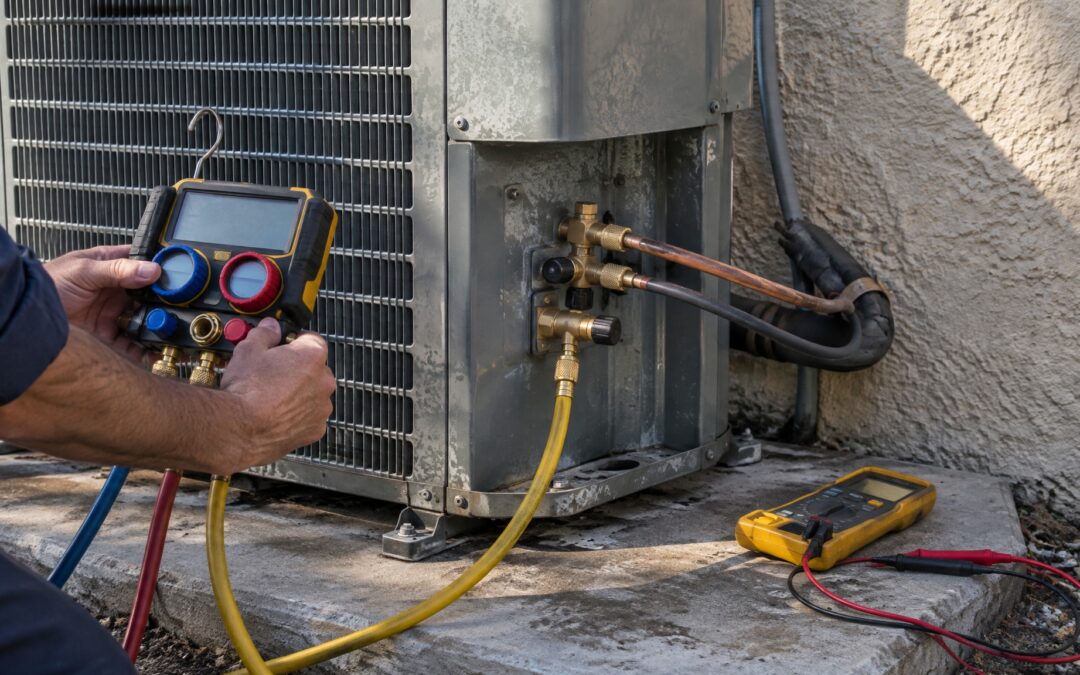
A good diagnosis reads the system, not just the thermostat: electrical readings at the outdoor unit, airflow, refrigerant pressures, and the condition of the coil and drain line. Once we know what actually failed, you get a number tied to a real part and real labor.
Plenty of homeowners start by trying to work out why an AC runs but won’t cool. That’s a useful first step, but the symptom only narrows the list. It doesn’t name the price.
AC Repair Cost by Repair Type in Naples, FL
Think of repairs as a ladder. At the bottom are small electrical parts that fail often and swap out quickly. In the middle sit motors and refrigerant leaks. At the top is the compressor, the usual costliest repair on any AC unit.
I’m using tier language here and not dollar figures on purpose. Prices move with the part, the brand, and the day your system failed, and I’d rather be straight with you than quote a number that doesn’t match your estimate.
Lower-Cost Fixes: Capacitors, Contactors, and Thermostats
A capacitor gives your compressor and fan motor the jolt they need to start. It’s one of the most common failures in Southwest Florida, and it’s a lower-cost call because the part is small, widely stocked, and quick to replace.
A contactor is the switch that sends power to the outdoor unit. Over time its contacts pit and stick, especially in salty, humid air, and swapping one usually fits inside a single visit.
Thermostats sit in the same tier. Sometimes the fix is a new battery or a recalibration, and sometimes it’s a replacement unit, but either way the work is light on labor.
These repairs cost less for three reasons: the parts are common, the labor is short, and the fix rarely means opening up the refrigerant side of the system.
A cheap part can still cause an expensive problem if it’s ignored. A weak capacitor that keeps struggling can wear out the motor or compressor it was feeding, so a small repair done early often saves a bigger one later.
Bigger-Ticket Repairs: Motors, Refrigerant Leaks, and Compressors
Fan motors, both the outdoor condenser fan and the indoor blower, fall in the middle tier. The motor itself costs more than a capacitor, and getting to it takes more labor, especially when the blower sits in a cramped air handler.
Refrigerant leaks also land in the middle, though they can climb. Cost depends on where the leak is, how long it takes to find, and what type of refrigerant your system uses. Older systems that run R-22, which has been phased out, can cost noticeably more to recharge because supply is limited.
Here’s the part many people miss: refrigerant doesn’t get “used up.” If your system is low, something is leaking, and topping it off without finding the leak is a short-term patch that you’ll pay for again.
The compressor sits at the top. It’s the heart of the system, the part is expensive, and the replacement is labor-heavy because it involves recovering refrigerant, brazing, evacuating, and recharging the system.
A failed capacitor and a failed compressor show how wide the gap is. One is a routine visit, the other is a decision about whether the whole system is still worth repairing.
What Shapes Naples AC Service Cost
Two homes in the same neighborhood can get very different bills for what sounds like the same repair. The reasons are practical, and once you know them you can read an estimate with more confidence.
Unit Age, Refrigerant, and Parts Availability
Age matters first. A newer system usually has parts on the shelf and a warranty that may cover some of them, while a system past its mid-years can need parts that take days to arrive, and that wait can raise the price.
Refrigerant is the second driver. If your system uses a phased-out type, recharging costs more and the supply is tighter, which is one reason a leak on an older unit can push the conversation toward replacement.
Climate plays a role too. Southwest Florida’s long, humid cooling season keeps systems running for much of the year, so wear and small faults show up sooner than they would in a milder climate. A ten-year-old system here has worked harder than its age suggests.
Access, After-Hours Timing, and the Diagnostic Visit
Where your equipment sits changes the labor. An outdoor condenser with clear space around it is quick work, while an air handler wedged in a tight closet or a hot attic takes longer and costs more to service.
After-hours timing can also move the price. Many companies charge more for nights, weekends, and holidays, so ask about it up front when you call, and don’t wait to be surprised by it on the invoice.
Then there’s the diagnostic visit. Some contractors credit the diagnostic fee toward the repair if you go ahead, and some don’t. Ask before anyone opens a panel, because the answer changes what your total looks like.
This guide can’t tell you your exact total. Only a technician standing at your equipment can do that, and anyone who claims otherwise is selling you certainty they don’t have.
Air Conditioner Repair Price in Florida: When Replacement Makes Sense
Sometimes the honest answer is that the repair isn’t the best use of your money. When an older system needs a big repair, the bill starts to look like a down payment on a new one, and that’s the moment to slow down and think.
Replacement is a far larger investment than almost any repair, so I never push it on the first visit. If your estimate is edging toward that territory, a look at mini-split installation costs in Southwest Florida can give you a reference point for what a new system involves.
The Repair-Versus-Replace Rule of Thumb
Licensed technicians commonly weigh a major repair against the unit’s age and repair history before recommending it. That reasoning sits behind the widely used repair-versus-replace rule of thumb: the older the system and the more it has already cost you, the less sense a large repair makes.
In practice, you ask three things. How old is the system? How many repairs has it needed lately? And does the failed part sit on the expensive end of the ladder above?
A young system with a single compressor failure usually deserves a repair. An aging system with repeat breakdowns, a phased-out refrigerant, and a major part down is a different story.
The rule is a guide, not a verdict. It won’t account for your budget, your plans for the house, or how you feel about replacing a system you’ve kept running for years.
Before you request a quote, it helps to run through the signs your AC needs a new unit. You’ll walk into the conversation knowing what you’re weighing.
Affordable AC Repair in Naples Starts With Routine Maintenance
Yes, a yearly tune-up is worth it, and the main reason is that it keeps repair bills predictable. Most of what fails in July started wearing out months earlier, and a technician can spot it before it strands you in the heat.
A good tune-up covers the pieces that cause the most breakdowns here:
- Evaporator and condenser coil checks
- Condensate drain inspection, since clogs and overflow are common in humid air
- Electrical connections tightened and tested
- Capacitor readings against the part’s rating
- Refrigerant readings to catch a slow leak early
It lowers the odds of an expensive breakdown in Florida’s hottest months, but it doesn’t make a failure impossible. An old compressor can still quit on a clean system, and maintenance won’t turn a worn-out unit into a new one.
If you’d like service on a regular schedule so you’re not remembering it every spring, our AC maintenance plan is built for exactly that.
How to Get an HVAC Repair Estimate in Southwest Florida
A fair estimate is one you can read, understand, and compare. When it’s done right, you can set two quotes next to each other and see exactly where they differ.
What a Written Estimate Should Include
Ask for a written estimate that breaks the job into pieces:
- The diagnosis, and whether the diagnostic fee applies to the repair
- Each part, named, with its cost
- Labor, shown separately from parts
- Warranty terms on both the part and the work
- What happens if the technician finds something else once the unit is open
Written that way, a quote tells a story. You can see what failed, what it will take to fix, and what stands behind the work.
Be sure the estimate also names the failed part in plain words. “Electrical repair” tells you nothing. “Run capacitor, 45/5 microfarad” tells you the whole story.
If you’d like to see how we put estimates together, you can ask us for a written quote any time. There’s no pressure and no obligation to book.
Red Flags That Point to Unclear Pricing
Some warning signs are easy to spot once you know them:
- A single vague total with no breakdown
- Pressure to replace the whole system on the spot
- No clear explanation of which part failed or why
- A price that changes sharply once work begins, with no new findings to explain it
Any one of these is a reason to pause and get a second quote. A reputable contractor won’t mind that you want one.
For a longer checklist, see our piece on how to choose an HVAC contractor you can trust.
Get a Straight AC Repair Quote in Naples, FL
I started Infinite Electric & Air because I grew up watching how it’s done right. I’m a third-generation home services professional, and the lesson that came down through my family is simple: treat every home like it belongs to someone you love.
That’s what “Leading with Love” means to us in practice. We show up when we say we will, explain what failed in plain words, and give you a price you can read before any work begins. We’re licensed for both electrical and HVAC work, and we serve Cape Coral, Fort Myers, Naples, Estero, and the rest of Southwest Florida.
What Naples Homeowners Say After Working With Us
We hold a 4.9 Google rating, and I’m proud of it because it came from neighbors, not from advertising. I’d rather you read those reviews in the customers’ own words than have me pick a few for you, so please go through what Naples homeowners say about our work and see whether honest pricing and showing up on time come up the way we hope they do.
When you’re ready, reach out and tell us what your system is doing. We’ll schedule a diagnostic visit or send you a written quote, and you can take it from there at your own pace. If we’re not the right fit, I’d still encourage you to get a second opinion.
We’d be glad to take care of your home and your family. That’s the whole job.
Frequently asked questions
What is the most expensive repair on an AC unit?
The compressor is usually the costliest repair. The part is expensive, and replacing it means recovering refrigerant, brazing, evacuating the lines, and recharging the system. On an older unit, a compressor failure often makes replacement worth a serious look.
How much does it cost to replace an air conditioner in Florida?
Replacement is a far larger investment than almost any repair, and the total depends on system type, size, ductwork condition, and the equipment you choose. We can’t name an honest figure without seeing your home. A written quote after a visit will show exactly what your system would involve.
What is the “$5,000 rule” for AC repairs?
It’s a popular rule of thumb that multiplies your system’s age by the repair quote and compares the result to a set threshold. If the result is over the line, replacement usually makes more sense. Treat it as a starting point, because repair history, refrigerant type, and your budget matter too.
Am I supposed to get my AC serviced every year?
Yes, once a year is the usual recommendation, and it matters even more in Southwest Florida, where systems run most of the year. A tune-up checks coils, drains, electrical connections, and refrigerant readings. It lowers the odds of a breakdown in the hottest months, though it can’t guarantee an old part won’t fail.