
Hearing your air conditioner run constantly while the indoor temperature climbs is one of the most stressful experiences for a Southwest Florida homeowner. The fan blows, but the air never gets that crisp chill your family needs against our heat and humidity. When a unit runs audibly but never lowers the thermostat reading, that usually points to a specific problem, not a dying system.
Understanding why your AC is not cooling but running means looking past simple mechanical failure to how our coastal environment wears on equipment. We see this scenario daily at Infinite Electric & Air, where electrical integrity and HVAC function meet to decide whether your home stays cool or turns unbearable. Before you panic about a full replacement, it helps to understand what your system is telling you through its behavior.
Why Your AC Is Running but Blowing Warm Air in Southwest Florida
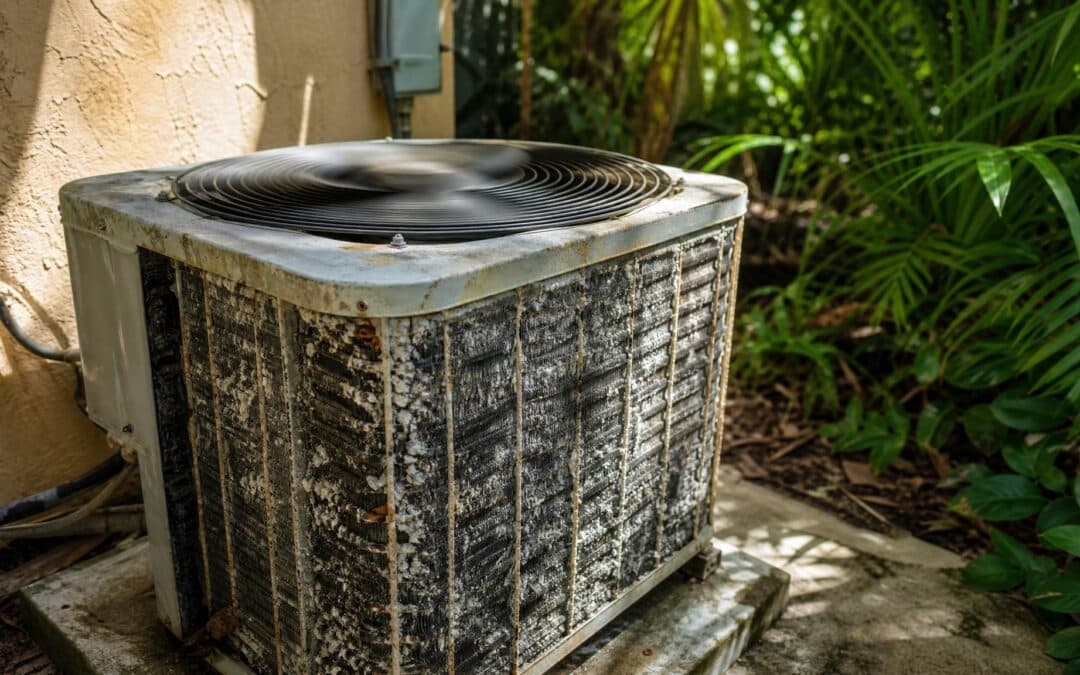
Southwest Florida’s salt-laden air speeds up condenser coil corrosion and electrical contact pitting, which is why annual professional cleaning matters so much for keeping cooling capacity where it should be. When your AC blows warm air despite the fan spinning, the problem often sits in how well the system rejects heat outdoors, not a lack of effort indoors. Our humidity acts like an insulator, masking small cooling losses until they turn into real failures during peak afternoon load.
How High Humidity Masks Cooling Problems
High humidity forces your air conditioner to work much harder just to pull moisture from the air before it can lower the temperature at all. A system that holds seventy-five degrees easily in a dry climate will struggle here, because latent heat removal eats up so much of its capacity. You might notice the unit running non-stop without ever satisfying the thermostat. That means the system has lost enough efficiency that it can no longer handle dehumidification and sensible cooling at the same time.
This kind of decline often goes unnoticed until a hot week pushes the weakened system over the edge. Air from the vents may feel a little cool to the touch but never truly cold, because the evaporator coil can’t get below the dew point. Telling the difference between airflow volume and real heat transfer is the first step in troubleshooting your AC.
When Warm Air Signals an Electrical Issue
Many apparent cooling failures in older Cape Coral and Fort Myers homes trace back to undersized or degraded electrical panels struggling with modern AC startup loads. If your compressor tries to start but only hums or clicks off repeatedly, low voltage delivery may be the real problem, not a bad compressor. Your electrical system delivers the power the refrigerant cycle needs to run, and any resistance along that path cuts cooling output directly.
We often find homeowners assume their HVAC equipment has failed when the real cause sits in the breaker panel or disconnect box. Loose connections create heat and voltage drop, which keeps the compressor from reaching full speed. The result is warm air circulating even though the blower motor runs fine. Figuring out whether the fault is mechanical or electrical saves you from replacing parts that were never broken.
Top Reasons Your Air Conditioner Isn’t Cooling Your House
Working out why your AC isn’t cooling your house means ruling out the environmental stressors specific to our region, one by one. Salt spray, constant UV exposure, and biological growth all attack your outdoor condenser in ways most manufacturers never planned for. These factors wear components down differently than they would elsewhere in the country, so local knowledge matters here.
Dirty Coils and Clogged Filters in Salt Air
Salt builds a crusty barrier on condenser fins that blocks heat exchange even when the coil looks clean from a few feet away. That marine layer insulates the metal tubing and restricts airflow, forcing the compressor to run hotter and longer for less cooling. Add in pollen and mold spores common to our climate, and this buildup can cut system capacity by thirty percent or more in a single season.
Your air filter protects the indoor evaporator coil from the same kind of fouling. A clogged filter doesn’t just cut airflow. It lets dust and debris slip past and coat the wet coil, where moisture pulls in particulate matter like a magnet. That combination can ice over the coil and shut down cooling entirely, even while the fan keeps pushing unconditioned air through your ducts.
Refrigerant Leaks and Compressor Strain
Refrigerant leaks near the coast often start at brazed joints or service valves, where salt corrosion eats through copper and brass fittings over time. Unlike a sudden puncture, these micro-leaks develop slowly, letting the system limp along at reduced capacity until charge levels drop too low to function. You’ll typically notice the suction line losing its sweat, or the outdoor unit sounding different as the compressor struggles against low head pressure.
Compressor strain from chronic low charge builds excessive heat that permanently damages internal windings and valve plates. Keep running a leaking system, and you risk destroying the most expensive part of your whole HVAC setup. Leak detection and repair calls for specialized equipment and EPA certification, so this is strictly a job for licensed technicians who can recover and recharge refrigerant legally.
Thermostat and Sensor Malfunctions
Electronic thermostats and safety sensors fail early in Florida thanks to moisture intrusion and power surges from frequent lightning storms. A miscalibrated thermostat might read seventy-two degrees accurately while your living space actually sits at eighty, so the system satisfies a target that isn’t real. Frozen coil sensors or high-pressure switches can also lock out the compressor while leaving the blower running, which produces exactly the symptom we started with: running without cooling.
These control failures show up intermittently and are hard to catch during a standard service call without the right diagnostic tools. Checking settings or swapping batteries is safe first-pass troubleshooting, but a discrepancy that keeps coming back needs professional calibration or a part replaced. Modern smart thermostats add another wrinkle, since WiFi connectivity issues can look exactly like sensor failures.
Safe DIY Air Conditioner Troubleshooting Steps
There are checks you can do safely before scheduling service. But opening sealed refrigerant systems or testing live electrical components carries real injury risk, so this isn’t a substitute for professional diagnosis on complex faults involving high voltage or pressurized gas. Your safety matters more than saving a service call fee, and knowing where to stop protects both you and your equipment warranty.
Checking Breakers and Disconnect Switches
Check that the main panel breaker and the outdoor disconnect switch are both fully engaged before assuming equipment failure. Storm activity or grid fluctuations can trip these devices on their own, cutting power to the compressor while the indoor air handler keeps running on a separate circuit. Resetting a tripped breaker once is fine. If it trips again right away, stop and call for help, because repeated resetting can start a fire.
Look inside the outdoor disconnect box for melting, burning, or insect nesting that could interrupt power delivery. Wasps and ants love building nests in these warm enclosures, and the nests can create conductive paths that short circuits or block contacts outright. Clearing out debris and tightening connections at the disconnect is about as far as safe homeowner electrical work should go.
Inspecting and Replacing Air Filters
Check your air filter monthly during cooling season, and replace it once light stops passing through it easily. A fresh filter restores proper airflow across the evaporator coil and stops the ice formation that mimics refrigerant problems. Make sure you install the correct size and MERV rating for your system, since an overly restrictive filter causes the same symptoms as a dirty one.
Clear vegetation and debris from around your outdoor condenser to keep proper clearance for heat rejection. Trim back shrubs, remove fallen leaves, and gently rinse the exterior fins with a garden hose to knock off surface salt and dirt. Never use a pressure washer on condenser coils. The force bends the delicate aluminum fins and makes airflow restriction permanently worse.
Electrical Faults That Mimic AC Cooling Failures
Electrical problems are the most commonly misdiagnosed cause behind “AC not cooling but running” complaints in Southwest Florida. Your air conditioner depends entirely on stable electrical delivery to run the compressor, fan motors, and control circuits that produce cooling. When voltage sags or connections degrade, the system can look mechanically fine while failing thermodynamically.
Failing Capacitors and Contactors
Capacitors store electrical energy to help motors start and run efficiently, but extreme heat and humidity degrade their internal dielectric fluid fast. A weak capacitor lets the compressor draw too much amperage while producing too little torque, which leads to overheating and eventual thermal shutdown. You might hear the compressor humming loudly without starting, or notice the outdoor fan spinning slower than normal while the unit runs on and on.
Contactors are heavy-duty relays that switch high-voltage power to the compressor and fan motor dozens of times a day. Each switch creates a small arc that gradually pits and carbonizes the contact surfaces, raising resistance and cutting voltage to the components downstream. Pitted contactors generate enough heat to melt plastic housings and cause the kind of intermittent operation that defies simple troubleshooting.
Voltage Drops from Aging Panels
Older electrical panels installed during Cape Coral’s original development boom often can’t support a modern high-efficiency AC unit alongside today’s household loads. Corroded bus bars, loose neutral connections, and undersized feeders add up to voltage drop right at the point of use. Your compressor ends up receiving two hundred volts instead of the two hundred forty it needs, so it runs hot and inefficient while drawing more current than it should.
Understanding electrical panel upgrade costs helps you weigh whether repairing aging infrastructure makes financial sense against continued patchwork fixes. Many of the cooling complaints we resolve trace directly back to electrical distribution problems that a pure HVAC contractor can’t legally diagnose or repair. Fixing the electrical root cause prevents premature compressor failure, and it improves home safety well beyond just the air conditioning.
When to Call a Local Pro for AC Repair in Fort Myers
Knowing when to move from DIY checks to professional AC repair in Fort Myers protects your equipment and gets you an accurate diagnosis. Florida building codes require licensed professionals for any AC repair involving refrigerant handling or electrical modifications, for safety and compliance. Going beyond basic maintenance on your own breaks these regulations and voids manufacturer warranties, no matter how skilled you are.
Signs You Need Immediate Professional Help
Ice on the refrigerant lines or evaporator coil means a serious problem that needs immediate attention. Burning smells, unusual grinding, or water pooling around indoor units signal active damage that gets worse the longer the system runs. If your system cycles on and off every few minutes without hitting the set temperature, stop using it. Short-cycling like that can destroy the compressor.
Recurring breaker trips or lights flickering in time with the AC demand an urgent electrical check before any further HVAC troubleshooting. These are signs of conditions that could lead to an electrical fire or damage beyond economical repair. Trust your gut when something feels off. A comfort system should run quietly and predictably, not demand constant attention.
Why Licensing Matters for Electrical-Integrated Repairs
Infinite Electric & Air holds dual HVAC and electrical licensing, so our technicians catch integrated system failures that single-trade contractors often miss. That combined expertise means we look at your cooling problem as a whole, instead of assuming mechanical failure when the real issue is electrical. Hiring a licensed Fort Myers electrician who also understands HVAC cuts out the finger-pointing between trades that so often delays a fix and drives up cost.
Dual licensing also means compliance with the codes that govern both refrigerant handling and electrical work in a home. A single-trade contractor may only be legally allowed to run half the diagnostics your system needs, which leads to incomplete repairs and callback fees. Choosing a properly credentialed provider pays off in a fix that’s right the first time, and a system that keeps working.
Preventing Future Cooling Issues in Florida’s Climate
Preventive maintenance built around Southwest Florida’s conditions extends equipment life and keeps cooling efficiency steady year-round. Schedule professional tune-ups twice a year, ideally before summer peak demand and again after hurricane season winds down. Post-storm inspections catch the salt intrusion and water damage that quietly develop while systems sit idle or run under stress during a weather event.
Rinse outdoor condensers with fresh water every few months to clear salt before it corrodes the aluminum fins and copper tubing. Change filters monthly no matter what the manufacturer’s schedule says, since our biological contaminant load runs well past national testing standards. Keep maintenance records so you can track performance over time and catch a developing problem before it turns into a full cooling failure in August.
Considering a Mini-Split When Your Central AC Fails
Repeated repairs on an aging central system sometimes mean you’ve hit the point of diminishing returns. Exploring mini-split installation options is a real path forward for homes with compromised ductwork or electrical capacity too tight for a new central unit. These zoned systems skip duct losses entirely and give you room-by-room control that central air can’t match.
Mini-splits do well in Florida’s climate because they handle humidity better than central systems at partial loads. Checking current mini-split pricing often turns up more affordability than people expect, once you factor in skipped duct repairs and better seasonal efficiency. For room additions, garage conversions, or older homes where running new ductwork isn’t practical, a mini-split delivers targeted comfort without tearing the house apart.
When your AC is not cooling but running, and basic troubleshooting hasn’t fixed it, a professional diagnosis is what separates a repairable fault from a good time to replace. Our team brings both electrical and HVAC licensing to every call, with diagnosis rooted in Southwest Florida’s own environmental wear and tear. Schedule your diagnostic visit today to get your comfort back, backed by local experience and dual-trade licensing.