
Power usually goes out at the worst possible time – during a summer storm, in the middle of dinner, or when your AC is already working overtime. If you own or plan to buy a portable generator, the question often becomes transfer switch vs interlock kit generator setup: which one is safer, smarter, and better for your home?
The short answer is that both can be safe and code-compliant when installed correctly, but they solve the problem in different ways. A transfer switch gives you a more controlled, appliance-by-appliance setup. An interlock kit lets you use your main electrical panel to choose which circuits to run. The better option depends on your panel, your budget, how much flexibility you want, and how comfortable you are managing loads during an outage.
Transfer switch vs interlock kit generator: the basic difference
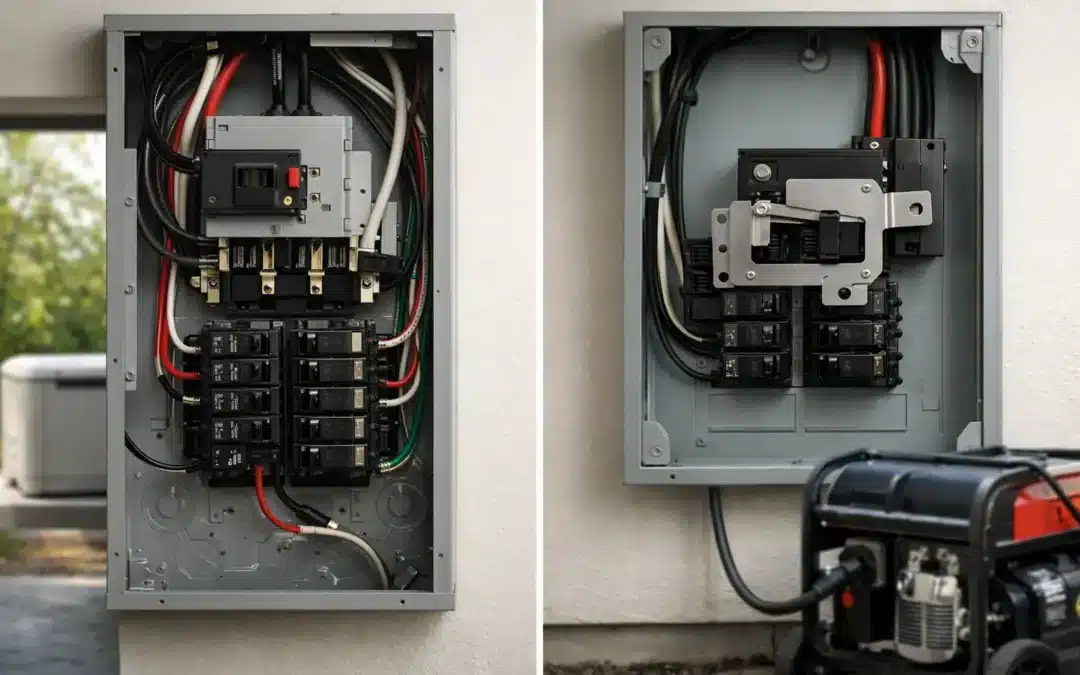
A transfer switch is a separate device installed next to your electrical panel. It connects selected household circuits to generator power. During an outage, you move those chosen circuits from utility power to generator power. This setup is common when homeowners already know exactly what they want backed up – maybe the refrigerator, a few lights, the garage door, internet equipment, and a bedroom outlet for charging devices.
An interlock kit works differently. It is installed on the main electrical panel and mechanically prevents the main breaker and generator backfeed breaker from being on at the same time. That matters because generator power must never feed back into the utility lines. With an interlock, you use your existing panel circuits instead of a separate subpanel or dedicated transfer switch circuit set.
Both systems are designed to prevent dangerous backfeeding. Neither should be confused with plugging a generator into a dryer outlet or any other improvised method. That is unsafe, not code-compliant, and puts utility workers, your home, and your equipment at risk.
When a transfer switch makes more sense
A transfer switch is often the cleaner choice for homeowners who want simplicity during an outage. Once it is installed, the critical circuits are already identified and labeled. You do not have to decide in the moment which breakers to turn on and off. That can be especially helpful during a stressful weather event.
This setup also helps limit the chance of overloading a portable generator. Because only selected circuits are connected, the electrical demand is more predictable. If your goal is to power essentials and avoid guesswork, a transfer switch can feel more straightforward.
Another advantage is organization. The switch clearly shows which circuits are generator-fed, which can make the system easier for multiple household members to use. If one person is home during an outage and another usually handles electrical questions, that clarity matters.
The trade-off is flexibility. If the transfer switch was wired for six or ten circuits, that is your backup plan unless the system is modified. If you later decide you also want a different room, additional lighting, or another appliance, changes may require more electrical work.
When an interlock kit is the better fit
An interlock kit is often appealing because it gives you more freedom. Instead of being limited to a fixed list of circuits, you can choose which breakers to use during the outage. That can be helpful if your priorities change with the season. One day you may care most about the refrigerator and freezer. Another time, your focus may be a portable AC, well pump, or microwave.
For many homes, an interlock kit can also be a more cost-effective way to connect a portable generator. Since it uses the main panel rather than a separate transfer switch with dedicated circuits, installation may be simpler in the right situation.
That said, more flexibility also means more responsibility. You need to manage the electrical load carefully. Just because the panel gives you access to many circuits does not mean your generator can run all of them at once. Homeowners with interlock systems must understand what their generator can handle and turn circuits on in a controlled way.
Panel compatibility is another factor. Not every electrical panel accepts every interlock kit, and not every older panel is a good candidate. The installation needs to match the panel model and meet code requirements.
Safety matters more than convenience
In Southwest Florida, generator conversations are rarely theoretical. Storm season has a way of turning backup power into an urgent project. But safety should stay at the center of the decision.
A properly installed transfer switch or interlock kit protects against backfeeding, which is one of the biggest hazards with portable generators. It also creates a legal, predictable connection point for generator power. That is far different from extension cords running across rooms or unsafe homemade hookups.
There are other safety concerns too. Portable generators must stay outside, away from doors, windows, and garages because of carbon monoxide risk. Your generator connection should also be sized correctly, protected by the right breaker, and installed by a licensed electrician who understands local code and panel conditions.
If your home has an older panel, limited capacity, or signs of electrical wear, generator hookup may uncover bigger issues. Sometimes the right answer is not just transfer switch or interlock kit. Sometimes it starts with a panel upgrade so the home can support backup power safely.
Cost, control, and everyday usability
Homeowners often ask which option is cheaper, but cost alone does not tell the full story. A transfer switch may cost more upfront depending on the number of circuits and the installation layout. An interlock kit can be less expensive in some homes, especially when the panel is compatible and access is straightforward.
Still, the more useful question is what you are paying for. With a transfer switch, you are paying for convenience, structure, and easier operation. With an interlock kit, you are often paying for flexibility and potentially lower installation cost.
Think about who will operate the system during an outage. If you want a very simple process with minimal decision-making, the transfer switch usually wins. If you are comfortable managing loads and want to choose different circuits depending on the situation, the interlock kit may be the better value.
Noise, fuel use, and generator size also affect the experience. A smaller portable generator paired with a transfer switch for essential circuits can be a practical setup. A larger portable generator with an interlock kit may give you more options, but only if you understand how to balance the load.
Code compliance and insurance are part of the decision
Electrical work is not an area where shortcuts pay off. A legal installation protects your family and may also protect you if there is ever an insurance claim related to electrical damage or fire.
Both transfer switches and interlock kits can be code-compliant, but the details matter. The equipment has to be listed for the application, compatible with the panel, and installed correctly. Permitting and inspection requirements may apply depending on the project scope and local rules.
This is one reason homeowners should be cautious about generic online advice. What worked in another state, or with another panel brand, may not be appropriate for your home. Florida homes also deal with heavy storm exposure, high humidity, and frequent generator use after severe weather, so reliability is not just a nice feature.
Which one is right for your home?
If you want backup power for a fixed set of must-have circuits and the easiest operation possible, a transfer switch is often the better fit. It is especially useful for households that want a clear, repeatable plan during outages.
If you want more control over which branch circuits get power and your panel is compatible, an interlock kit can be an excellent option. It gives you more flexibility, but it expects more from the user.
For some homeowners, the decision also comes down to future plans. If you expect to keep using a portable generator for years, either setup can make sense. If you are thinking about moving to a whole-home standby generator later, it is worth discussing that long-term goal before installation so your electrical upgrades make sense together.
At Infinite Electric & Air, this is usually where a real home evaluation matters more than a generic answer. Panel type, generator size, essential loads, and the age of your electrical system all shape the right recommendation.
The best generator connection is the one that keeps your home safe, matches how your family actually lives, and works reliably when the weather turns bad.