
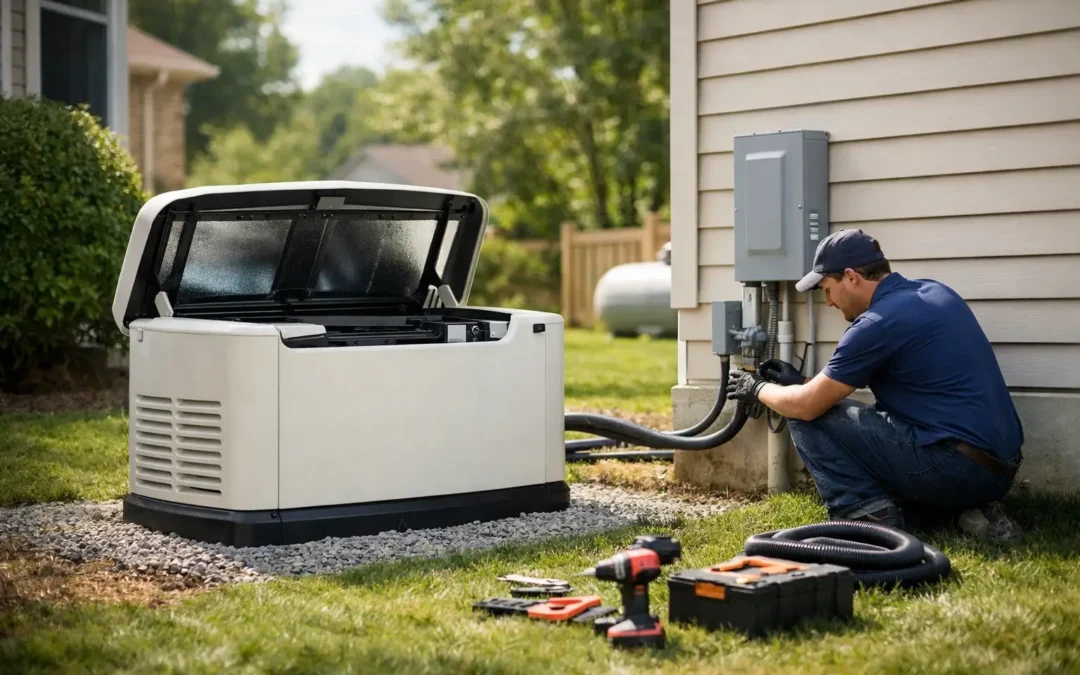
When the power goes out in Southwest Florida, it is rarely a minor inconvenience. A summer outage can mean indoor temperatures climb fast, food spoils, medical devices lose backup power, and storm recovery gets a lot harder. That is why a generator installation guide for homeowners should start with one point above all others: a standby generator is not just about comfort. It is about safety, planning, and making sure your home can function when the grid cannot.
What this generator installation guide for homeowners should help you decide
The first decision is not which brand to buy. It is whether you want partial-home backup or whole-home backup. Some homeowners only want to keep the refrigerator, a few lights, internet equipment, and one small AC system running. Others want the home to operate almost normally during an outage, including central air, well pumps, water heaters, and larger appliances.
That choice affects nearly everything that follows, from generator size to fuel use to installation cost. A smaller system can be more budget-friendly up front, but if it does not cover the loads that matter most during a long outage, it may not solve the real problem. A larger system offers more convenience, but it needs proper planning so you are not overspending on capacity you rarely use.
Start with load calculation, not guesswork
Generator sizing is where many projects go wrong. Homeowners often estimate based on square footage or assume a neighbor’s setup will work for their house too. In reality, generator sizing should be based on electrical loads, startup demands, and which circuits you want powered during an outage.
Air conditioners are a major factor in Florida homes. Compressors can draw a high starting current, and if you plan to run one or more AC systems, that needs to be accounted for carefully. The same goes for pool equipment, electric ranges, dryers, water heaters, and well pumps. If too many large loads try to start at once, an undersized generator may struggle, trip, or fail to support the home as expected.
A proper load calculation looks at your essential circuits, major appliances, and how they operate in real life. Some homes benefit from load-shedding controls that prioritize critical equipment and delay nonessential loads. That can allow a slightly smaller generator to serve the home well without sacrificing safety or performance.
Partial-home vs. whole-home backup
Partial-home backup usually makes sense when you want to control costs and focus on essentials. This approach often covers refrigeration, lighting, outlets for charging devices, garage door operation, and selected air conditioning. It is practical, especially for homeowners who can tolerate short-term limits during an outage.
Whole-home backup is a better fit if outages are frequent, someone in the home depends on powered medical equipment, or you simply want as little disruption as possible. It is also worth considering if your home has systems that are difficult to manage manually during extended outages.
Choose the right fuel source for your property
Most residential standby generators run on natural gas or liquid propane. Portable generators often use gasoline, but portable systems are a different category and come with added limitations and safety concerns.
Natural gas is convenient if your home already has service. You do not need to refill tanks, and fuel supply can be continuous as long as utility service remains available. The trade-off is that not every neighborhood has natural gas access, and in some emergency conditions, utility service may still be affected.
Propane is common in areas where natural gas is unavailable. It burns cleanly and stores well, but tank size matters. A generator can consume propane quickly under heavy load, so your installer should help estimate runtime based on your generator size and expected usage.
Gasoline and diesel are typically less practical for permanent residential standby systems. They can make sense in certain backup arrangements, but fuel storage, maintenance, and long-term reliability need more attention.
Placement matters more than many homeowners expect
A generator cannot be placed just anywhere there is open ground. Location must follow code requirements, manufacturer clearance rules, and practical service considerations. The unit needs enough distance from windows, doors, soffit vents, and fresh-air intakes to reduce the risk of exhaust entering the home.
It also needs a stable base, adequate airflow, and room for maintenance access. In storm-prone parts of Florida, placement should account for drainage and flood exposure too. A low spot in the yard may seem convenient until heavy rain arrives.
Noise is another factor. Modern standby generators are much quieter than many people expect, but they are not silent. If the unit is placed too close to a bedroom window or a neighbor’s outdoor living area, that can become frustrating during an extended outage. Good planning balances safety, code compliance, and day-to-day livability.
The transfer switch is not optional
One of the most important parts of any generator installation is the transfer switch. This device isolates your home from the utility grid when the generator is running. Without that separation, backfeeding can occur, creating a serious hazard for utility workers, neighbors, and your own electrical system.
For a permanent standby generator, an automatic transfer switch is typically part of the system. When utility power fails, the switch senses the outage, starts the generator, and transfers selected household loads. When utility power returns, it switches the home back and shuts the generator down after a cooldown period.
That automatic function is a major reason homeowners choose standby systems. You do not have to be home to connect anything, and you are not running extension cords through the house. More important, the power transition is handled safely when the system is installed correctly.
Permits, codes, and inspections are part of the job
A true generator installation guide for homeowners would be incomplete without discussing permits. Residential generator installation is not a simple appliance hookup. It often involves electrical work, fuel line work, local permitting, and inspections.
In many cases, the project may also require coordination with the utility company and compliance with local setback rules or noise ordinances. Skipping permits may seem like a shortcut, but it can create major problems later during a home sale, insurance claim, or post-storm repair review.
Professional installation protects more than convenience. It helps ensure the generator, transfer equipment, grounding, bonding, overcurrent protection, and fuel connections all meet current code. It also gives you confidence that the system has been installed with safety in mind from the start.
Budget for installation, not just equipment
Homeowners often begin with generator unit pricing, then get surprised by the full project cost. The generator itself is only one part of the investment. Installation can also include site preparation, the concrete or composite pad, transfer switch installation, panel work, gas or propane line upgrades, permits, startup testing, and inspection coordination.
If your electrical panel is outdated or already near capacity, additional upgrades may be needed. That is not necessarily bad news. In some homes, panel improvements make the generator installation safer and more reliable overall. It just means the quote should reflect the true condition of the home, not an idealized version of it.
Transparent pricing matters here. A thorough estimate should explain what is included, what assumptions are being made, and where additional costs could appear if site conditions change.
Maintenance is part of ownership
A standby generator is not something you install and forget. Like any engine-powered equipment, it needs regular maintenance to stay ready. That includes oil and filter changes, battery checks, inspection of electrical connections, and periodic testing under operating conditions.
Most standby units perform automatic exercise cycles, which helps confirm basic readiness, but that does not replace scheduled service. If a generator sits for months with a weak battery, low fluids, or neglected maintenance, it may not respond the way you expect during an outage.
In Florida’s heat and humidity, routine service matters even more. Salt air, moisture, and storm exposure can all affect outdoor equipment over time. Homeowners who want dependable backup power should think of maintenance as part of the system, not an extra.
Common mistakes to avoid
The biggest mistake is choosing a generator before defining your goals. The second is hiring someone who treats generator installation like a side job rather than a specialized electrical service. A standby generator connects directly to critical systems in your home, and poor installation can create safety hazards, nuisance shutdowns, and expensive corrections later.
Another common mistake is underestimating fuel needs or overestimating what a small generator can run. It is also easy to ignore the condition of the existing electrical panel, only to discover during installation that upgrades are needed for the system to work properly.
For homeowners in places like Cape Coral, Fort Myers, and North Fort Myers, storm preparation is not theoretical. If you are going to invest in backup power, it makes sense to size it correctly, install it to code, and maintain it so it is ready when the weather turns.
The best generator setup is the one that fits your home, your priorities, and the way your family actually lives. If you start there, the rest of the decisions become much clearer.