
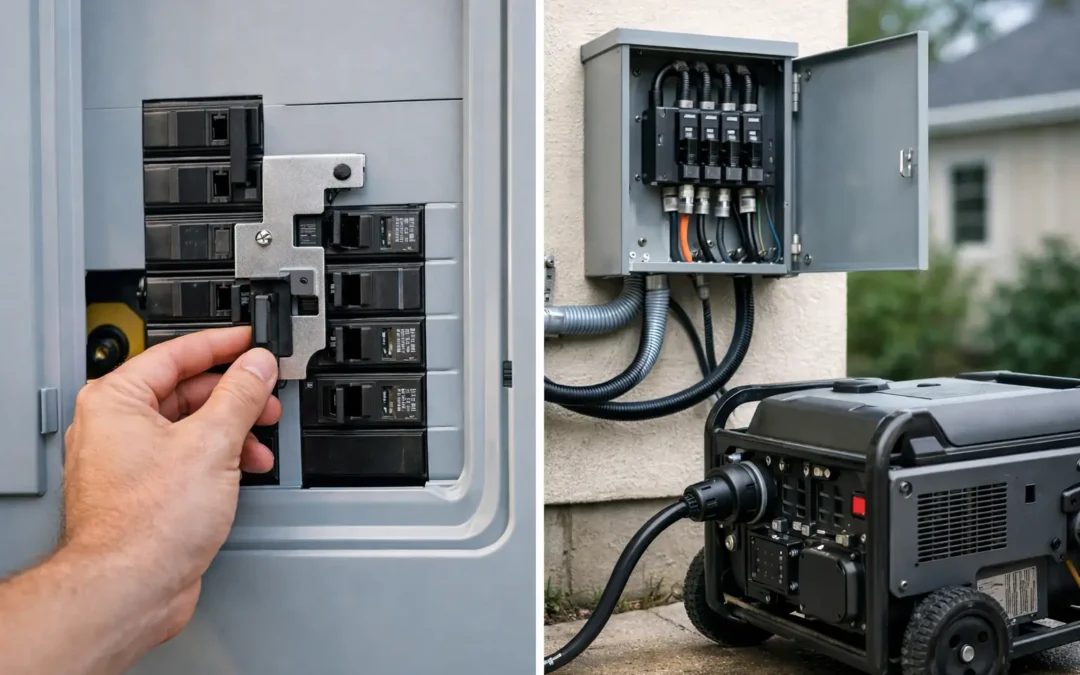
When the power goes out in Southwest Florida, the question usually gets real fast: what will keep the lights on, the fridge cold, and the AC or air handler running safely? That is why homeowners often compare generator interlock vs transfer switch options before installing a portable or standby generator setup. Both can power parts of your home during an outage, but they work differently, cost differently, and fit different households.
Generator interlock vs transfer switch: the core difference
A generator interlock is a mechanical device installed on your main electrical panel. Its job is simple but critical – it prevents the main breaker and the generator backfeed breaker from being on at the same time. That matters because electricity should never flow from your generator back out to the utility lines, where it can endanger lineworkers and damage equipment.
A transfer switch also prevents utility power and generator power from feeding the house at the same time, but it does so through a separate switch assembly. Depending on the design, it may feed only selected circuits or it may work as part of a whole-home standby generator system.
So if you want the shortest version, here it is: an interlock uses your existing panel and lets you choose which circuits to run by managing breakers, while a transfer switch moves power through a dedicated switching device and often offers a more guided, convenient setup.
How a generator interlock works
With an interlock, a licensed electrician installs a generator inlet, a dedicated breaker in the panel, and the interlock mechanism itself. When utility power fails, you connect the portable generator outside, start it, and then switch the panel over by turning off the main breaker and turning on the generator breaker. The interlock physically blocks you from having both on at once.
From there, you decide which branch circuits to energize. That flexibility is one reason many homeowners like interlocks. You are not limited to a fixed set of pre-wired circuits. If your generator can handle it, you might run the refrigerator, some lighting, garage door, and a few receptacles one day, then shift priorities during a longer outage.
The trade-off is that this setup requires more homeowner involvement. You need to understand your electrical loads and avoid turning on too much at once. If someone in the home is not comfortable managing breakers during a storm, the lower price of an interlock may not feel like a bargain.
How a transfer switch works
A transfer switch creates a more structured path between utility power, generator power, and the circuits being served. In a manual transfer switch setup, the homeowner still starts the generator and moves the switch, but the selected circuits are already designated. That makes operation more straightforward because there is less guesswork at the panel.
For automatic standby systems, the transfer switch becomes even more hands-off. It senses a power outage, starts the standby generator, and shifts the load automatically. When utility power returns, it switches back and shuts the generator down. That level of convenience is hard to beat, especially for households with medical equipment, frequent travel, or seasonal residents who may not be home when the outage starts.
The downside is cost. Transfer switch systems, especially automatic ones tied to standby generators, are generally more expensive to install than an interlock setup for a portable generator.
Safety matters more than convenience or price
On the generator interlock vs transfer switch question, safety is not where you cut corners. Both options can be safe when they are properly designed, code-compliant, and installed by a licensed electrician. Both can be dangerous when someone tries to improvise with extension cords, dryer outlets, or homemade backfeeding methods.
An interlock is not a shortcut around safe installation. It still needs the right panel compatibility, proper breaker sizing, a correctly installed inlet, and clear operating instructions. Not every electrical panel accepts a listed interlock kit, and using the wrong hardware can create serious problems.
Transfer switches also need professional sizing and installation. The electrician must determine which loads will be served, whether there are any multi-wire branch circuits or 240-volt loads to account for, and how to handle neutral and grounding requirements correctly.
If you live in a storm-prone area like Fort Myers or Cape Coral, that professional approach becomes even more important. Outages often happen during stressful conditions, and your backup power system should be easy to operate without second-guessing what is safe.
Cost differences and what you are really paying for
In many cases, an interlock setup costs less upfront than a transfer switch. That is because it often uses the existing main panel rather than adding a separate switching assembly for selected circuits. For a homeowner with a portable generator and a modern, compatible panel, this can be an efficient way to get legal, safer backup power.
A manual transfer switch usually costs more, but some homeowners prefer paying for simplicity. Instead of deciding which breakers to cycle on and off, they get a clearer set of designated circuits. That can be helpful if more than one person in the household may need to operate the system.
Automatic transfer switches paired with standby generators cost more still, but they deliver a different level of value. You are paying for convenience, speed, and often broader home coverage. For some homes, especially those with sump pumps, refrigerated medications, security systems, or occupants who cannot be without cooling for long, that added expense can make sense.
So the better question is not only which costs less. It is which setup matches the way your household will actually use backup power.
Which one is better for a portable generator?
For portable generators, the answer often depends on your panel, your budget, and how comfortable you are managing loads. Interlocks are popular because they are flexible and often more affordable. They also make good use of your existing panel when the panel is compatible and in good condition.
A manual transfer switch may be better if you want a more user-friendly system with a fixed set of circuits already chosen. That can reduce confusion during an outage and make it easier for everyone in the home to use the generator correctly.
Neither option is automatically better for every portable generator owner. If your main concern is keeping costs reasonable while still meeting code and maintaining flexibility, an interlock may be a strong fit. If your main concern is ease of operation, a transfer switch may be worth the added investment.
Panel condition can decide the answer
One detail homeowners sometimes miss is that your existing electrical panel may influence the final recommendation. If the panel is outdated, overloaded, damaged, or does not support a listed interlock kit, installing an interlock may not be the right path.
In those cases, the conversation can shift toward a transfer switch, a panel upgrade, or a broader electrical improvement plan. This is one reason a site visit matters. What sounds straightforward online may look very different once a licensed electrician checks breaker space, service condition, grounding, and overall panel health.
That is especially true in older homes or homes that have had additions, remodels, or multiple electrical modifications over the years.
Generator interlock vs transfer switch for whole-home backup
If your goal is true whole-home backup with minimal involvement, a transfer switch is usually the better fit. Whole-home standby systems are designed around automatic transfer equipment and load management strategies that can support larger portions of the home safely.
An interlock is usually better understood as a practical backup solution for selective use with a portable generator. It can power many essentials, but it still requires active management. That does not make it inferior. It just means it serves a different purpose.
For many homeowners, the right answer comes down to this: do you want affordable backup power for key needs, or do you want a more automated system that feels closer to business as usual during an outage?
The best choice depends on your home and your priorities
There is no one-size-fits-all winner in the generator interlock vs transfer switch debate. An interlock can be an excellent solution when the panel is compatible, the homeowner is comfortable managing loads, and the goal is cost-effective backup power from a portable generator. A transfer switch can be the better option when convenience, designated circuits, or whole-home automation matter more.
The most reliable way to choose is to look at your actual electrical system, your generator size, and the loads you care about most. A household trying to keep a refrigerator, lights, and a few outlets running has different needs than one trying to support larger HVAC loads or near-normal operation during a long outage.
At Infinite Electric & Air, these are the kinds of details that shape a safe recommendation, not just a fast one. The best backup power setup is the one that works for your home, follows code, and gives you confidence when the weather turns.
Before the next storm season shows up on the forecast, it is worth finding out which option fits your panel, your generator, and the way your family actually lives.