
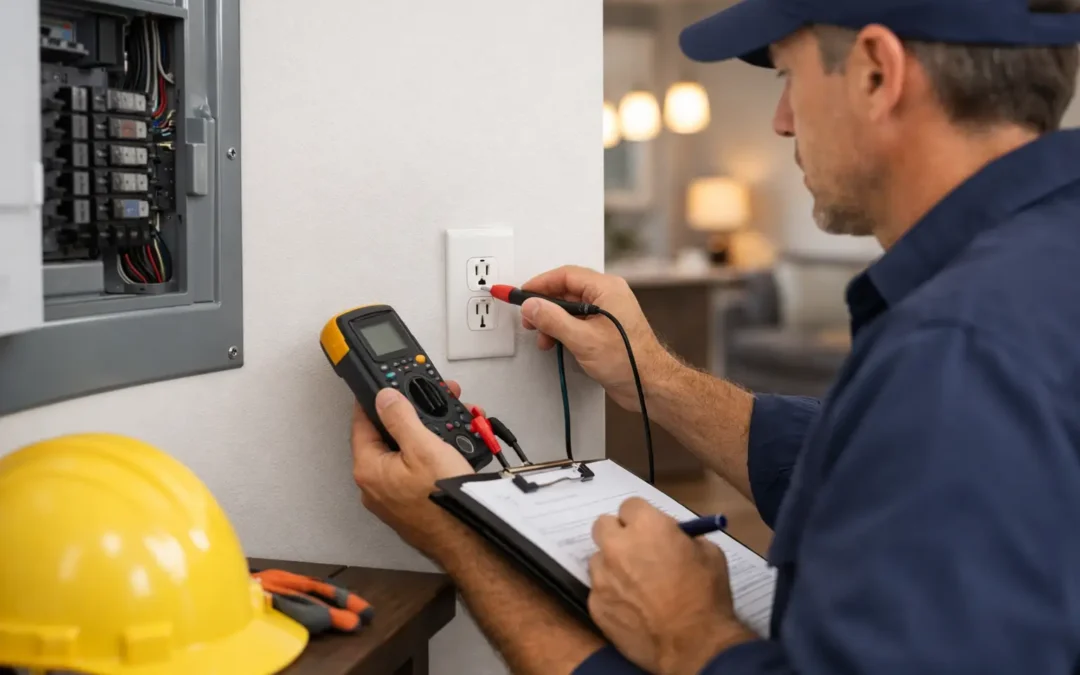
A breaker that trips once might be a nuisance. A breaker that trips twice, a warm outlet, or lights that flicker during a summer storm is your home asking for attention. This home electrical safety inspection guide is built for homeowners who want to catch problems early, reduce fire risk, and make smart decisions about when a quick check is enough and when it is time to call a licensed electrician.
Why a home electrical safety inspection matters
Electrical issues rarely stay small. A loose connection can create heat over time. An overloaded circuit can quietly stress wiring behind the wall. In Southwest Florida, storm activity, lightning, humidity, and heavy AC use can add extra wear to an electrical system that already works hard most of the year.
That does not mean every older home is unsafe or every flicker points to a major repair. It does mean routine inspection matters. A careful look around your home can reveal patterns that deserve professional attention before they turn into outages, damaged appliances, or dangerous conditions.
A safety inspection is also useful if you have recently bought a home, added large appliances, installed a hot tub, noticed higher electric bills, or rely on a generator during storm season. These situations put more focus on the condition and capacity of your electrical system.
What homeowners can check safely
A good home electrical safety inspection guide should be practical, but it also needs clear limits. Homeowners can inspect visible components and notice warning signs. They should not remove panel covers, test live wiring, or take apart outlets and switches unless they are trained and equipped to do so safely.
Start with what you can see, hear, and smell.
Outlets and switches
Walk room to room and pay attention to outlets and switches that feel warm, look discolored, or make crackling sounds. These are not normal signs of age. They can indicate loose wiring, failing devices, or overloaded circuits.
Test whether outlets hold plugs securely. A loose outlet may seem minor, but poor contact can create arcing. If you have two-prong outlets in older areas of the home, that is not automatically an emergency, but it often points to an outdated system that may need evaluation, especially if you are using adapters or extension cords regularly.
In kitchens, bathrooms, garages, laundry rooms, and outdoor areas, check for GFCI protection. A GFCI outlet is designed to reduce shock risk where water is present. If these outlets will not reset, trip repeatedly, or are missing in locations where they should be installed, that deserves follow-up.
Cords, plugs, and power strips
Look for frayed cords, damaged plug ends, or extension cords being used as permanent wiring. That last one is common and easy to ignore, especially in garages, home offices, and entertainment setups. It is also a sign your home may not have enough properly placed outlets for how you live today.
Power strips should not be daisy-chained together, and large appliances should not be plugged into them unless the manufacturer specifically allows it. Window AC units, space heaters, and similar high-demand equipment need careful attention because they can overload circuits quickly.
Lighting and fixtures
A flickering light is not always caused by a bad bulb. It can also be a symptom of voltage fluctuations, a loose connection, or a circuit problem. If flickering happens in multiple rooms, or when a major appliance starts, the issue may go beyond the fixture itself.
Check light fixtures for signs of overheating, including browning around the canopy or a burning smell. Make sure bulbs match the fixture rating. Using a bulb with too much wattage in an enclosed fixture can create excess heat and shorten the life of the fixture.
The electrical panel area
You can inspect the area around the panel without opening it. The panel should be easy to access and free from storage piled in front of it. Listen for buzzing and check for any burnt smell nearby. If breakers trip often, that is worth noting. A breaker that trips occasionally after a clear overload may be doing its job. A breaker that trips repeatedly under normal use suggests a problem.
Labels matter too. If your panel directory is missing, inaccurate, or hard to read, update it. In an emergency, clear circuit identification saves time and reduces confusion.
Signs your home may need a professional inspection
Some warning signs are subtle. Others are more direct. If you notice any of the following, a licensed electrician should inspect the system:
- Frequent breaker trips or blown fuses
- Dimming or flickering lights in multiple areas
- Warm, buzzing, or discolored outlets and switches
- Burning odors near outlets, fixtures, or the panel
- Mild shocks when plugging in or touching devices
- Heavy use of extension cords because outlets are limited
- A panel that feels undersized for current household needs
There is also an age factor. If your home is several decades old and has never had a meaningful electrical update, an inspection is a smart move even if nothing seems wrong. Older homes often were not designed for modern loads like multiple refrigerators, large televisions, computer equipment, EV chargers, and high-capacity HVAC systems running through long Florida summers.
Florida-specific concerns homeowners should not ignore
In this region, electrical safety is tied closely to weather. Surge protection is one of the clearest examples. Lightning and utility fluctuations can damage electronics and appliances in a moment, but repeated smaller surges also wear equipment down over time. Whole-home surge protection is often a worthwhile layer of defense, especially in areas that see frequent storms.
Moisture matters too. Outdoor outlets, pool equipment connections, and exterior lighting should be in good condition and appropriately protected. Corrosion can develop faster in humid or coastal environments, and that can affect reliability as well as safety.
Generator connections deserve special attention. If you use a portable generator during outages, it should never be connected through unsafe backfeeding methods. Proper transfer equipment is essential. For homeowners considering a standby generator, a professional inspection can confirm whether the panel, grounding, and overall system are ready for it.
What happens during a professional home electrical safety inspection
A licensed electrician takes the process further than a visual walk-through. They can test system performance, inspect connections, verify grounding and bonding, evaluate panel condition, and identify code or safety concerns that are not obvious from the surface.
A professional inspection often includes reviewing the main panel, subpanels, breakers, visible wiring, receptacles, GFCI and AFCI protection, smoke detector power, surge protection options, and the general load on the system. If your home has older aluminum wiring, a recalled or obsolete panel brand, or signs of previous unpermitted work, those findings may shape the next steps.
Not every issue leads to a major upgrade. Sometimes the solution is replacing worn devices, correcting a few unsafe connections, or adding protection where it is missing. In other cases, the inspection reveals that the panel no longer supports the home safely and efficiently. That is where transparent recommendations matter. Homeowners should understand what is urgent, what is preventative, and what can be planned over time.
How often should you inspect your home’s electrical system?
There is no single schedule that fits every house. A newer home with no warning signs may only need periodic visual checks and a professional inspection around major changes, like a renovation or generator installation. An older home, a recently purchased home, or a home with frequent electrical complaints should be evaluated sooner.
A practical approach is to do your own visual review a few times a year, especially before storm season and after any major outage. Professional inspections make sense when you notice recurring symptoms, before adding large electrical loads, or anytime you want reassurance that the system is safe and keeping up with how your household uses power.
A few mistakes to avoid during any inspection
The biggest mistake is assuming no obvious problem means no real risk. Electrical issues often develop out of sight. Another common mistake is treating recurring symptoms as normal, especially in older homes. Breakers should not trip all the time, outlets should not feel warm, and extension cords should not become permanent solutions.
It is also wise to avoid DIY repairs inside the panel or behind outlets if you are not trained. A quick online fix can create a much more expensive and dangerous situation. When safety and code compliance are involved, professional work protects both your home and your family.
If you are unsure where your system stands, a licensed team like Infinite Electric & Air can help you separate minor issues from serious ones and give you a clear path forward. That kind of clarity is valuable, especially before peak storm season or a major home upgrade.
Electrical safety is not really about being alarmed. It is about paying attention early, fixing the right things, and making sure your home is ready for the way you live in it now.