
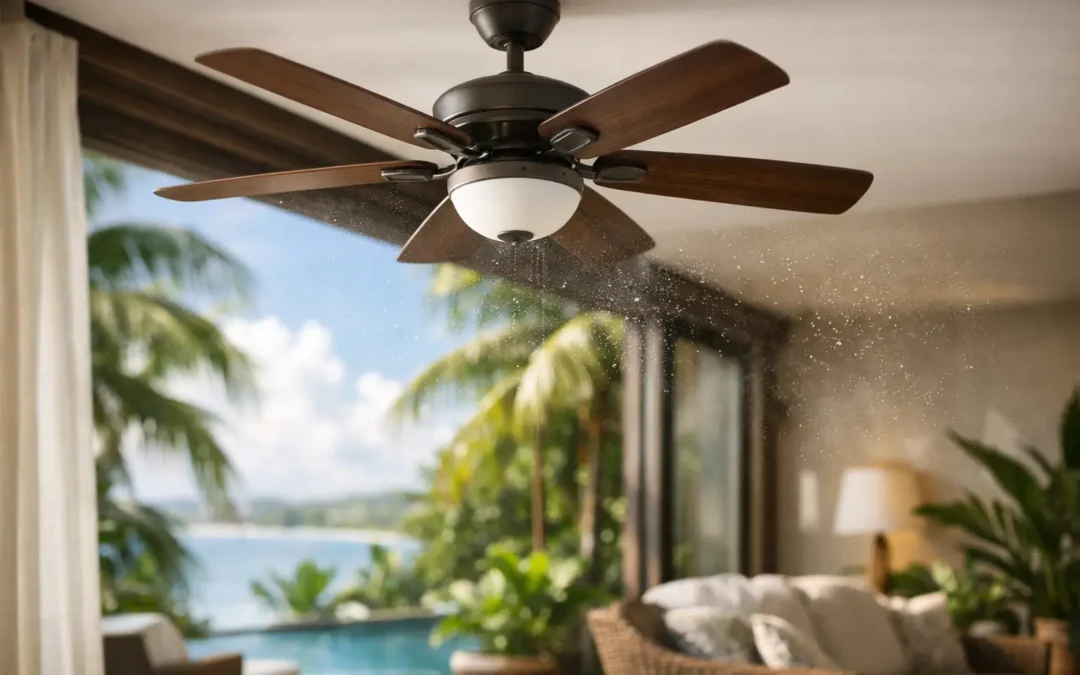
Step onto a screened lanai in July and you can feel right away whether a fan was chosen for looks or for Florida weather. The best ceiling fans for humid climates do more than move air. They resist moisture, hold up against corrosion, and keep working when heat and humidity would wear out a cheaper model fast.
For homeowners in Southwest Florida, that difference matters. A fan in a damp bathroom, covered patio, garage, or coastal-adjacent outdoor space deals with moisture day after day. If you pick the wrong type, you may end up with warped blades, rusted hardware, motor issues, or a fan that simply does not move enough air to make the room comfortable.
What makes the best ceiling fans for humid climates different?
Humidity affects both performance and lifespan. Moisture can get into motor housings, encourage corrosion on metal components, and damage blade materials that are not built for damp conditions. Even indoors, spaces like bathrooms, laundry rooms, and kitchens can expose a fan to much more moisture than a standard bedroom or living room.
That is why the first thing to check is the fan’s rating. A dry-rated fan is meant for interior rooms with controlled conditions. A damp-rated fan can handle moisture in covered outdoor areas or humid indoor spaces. A wet-rated fan is built for direct exposure to rain and heavier weather conditions. If a fan will be installed on an open patio or anywhere wind-driven rain can reach it, wet-rated is the safer choice.
In Florida, many homeowners assume a covered outdoor area automatically means a damp-rated fan is enough. Sometimes it is. Sometimes it is not. If the space is exposed during storms, or if humidity stays trapped for long periods, moving up to a wet-rated model often pays off over time.
How to choose the best ceiling fans for humid climates
The rating is only the start. A fan may be approved for moisture, but still fall short if the materials, motor, or size do not fit the space.
Blade materials matter more than most people think
Solid wood blades can look great, but they are not always the best fit for high-humidity environments. Over time, moisture can lead to warping, swelling, or finish problems. For covered patios, garages, and other damp locations, ABS plastic, composite, or all-weather molded blades usually perform better.
These materials are designed to resist moisture and hold their shape. That helps the fan stay balanced, which reduces wobble and stress on the motor. In practical terms, it means fewer issues and a longer service life.
Motor quality affects comfort and durability
In a humid climate, the motor works hard for long stretches of the year. A low-quality motor may become noisy, lose efficiency, or fail earlier than expected. Look for a sealed motor housing or models specifically marketed for outdoor or high-moisture use.
DC motors are often a smart upgrade. They are usually quieter, more energy efficient, and offer more speed settings than standard AC motors. The trade-off is cost. If budget is a concern, a well-built AC motor fan can still be a solid choice, but this is not the area where you want to go as cheap as possible.
Airflow should match the room, not just the fan’s appearance
Bigger is not always better, but undersizing is a common mistake. In humid areas, good airflow is the whole point. CFM, or cubic feet per minute, tells you how much air the fan moves. A stylish fan with low airflow may look right on the ceiling and still leave the room feeling sticky.
For larger living areas, lanais, and open spaces, prioritize airflow over decorative features. In smaller bathrooms or laundry areas, a compact fan may be enough, but it still needs to be rated correctly for moisture. Ceiling height also matters. A fan installed too high or too low will not perform as well and may create safety concerns.
Best fan features for Florida homes
A humid climate puts extra pressure on every part of a fan, so the details matter.
Corrosion-resistant finishes are worth looking for, especially near the coast or in outdoor settings. Stainless steel hardware, powder-coated surfaces, and finishes designed for marine or outdoor use can slow rust and staining. This may sound cosmetic, but corrosion can affect more than appearance over time.
Integrated LED lighting is another feature many homeowners want, particularly for patios and multi-use spaces. It can be convenient, but make sure the light kit is also approved for the installation area. A fan may be damp-rated while an add-on light kit is not.
Remote controls and wall controls are popular, but they should be installed correctly and matched to the fan model. In some cases, smart fan controls are a good fit for convenience and energy savings. In others, especially with older wiring, compatibility needs to be checked first.
Where homeowners often make the wrong choice
One common issue is choosing an indoor decorative fan for a humid room because it matches the style better. That usually works fine at first. Then the finish starts to pit, the blades droop, or the motor struggles. Moisture-related damage tends to show up after the return window is long gone.
Another mistake is focusing only on blade span. Homeowners may buy a large fan thinking it will cool better, but blade pitch, motor strength, and CFM all affect performance. A poorly designed 72-inch fan can move less useful air than a better-built 60-inch model.
Installation location also gets overlooked. Outdoor fans need proper support, secure mounting, and electrical components suited to the environment. Bathrooms and laundry rooms may require careful placement to meet code and avoid interference with other fixtures. This is where professional installation can prevent both safety issues and frustrating performance problems.
Indoor versus outdoor use in humid climates
Not every humid area needs the same solution. For a bedroom or family room with central air conditioning, humidity may be present but still controlled enough for a dry-rated indoor fan. For a bathroom, covered patio, garage, or porch, moisture resistance becomes much more important.
Think about exposure in real terms. Does the space trap steam? Does outside air move through it daily? Can rain blow in during storms? In coastal and storm-prone areas like Cape Coral or North Fort Myers, that extra exposure can push a borderline installation into damp-rated or wet-rated territory quickly.
If you are unsure, it is usually better to choose more protection rather than less. The price difference between a standard fan and one built for humid conditions is often smaller than the cost of early replacement.
Is an expensive fan always better?
Not always. Price can reflect motor quality, materials, finish durability, brand reputation, or added features, but it can also reflect design trends that do little for performance. A mid-range fan with the right rating, strong airflow, and durable materials is often a better buy than a premium decorative model that is not built for humidity.
That said, very low-cost fans are more likely to cut corners in the places that matter most. Thin blade materials, lower-grade hardware, and weaker motors tend to show their limits faster in hot, damp environments. If a fan is going into a space you use every day, durability should be part of the value calculation.
Installation and maintenance still matter
Even the best fan can disappoint if it is installed incorrectly. Mounting height, downrod length, electrical box support, and blade clearance all affect safety and performance. In humid or outdoor locations, proper electrical connections and correct rating compliance matter just as much.
Routine maintenance is simple but helpful. Wipe down blades to prevent buildup, check for loose hardware, and watch for early signs of rust or wobble. If the fan starts making new noises or the speed control becomes inconsistent, it is worth having it checked before the issue gets worse.
For homeowners who want the job handled safely, Infinite Electric & Air can help evaluate the space, wiring, and installation requirements before a fan is mounted. That is especially useful when the project involves a patio, lanai, remodel, or older home electrical setup.
The right ceiling fan should make a humid space feel more usable, not become another item on your repair list. If you choose one that is rated for the environment, built with moisture-resistant materials, and sized for real airflow, you will feel the difference every time the weather turns heavy.