
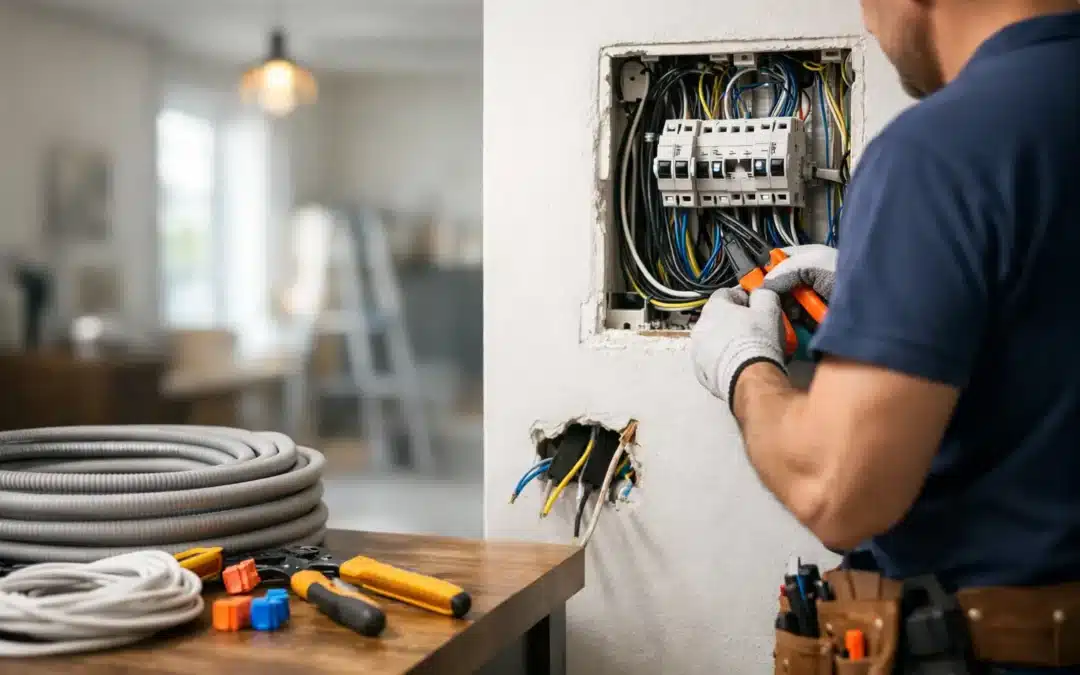
If you have flickering lights, two-prong outlets, warm switch plates, or a panel that has clearly seen better decades, you are probably not just wondering whether your home needs work. You are also asking about whole house electrical rewiring cost factors and what really drives the price up or down.
That question matters because rewiring is not a cosmetic upgrade. It is a safety project that affects how reliably your home handles daily electrical demand, storm-related surges, and the growing number of devices modern households use. For homeowners in Southwest Florida, it can also be part of making a house more resilient in a climate known for heat, humidity, and severe weather.
What affects whole house electrical rewiring cost factors?
The biggest cost driver is usually the amount of labor involved, not just the wire itself. Rewiring a home means more than pulling new conductors through walls. Electricians have to evaluate the existing system, plan new circuits, work around the structure of the home, remove or disconnect outdated wiring where appropriate, install devices, and make sure everything meets current code.
A smaller home with open attic access and a straightforward layout is usually less expensive to rewire than a larger home with limited access, multiple additions, or masonry walls. Two homes with the same square footage can still have very different project costs if one is easier to work in than the other.
The age of the home also plays a major role. Older homes often have wiring methods or service equipment that no longer match current safety standards. That does not automatically mean every old house needs a complete rewire, but if the wiring is deteriorated, improperly modified, or undersized for modern use, the scope of work can expand quickly.
Home size and layout
Square footage matters because more space typically means more circuits, more outlets, more switches, and more wire. But layout can matter just as much. A single-story home with good attic access is often simpler than a two-story home where electricians must fish wires through harder-to-reach wall cavities.
Open framing helps. Tight crawl spaces, finished ceilings, and block construction can slow the work considerably. In parts of Florida, concrete block homes are common, and that can affect how wires are routed and how much wall repair may be needed after the electrical work is done.
The number of bathrooms, kitchens, laundry areas, garages, outdoor living spaces, and major appliances also shapes the rewiring plan. These areas often require dedicated circuits or specialized protection, so the complexity goes beyond basic room count.
Existing wiring condition
Some rewiring jobs are full replacements. Others are more targeted upgrades that solve the real problem without replacing every run in the house. The condition of the current wiring determines where the project falls on that spectrum.
If an electrician finds brittle insulation, aluminum branch wiring, unsafe splices, overloaded circuits, or evidence of previous patchwork repairs, a more comprehensive approach may be the safest option. If parts of the system are still in good condition and compliant, the work may be more limited.
This is one reason estimates can vary. A price based on a quick visual impression is not the same as a price based on a thorough evaluation. Transparent pricing starts with identifying the actual condition of the system, not guessing from the age of the house alone.
Panel upgrades and service capacity
One of the most overlooked whole house electrical rewiring cost factors is whether the service panel also needs attention. Rewiring a home without addressing an undersized, outdated, or problematic panel can leave you with a better branch wiring system feeding into equipment that still needs replacement.
Many older homes were not designed for today’s electrical loads. Air conditioning systems, kitchen appliances, tankless water heaters, EV chargers, home offices, and whole-home surge protection all add demand. If the existing service is too small, the project may include a panel upgrade, meter work, grounding improvements, or coordination with the utility.
That adds cost, but it can also add long-term value. A properly sized and code-compliant panel gives your home room to operate safely now and adapt later.
Access to walls, ceilings, and attic spaces
Access is where the project often gets more expensive than homeowners expect. Electricians do everything they can to minimize disruption, but wires still have to travel through the structure somehow.
Homes with accessible attics, unfinished utility spaces, or removable surfaces are generally easier to rewire. Homes with solid plaster walls, extensive built-ins, finished garages, or low-clearance areas can require more time and more repair work. If the job involves opening drywall, there may also be patching and painting costs after the electrical phase is complete.
This is why a home that seems modest in size may still carry a higher estimate. Labor follows difficulty, not just square footage.
Code requirements and safety upgrades
Rewiring is also a code-compliance project. Once major electrical work begins, the system often needs to meet current standards in the areas being updated. That can include GFCI protection, AFCI protection, tamper-resistant receptacles, proper grounding and bonding, smoke detector interconnection, and surge protection depending on the scope and local requirements.
For Florida homeowners, surge protection is worth special attention. With frequent storms and utility disturbances, protecting sensitive electronics and major appliances is more than a nice extra. It is often a practical investment in a region where weather puts electrical systems to the test.
These upgrades increase project cost, but they are not fluff. They are part of bringing the home closer to modern safety expectations.
Permits, inspections, and local requirements
Permits and inspections are another cost factor, and they should be part of the conversation from the start. Proper permitting helps make sure the work is reviewed and documented, which protects both safety and resale value.
Requirements can vary by jurisdiction, and local experience matters. A licensed electrical contractor who regularly works in places like Cape Coral, Fort Myers, or North Fort Myers will usually have a better feel for what local inspectors expect and how to plan the job efficiently.
Skipping permits may look cheaper on paper, but it can create much bigger problems later, especially if you sell the home or file an insurance claim after an electrical issue.
Occupied homes versus empty homes
Whether you are living in the house during the project can affect cost and scheduling. Rewiring an occupied home often requires more staging, more protection of furnishings, and more coordination around your daily routine. The work may be done in phases to keep parts of the home usable.
An empty home is usually simpler and sometimes faster to complete. That does not always mean dramatically lower pricing, but it can reduce labor complications and make access easier.
For some homeowners, the real question is not just price but disruption. A lower-cost approach is not always the best fit if it means weeks of inconvenience.
How electricians estimate a rewiring project
A reliable estimate usually starts with an on-site inspection. The electrician looks at the panel, existing wiring, home layout, access points, grounding, and the number of devices and circuits needed. They may also ask about future plans, such as adding a generator connection, remodeling a kitchen, or installing heavier electrical loads.
That bigger-picture planning can prevent duplicate work. For example, if you already know you want a panel upgrade or generator-ready setup, it often makes sense to address those items during the rewiring project rather than after everything is closed back up.
At Infinite Electric & Air, that kind of planning is part of doing the job responsibly. Homeowners deserve clarity about what is necessary, what is optional, and what may save money over the long run.
When a partial rewire may make sense
Not every house needs a full top-to-bottom rewire. Sometimes the smarter path is replacing the most problematic circuits, updating unsafe wiring, upgrading the panel, and adding protection where the home is most vulnerable.
That can be a cost-effective solution if large portions of the existing system are still sound. The trade-off is that partial work may leave some older components in place, so it is not always the right fit for a home with widespread electrical issues or major renovation plans.
A trustworthy electrician should be willing to explain both options clearly. If a full rewire is necessary, they should be able to show you why. If it is not, they should not push it.
What homeowners should ask before approving the work
Before moving forward, ask what is included in the estimate, whether panel work is part of the scope, what kind of wall access may be needed, who handles permits, and whether repairs to drywall or finishes are included. Ask if the home will need code-related upgrades beyond basic wiring replacement. And ask how the contractor plans to keep your home safe and functional during the project.
Good answers should be direct, specific, and easy to understand. Electrical work is technical, but the pricing should not feel mysterious.
Rewiring a home is a major investment, but it is also one of the clearest ways to improve safety, reliability, and peace of mind. If your wiring is outdated or showing warning signs, the right next step is not chasing the lowest number. It is getting a careful evaluation from a licensed professional who can explain the real cost factors in plain English and help you make a smart decision for your home.