
If your AC struggles to keep the back bedroom cool while the living room feels like a freezer, you are already asking the right question: mini split vs central air. For many Southwest Florida homeowners, the better system is not the one with the biggest name recognition. It is the one that matches your home’s layout, ductwork, comfort goals, and long-term operating costs.
Both systems can cool a house effectively. The difference is how they deliver that cooling, how much control they give you, and what they ask of your home in return. In a hot, humid climate where air conditioning runs hard for much of the year, those details matter.
Mini split vs central air: the basic difference
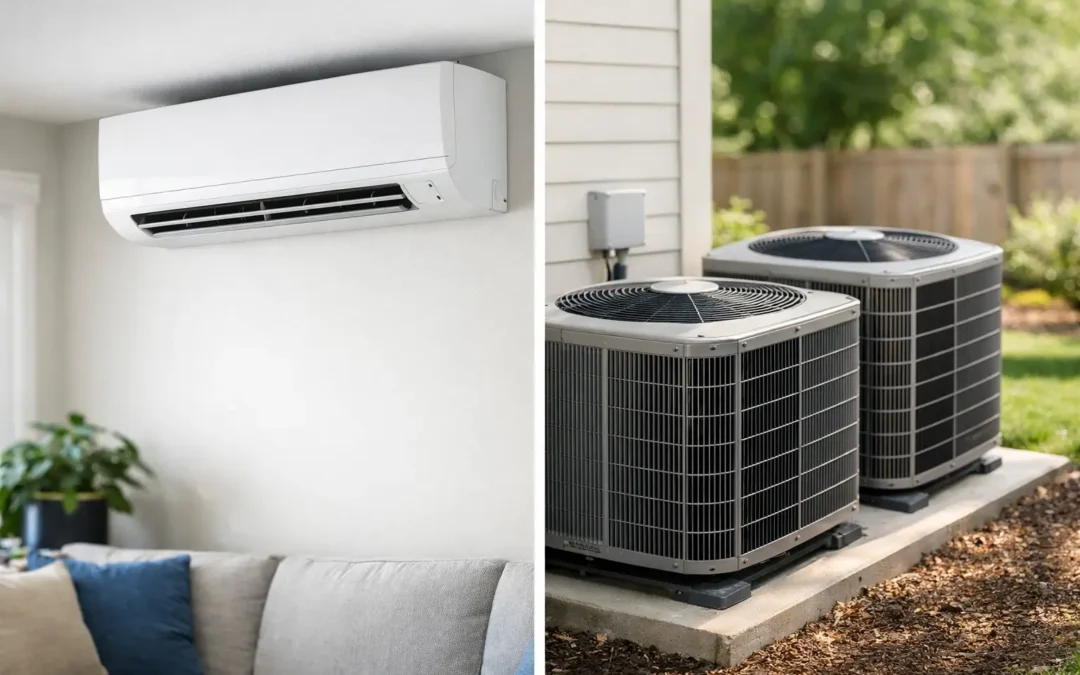
A central air system cools your whole home through a network of ducts. One indoor air handler or furnace coil works with an outdoor condenser, and conditioned air travels room to room through supply vents. If your house already has well-designed ductwork in good shape, central air often feels familiar and convenient.
A mini split system also uses an outdoor unit, but instead of pushing air through ducts, it connects to one or more indoor air handlers mounted in specific rooms or zones. Each zone can usually be controlled independently. That means one room can stay cooler without forcing the rest of the house to match it.
The biggest practical difference is simple. Central air treats the house more like one connected system. Mini splits treat the house as a collection of spaces with different cooling needs.
When central air makes more sense
Central air is often the better fit when you want whole-home cooling with a more uniform feel. If your house already has ductwork that is properly sized, sealed, and insulated, installing or replacing a central system can be straightforward. For many families, that matters. They want one thermostat, one system, and consistent temperatures throughout the home.
Central air can also be a strong choice in larger homes with many rooms that are all used regularly. If everyone is spread throughout the house all day, zoning may not offer as much savings as people expect. In that case, cooling the whole home through one system can be practical.
There is also the matter of airflow. A well-designed central system can do a good job managing indoor humidity, circulating air, and filtering it through one central return and filter setup. In Florida, humidity control is not a side issue. It is a comfort issue, an indoor air quality issue, and sometimes a mold prevention issue.
That said, central air only performs as well as the duct system behind it. Leaky ducts, poorly balanced airflow, and hot attic runs can waste energy and reduce comfort fast.
When a mini split is the smarter option
Mini splits shine when the home does not fit the one-size-fits-all model. If you have a room addition, a converted garage, an enclosed lanai, or a part of the house that never seems to cool properly, a mini split can solve that without reworking the entire duct system.
They are also appealing in older homes without existing ducts. Installing brand-new ductwork can be invasive and expensive, especially if attic or crawl space access is limited. A mini split can often deliver efficient cooling with less disruption.
Another major benefit is zone control. If you only use the guest room on weekends or keep one home office cooler during the day, a mini split lets you target cooling where you need it. That can help reduce unnecessary energy use, especially in households where some rooms sit empty for long stretches.
Mini splits are also known for high efficiency ratings. Because there are no ducts, there is no duct loss. In homes with aging or poorly sealed ducts, that can be a meaningful advantage.
The cost question is not as simple as it looks
Homeowners often ask which system is cheaper. The honest answer is that it depends on the house.
If your home already has solid ductwork and you are replacing an existing central AC, central air may be the more cost-effective installation. The infrastructure is already there, so the project may involve less labor and fewer design changes.
If you do not have ducts, or if your ducts are undersized, damaged, or located in harsh attic conditions, mini splits may compare more favorably. Avoiding a major duct installation can shift the numbers quickly.
Operating costs can also vary. Mini splits may use less energy in homes where only certain zones need frequent cooling. Central air may be competitive in homes where nearly every room is occupied most of the time. The wrong system in the wrong house can cost more to run, even if it looked cheaper upfront.
That is why system sizing and home evaluation matter so much. Bigger is not better. More expensive is not always better either.
Mini split vs central air for Florida humidity
This is where the conversation gets more specific for local homeowners. In Southwest Florida, cooling is only half the battle. Moisture removal is what makes indoor air feel comfortable instead of sticky.
Central air systems can be very effective at dehumidification when they are properly sized and installed. A system that runs at the right cycle length pulls moisture out of the air while keeping temperatures steady. But if a system is oversized, it may cool the house too quickly and shut off before removing enough humidity.
Mini splits can also manage humidity well, especially inverter-driven models that adjust output gradually. But performance depends on the design of the system and how the zones are used. If doors stay closed and air movement between rooms is limited, humidity conditions can vary more from one area to another.
For Florida homes, this is not a place to guess. The best answer comes from looking at insulation, window exposure, home layout, and how the space is actually used.
Appearance, maintenance, and day-to-day living
Central air is mostly out of sight. You see the thermostat, the vents, and the outdoor equipment. For homeowners who prefer a cleaner visual look indoors, that is a real benefit.
Mini splits place indoor units directly in the rooms they serve. Some homeowners do not mind that at all. Others strongly prefer not to see wall-mounted air handlers. There are other indoor unit styles available in some applications, but appearance is still part of the decision.
Maintenance differs too. Central air requires regular filter changes, coil care, drain line attention, and duct system evaluation. Mini splits need their own routine maintenance, including cleaning filters and indoor heads, checking condensate drainage, and inspecting refrigerant components. With multiple indoor units, there are simply more individual components to keep clean.
Neither system should be treated as install-it-and-forget-it. In Florida’s climate, regular service helps protect efficiency, comfort, and equipment life.
Which system is better for resale?
In many cases, central air still feels more standard to buyers, especially in homes designed around ducted comfort. But that does not automatically make it better for resale. A well-installed mini split system can be a strong selling point if it solves a known comfort problem or supports an addition that would otherwise be hard to cool.
What buyers tend to notice most is whether the home feels comfortable, whether utility costs seem reasonable, and whether the system appears professionally installed and maintained. Quality of installation often matters more than the label on the equipment.
How to choose between mini split vs central air
Start with your house, not the equipment brochure. Do you already have ductwork, and is it in good condition? Are some rooms always warmer than others? Are you cooling the whole home evenly, or mostly a few key spaces? Is this a full-system replacement, a renovation, or a fix for one problem area?
If your goal is consistent whole-home comfort and your duct system is solid, central air may be the better path. If your goal is targeted cooling, flexibility, or a solution for a home without good ducts, mini splits deserve a serious look.
For many homeowners, the deciding factor is not which system is better in general. It is which system is better for this house, this family, and this budget. That is why a professional load calculation and honest evaluation matter. A trustworthy HVAC contractor should explain the trade-offs clearly, not push one option on every home.
At Infinite Electric & Air, that is the approach we believe in. The right recommendation should make your home safer, more comfortable, and more efficient for the long run.
If you are weighing mini split vs central air, the best next step is not to chase the trend. It is to get a clear assessment of how your home handles heat, humidity, and airflow so your next system actually solves the problem you feel every day.