
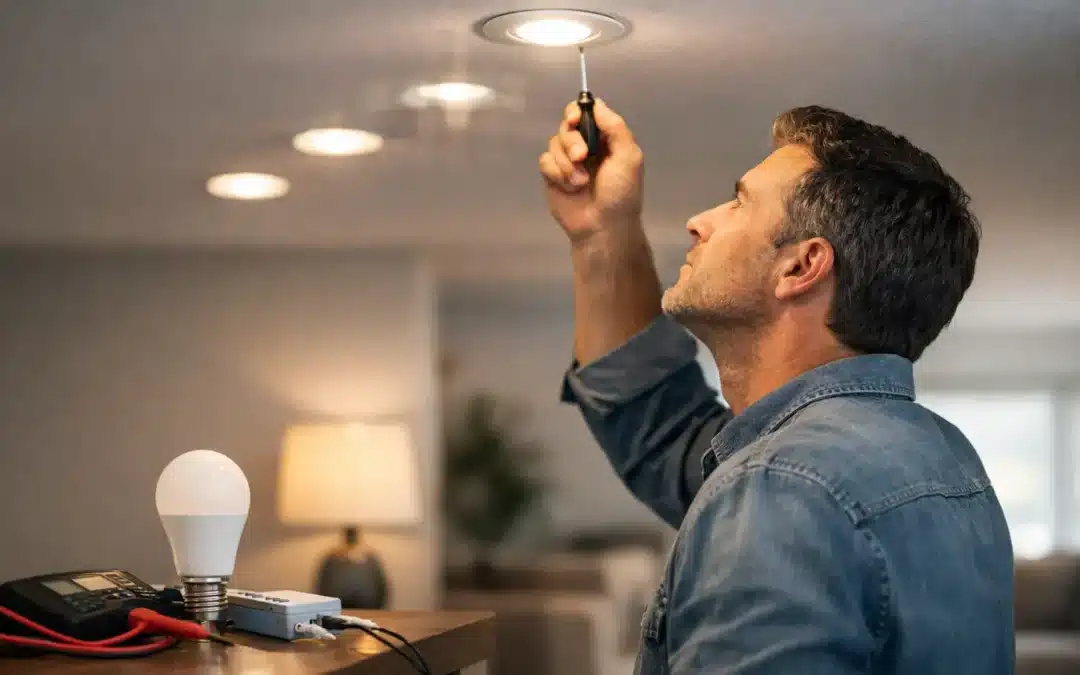
A flickering LED light can be more than a minor annoyance. That quick flash over the kitchen counter or pulse in the living room may point to a mismatched dimmer, a failing bulb, or an electrical connection that needs professional attention. Knowing how to fix flickering LED lights starts with recognizing the pattern and addressing the simple possibilities without taking risks around wiring.
For Southwest Florida homeowners, flickering can also become more noticeable during storms, heavy AC use, or power fluctuations. While some causes are easy to correct, lights that flicker throughout the home should never be ignored.
Start With the Bulb and Fixture
The safest first step is to turn off the switch and allow the bulb to cool. Make sure the LED bulb is seated securely in the socket. A bulb that has loosened slightly over time can lose consistent contact and flicker when the fixture is bumped or vibrates.
If tightening the bulb does not help, replace it with a quality LED bulb of the correct base type and wattage equivalent for the fixture. LED bulbs use far less energy than incandescent bulbs, but they can still fail. Heat buildup, lower-quality components, and frequent power fluctuations can shorten an LED bulb’s service life.
Try the replacement bulb in the same fixture. If the new bulb works normally, the original bulb was likely the problem. If several bulbs flicker in one fixture, however, the fixture, switch, or wiring may be involved.
Also look at where the fixture is installed. An enclosed fixture can trap heat around a bulb that is not rated for enclosed use. Over time, that excess heat may lead to early failure, reduced brightness, or flickering. Use LEDs specifically labeled for enclosed fixtures when needed.
Check Whether the Dimmer Is LED Compatible
A dimmer switch is one of the most common reasons LED lights flicker. Older dimmers were designed for incandescent bulbs, which draw more power and behave differently from LEDs. When paired with LED bulbs, an incompatible dimmer may cause flashing, humming, uneven dimming, or lights that will not turn fully off.
First, confirm that both the dimmer and the bulbs are labeled as dimmable. A non-dimmable LED should never be used on a dimmer circuit. Next, check the dimmer’s minimum and maximum load requirements. A dimmer that once controlled several high-wattage incandescent bulbs may not have enough load when those bulbs are replaced with low-wattage LEDs.
If the flickering happens only when lights are dimmed to a low setting, the fix may be as simple as adjusting the dimmer’s low-end trim setting. Not every dimmer has this feature, and the adjustment method varies by model. If the dimmer is older or was installed before LED lighting became common, replacing it with an LED-rated dimmer is often the better long-term solution.
Do not remove a switch cover or replace a dimmer unless you are comfortable doing so safely and understand how to shut off and verify power at the breaker. A licensed electrician can quickly confirm compatibility and install the correct control.
Notice When and Where the Flickering Happens
The timing of the flicker provides useful clues. A single light that flickers occasionally usually has a localized cause, such as a bulb, socket, fixture, or dimmer. Multiple lights flickering in the same room may point to a switch, circuit, or connection issue.
When lights flicker in several rooms, especially when a major appliance starts, the concern is greater. Your AC system, refrigerator, pool equipment, microwave, or dryer can create a brief demand for power when it cycles on. A small, momentary change in brightness can occur, but pronounced or frequent flickering is not something to dismiss.
Pay attention to whether the issue occurs during specific conditions, such as:
- When the air conditioner starts or runs during peak afternoon heat
- When a large appliance, pool pump, or power tool turns on
- During storms or after a nearby power interruption
- Only on one circuit, in one room, or across the entire home
These observations can help an electrician identify whether the issue is inside your home or related to incoming utility power. In Florida, weather-related power disturbances can occur, but they should not be used to explain away persistent electrical symptoms.
Rule Out Overloaded Circuits
An overloaded circuit can cause lights to dim or flicker when too many devices are pulling power from the same circuit. This is especially common in garages, kitchens, workshops, and older homes that were not designed for today’s number of appliances, chargers, electronics, and entertainment equipment.
You can safely test for a pattern by unplugging nonessential devices from the affected area and watching whether the flickering improves. Avoid relying on power strips or extension cords as permanent solutions. They may add convenience, but they do not increase the capacity of the circuit behind them.
If a breaker trips, feels hot, or needs to be reset repeatedly, stop using that circuit and arrange for an electrical inspection. Repeated breaker trips are a protective warning, not an inconvenience to work around. The circuit may be overloaded, a device may be faulty, or there may be a wiring problem that requires repair.
When Flickering Points to Loose Wiring
Loose electrical connections can create intermittent flickering because power is not flowing consistently through the circuit. The connection could be at a switch, outlet, fixture, junction box, breaker, electrical panel, or even at the service equipment. These are not DIY repairs.
Loose wiring can generate heat and, in serious cases, create an arc fault. That is why a flickering light paired with buzzing, crackling, a warm switch plate, a burning odor, discoloration, or a sparking outlet requires prompt professional service. Turn off the affected circuit at the breaker if you can do so safely, and do not continue using the fixture or outlet.
The same caution applies if lights become suddenly brighter as well as dimmer. Significant changes in brightness across several fixtures can indicate a neutral connection problem. This can damage electronics and appliances, so it warrants an urgent evaluation by a licensed electrician.
How to Fix Flickering LED Lights Without Guessing
The goal is not to keep replacing bulbs until the flicker disappears. Start with the low-risk checks: secure the bulb, try a known-good compatible LED, and confirm that any dimmer is rated for LED use. Then observe the scope of the problem.
If one fixture continues to flicker after a bulb change, have the fixture and its connections inspected. If multiple lights flicker, the issue involves a breaker, warm outlet, unusual sounds, or inconsistent power throughout the home, skip further troubleshooting and call a professional. Electrical problems are often hidden behind walls and inside panels, where guesswork can create a much larger safety issue.
A qualified electrician can test voltage, inspect connections, evaluate circuit loading, and determine whether your panel or service equipment needs attention. For homes exposed to frequent storm activity, whole-home surge protection can also help protect sensitive electronics from voltage spikes. It is valuable protection, but it does not replace repairs for loose wiring, overloaded circuits, or an aging electrical panel.
When to Call an Electrician Right Away
Call for professional electrical service promptly if you notice flickering along with a burning smell, buzzing, sparks, a hot outlet or switch, frequent breaker trips, or lights that brighten and dim dramatically. If the problem affects multiple rooms or began after storm damage, an inspection is also the right move.
For homeowners in Cape Coral, Fort Myers, North Fort Myers, Lehigh Acres, Punta Gorda, and Estero, Infinite Electric & Air can help identify the source of persistent flickering and recommend a clear, safety-focused repair. A steady light should be the expectation in your home, not something you have to hope for each time you flip the switch.