
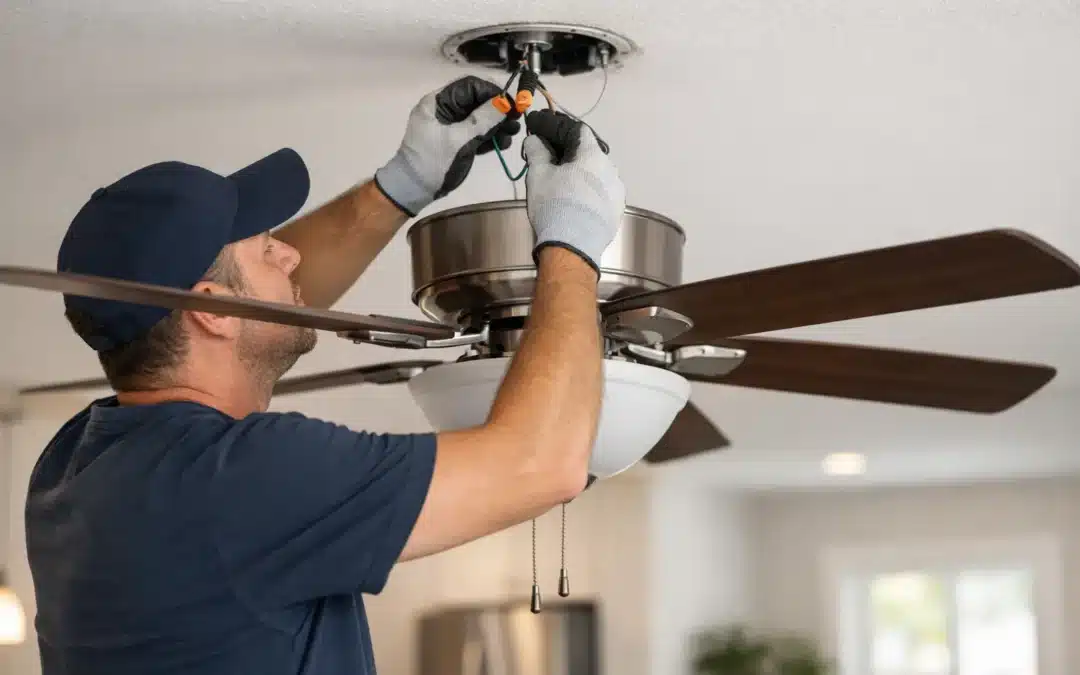
A light fixture in the right spot can make homeowners assume a fan swap is simple. Sometimes it is. But ceiling fan installation with existing wiring depends on more than seeing wires in the ceiling box. The real question is whether that wiring, the electrical box, and the switch setup are actually rated and configured for a moving fixture that adds weight, vibration, and ongoing load.
In Southwest Florida, that distinction matters. Ceiling fans are not just decorative. They help with comfort, support airflow, and can take some pressure off your cooling system during long stretches of heat. If you are replacing a basic light with a fan, or upgrading an older fan that wobbles, hums, or trips a breaker, it helps to know what an electrician is looking for before installation begins.
What ceiling fan installation with existing wiring really means
Existing wiring usually means there is already power at the ceiling location. That could come from a previous ceiling light, an older fan, or a switched outlet setup that was modified at some point. On the surface, this sounds ideal because it may reduce labor and avoid opening walls or ceilings.
Still, existing wiring does not automatically mean fan-ready wiring. A standard light fixture box is often not designed to support the weight and motion of a ceiling fan. A fan-rated box is built to handle both. That one detail is a major safety issue, not a minor upgrade.
The wiring itself also has to be evaluated. The conductor size, grounding, condition of the insulation, and how the switch leg was originally run all affect what can be installed and how the controls will work. In older homes, especially where previous electrical work was done in stages over many years, what is behind the ceiling can be different from what the room layout suggests.
When existing wiring makes the job easier
The best-case scenario is straightforward. There is power at the ceiling, the box is fan-rated, the circuit has adequate capacity, the grounding is correct, and the wall switch setup matches the type of fan being installed. In that case, installation is often relatively direct.
This is common when a home already had a ceiling fan in that location and the new fan is a replacement. Even then, a careful inspection still matters. Older fan brackets loosen over time, wire connections can deteriorate, and some older boxes no longer meet current expectations for support and safety.
It can also be fairly simple when a builder prewired a room for a future fan. Many bedrooms and living areas have ceiling wiring and a wall switch already in place, but the homeowner may have only used a light kit or no fixture at all. If the rough-in was done correctly, that can save time and cost.
When existing wiring is not enough
This is where homeowners can run into surprises. If the existing ceiling box is only rated for a light fixture, it needs to be replaced before a fan can be installed safely. A fan creates movement every time it runs. That constant motion puts stress on the box, bracket, and mounting hardware.
Switching can be another issue. Some homeowners want separate wall controls for the fan motor and the light kit, but the existing wiring may only support one switched function. You can still install the fan in many cases, but your control options may be different. You might use pull chains, a remote, or need additional wiring if you want separate wall switches.
Then there is circuit capacity. If the fan is being added to a circuit that is already carrying heavy loads, especially in a room with multiple electronics or lighting upgrades, the circuit should be checked. The fan itself does not usually draw a large amount of power, but electrical work should always be evaluated as part of the whole circuit, not as a single isolated fixture.
The box matters more than most people think
One of the most overlooked parts of ceiling fan installation with existing wiring is the electrical box itself. Homeowners often focus on the fan style, blade span, or whether it has a light. The box above the ceiling is what determines whether the fan has a safe foundation.
A fan-rated box is secured differently than many standard light boxes and is tested for the kind of support a fan requires. If the existing box is plastic, loosely mounted, or attached in a way that was only intended for a lightweight fixture, it may not be suitable.
This is not an area for guesswork. A fan that seems stable at first can begin wobbling later, especially after months of regular use. That movement can damage the mounting assembly or create a real hazard over time.
Control options depend on the wiring layout
Many homeowners want a clean, convenient setup. That usually means one wall switch for the fan and one for the light, or a remote that handles both. Whether that is possible depends on how the existing wiring was run.
If only a single switched conductor is present, the fan and light may share control unless the fan includes a remote receiver or another approved control method. That is not necessarily a problem, but expectations should match the wiring in place.
Smart controls add another layer. Some fans are designed for integrated smart features, while others need specific wiring arrangements to work reliably. Compatibility between the fan, switch, and existing electrical setup should be checked before installation, not after the fan is already mounted.
Why professional installation is often the safer choice
A ceiling fan may look like a simple fixture, but installation combines structural support and electrical safety. That matters in any home, and it matters even more when the existing wiring is older, unclear, or modified.
A licensed electrician can confirm whether the ceiling box is fan-rated, inspect the circuit, verify proper grounding, and make sure the controls are wired correctly. That helps prevent common problems like wobbling, flickering lights, nonworking switches, tripped breakers, and unsafe mounting.
For homeowners in older neighborhoods or homes that have had multiple remodels, professional evaluation can prevent a small project from turning into a repeated repair. It also helps ensure the finished installation looks clean and works the way you expect from day one.
A few Florida-specific considerations
In Southwest Florida, ceiling fans often run much more often than they do in other parts of the country. They are part of everyday comfort for bedrooms, lanais, living rooms, and covered outdoor spaces. That higher usage makes proper installation even more important.
Humidity can also expose weaknesses in poor installations over time. Corrosion, loose hardware, and aging connections can become more noticeable in coastal and high-moisture environments. If you are installing a fan outdoors or in a damp-rated location, the fan itself must also be appropriate for that setting.
Storm season is another reason to take electrical work seriously. Homes in areas like Cape Coral and North Fort Myers benefit from electrical systems that are installed correctly and checked carefully, especially when adding or upgrading fixtures that will be used regularly throughout the year.
What to expect during a service visit
A professional ceiling fan installation usually starts with an inspection of the existing box, wiring, switch controls, and the fan you want installed. If the wiring is suitable and the box is fan-rated, the work may move quickly. If not, the electrician will explain what needs to be updated and why.
Transparent pricing matters here. Homeowners should know whether the project is a direct replacement, a box upgrade, a control modification, or a more involved wiring adjustment. Those details affect labor, materials, and timing.
At Infinite Electric & Air, that practical approach matters because most homeowners are not looking for technical jargon. They want to know if the fan can be installed safely, what changes are needed if it cannot, and how to get the job done right without surprises.
Signs you should not ignore
If you already have a ceiling fan and are planning a replacement, a few warning signs deserve attention before the new fan goes up. A wobbling fan, clicking sounds, a fixture that shifts when touched, flickering lights, or a switch that behaves inconsistently can all point to issues with mounting, wiring, or controls.
These symptoms do not always mean a major repair is needed, but they are worth checking. Reusing a questionable box or old wiring connection just because power is present can create avoidable problems later.
A new ceiling fan should feel secure, operate quietly, and respond predictably to its controls. If the setup in the ceiling cannot support that, the right fix is to correct the infrastructure first.
If you are considering a fan where a light fixture already exists, think beyond whether there are wires in the box. Think about support, control, safety, and long-term reliability. A properly installed ceiling fan should make your home more comfortable without leaving you wondering what is happening above the ceiling every time you turn it on.