
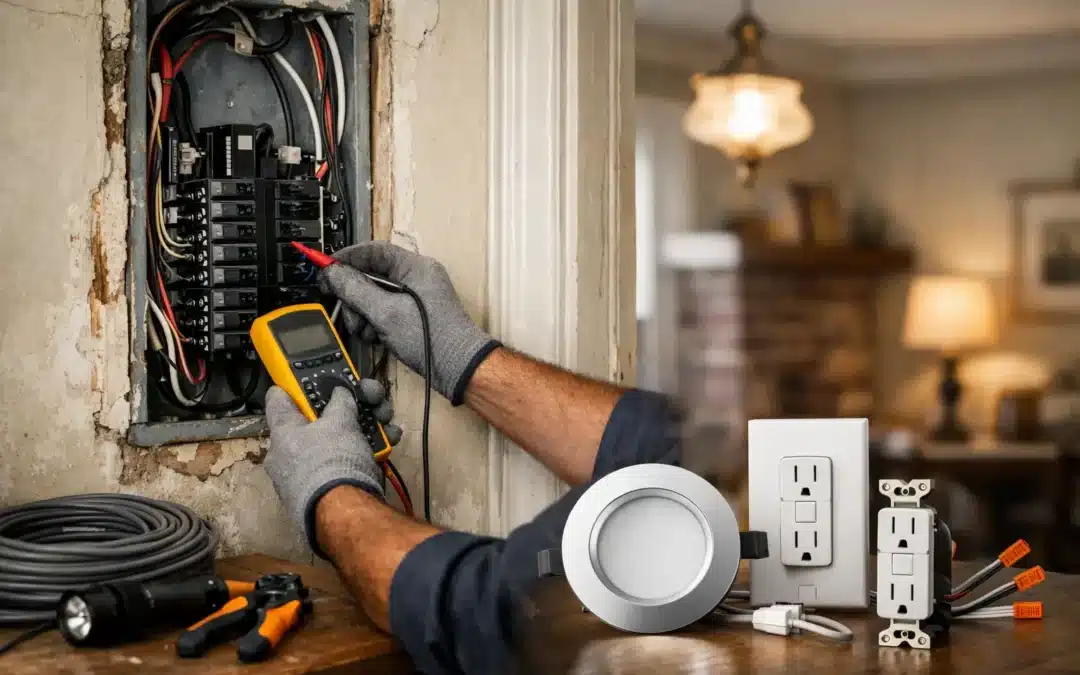
That flicker when the microwave starts, the outlet that feels warm, the breaker that trips when the air fryer and toaster run together – older homes have a way of telling you their electrical system is falling behind. The best electrical upgrades for older homes are not just about convenience. They are about safety, reliability, and making sure your home can handle the way your family actually lives today.
In Southwest Florida, that conversation gets more serious. Between heavy AC use, summer storm activity, and sensitive electronics throughout the home, an outdated electrical system can become more than a minor annoyance. If your home was built decades ago and has not had a meaningful electrical update, a few strategic upgrades can make a major difference.
Which electrical upgrades matter most in an older home?
Not every older home needs a full rewire, and not every homeowner needs to start with the same project. The right plan depends on the age of the home, the condition of the wiring, the size of the electrical service, and how much demand your household puts on the system.
That said, a handful of upgrades consistently rise to the top because they address the most common risks and limitations in older properties. Some protect people. Some protect equipment. Some simply allow the home to function without overloaded circuits and constant workarounds.
1. Electrical panel upgrade
If there is one upgrade that often changes everything, it is the panel. Many older homes were built for a time when households used fewer appliances, fewer electronics, and far less air conditioning demand. A panel that was once adequate may now be undersized, outdated, or no longer considered safe.
A panel upgrade can give your home the capacity it needs for modern living. It can also resolve issues like frequent breaker trips, limited room for new circuits, and difficulty supporting larger loads such as a new HVAC system, EV charger, or whole-home generator connection.
This is also where safety matters most. Some older panels have known reliability concerns, and age alone can affect breaker performance. If breakers do not trip when they should, wiring can overheat. If you are planning any major home improvements, the panel is often the first place a licensed electrician should evaluate.
Signs your panel may be outdated
Common warning signs include buzzing at the panel, rust or corrosion, breakers that trip repeatedly, lights that dim under load, or a panel that still uses fuses instead of breakers. Even if nothing seems obviously wrong, age and limited capacity are enough reasons to have it inspected.
2. Whole-home surge protection
In Florida, surge protection is not a luxury item. It is a practical layer of defense. Storms, lightning activity, utility switching, and internal surges from large appliances can all send excess voltage through your electrical system.
A whole-home surge protector helps shield expensive electronics and appliances, including TVs, computers, refrigerators, smart home devices, and HVAC equipment. Point-of-use surge strips still have value, but they are not a substitute for protection at the panel.
This upgrade is especially worthwhile in older homes because older electrical systems often were not designed with today’s volume of sensitive electronics in mind. The cost of surge protection is usually small compared to replacing damaged equipment.
3. GFCI and AFCI protection
Older homes often predate current code requirements for protective devices that are now standard in key areas. Ground fault circuit interrupter, or GFCI, protection helps reduce the risk of shock in places where water and electricity can meet, such as kitchens, bathrooms, garages, laundry rooms, and outdoor spaces.
Arc fault circuit interrupter, or AFCI, protection is designed to detect dangerous electrical arcing that can lead to fires. This type of protection is especially relevant in older homes where wiring connections may have loosened over time or where aging circuits are hidden behind walls.
Adding GFCI and AFCI protection does not always require tearing into the whole house, but it does require a proper evaluation. The exact solution may involve replacing certain breakers, updating outlets, or both. The benefit is simple: better protection in the places where older homes are most vulnerable.
4. Dedicated circuits for major appliances
One common issue in older homes is that too many things share the same circuit. That may not have been a problem when the house was built, but modern kitchens, laundry rooms, garages, and home offices draw much more power than they once did.
Dedicated circuits give high-demand appliances their own electrical path. That reduces nuisance tripping and lowers the risk of overheating from overloaded wiring. This is often recommended for microwaves, refrigerators, dishwashers, washers, dryers, garage refrigerators, and newer HVAC equipment.
It is not the flashiest upgrade, but it is one of the most useful. If you are constantly managing which appliances can run at the same time, your home is asking for circuit improvements.
5. Rewiring old or unsafe wiring
Some older homes still contain wiring materials or installation methods that deserve close attention. Cloth-insulated wiring, aging branch circuits, poorly executed past repairs, and ungrounded wiring can all create safety and performance concerns.
A full-house rewire is not always necessary. In many cases, targeted rewiring in problem areas is enough. The right approach depends on what an inspection finds. If the home has widespread deterioration, ungrounded outlets throughout, or evidence of overheating, a more extensive update may be the safer long-term decision.
This is one of those upgrades where trade-offs matter. Rewiring can be more disruptive and more expensive than other projects, especially in finished homes. But when the existing wiring is no longer dependable, patchwork fixes only go so far.
6. Grounded outlets and safer receptacles
Two-prong outlets are a common clue that a home has not kept up with electrical changes. Without proper grounding, your electronics have less protection, and some devices may not operate as intended.
Upgrading outlets can improve both safety and usability. In some homes, that means installing properly grounded three-prong outlets. In others, the solution may involve GFCI protection where grounding upgrades are not practical in the short term. The correct fix depends on how the circuits are wired and what the code allows.
This is also a good time to replace damaged, loose, or worn receptacles. An outlet that no longer holds a plug securely is not just annoying. It can create heat and arcing over time.
7. Generator readiness or generator installation
Power outages hit older homes harder when the electrical system is already strained. In storm-prone areas, generator planning is one of the smartest upgrades a homeowner can make. That does not always mean installing a whole-home generator immediately, although many homeowners do choose that route.
Sometimes the first step is making the home generator-ready with a transfer switch, panel modifications, or a load management plan. That way, when an outage becomes more than an occasional inconvenience, the home is already prepared for a smoother installation.
For households with medical devices, refrigerated medications, work-from-home needs, or simply a desire to keep the AC running during long outages, generator planning adds real peace of mind.
8. Better lighting and modern switches
Lighting upgrades are often treated as cosmetic, but in older homes they can solve real electrical problems. Replacing outdated fixtures, adding recessed lighting, updating switches, and improving outdoor lighting can all make the home safer and more functional.
This is also an opportunity to add dimmers, timers, motion sensors, or smart controls where they make sense. In entryways, garages, and exterior walkways, better lighting is partly about comfort and partly about safety.
If your lighting still depends on old fixtures, brittle wiring connections, or a switch layout that no longer fits how you use the space, this upgrade can deliver more value than most homeowners expect.
How to prioritize the best electrical upgrades for older homes
The best place to start is not with a wishlist. It is with an inspection by a licensed electrician. A professional assessment can identify what is urgent, what is recommended, and what can wait.
In general, safety issues come first. That includes problematic panels, damaged wiring, lack of protection in wet areas, and signs of overheating. Capacity improvements come next, especially if your home struggles with modern appliances or planned additions. Convenience upgrades, like lighting changes and extra outlets, matter too, but they should follow the work that protects the home itself.
If budget is a concern, phased upgrades often make sense. You do not have to do everything at once. A clear plan lets you handle the highest-priority items now and schedule the rest over time without guessing.
Why local conditions matter
Electrical recommendations are never one-size-fits-all, and that is especially true in Southwest Florida. Homes here deal with long cooling seasons, frequent thunderstorms, and outage risks that can put extra pressure on aging systems. A panel that barely keeps up in mild weather may show its limitations fast during peak summer demand.
That is why upgrades like surge protection, generator readiness, and panel capacity deserve serious attention in this region. They are not just about modernization. They are about making your home more resilient under real local conditions.
When older electrical systems are updated thoughtfully, daily frustrations usually improve right away. More importantly, the home becomes safer, more dependable, and better prepared for whatever comes next. If your house has been giving you warning signs, it is worth listening before a small issue turns into an emergency.