
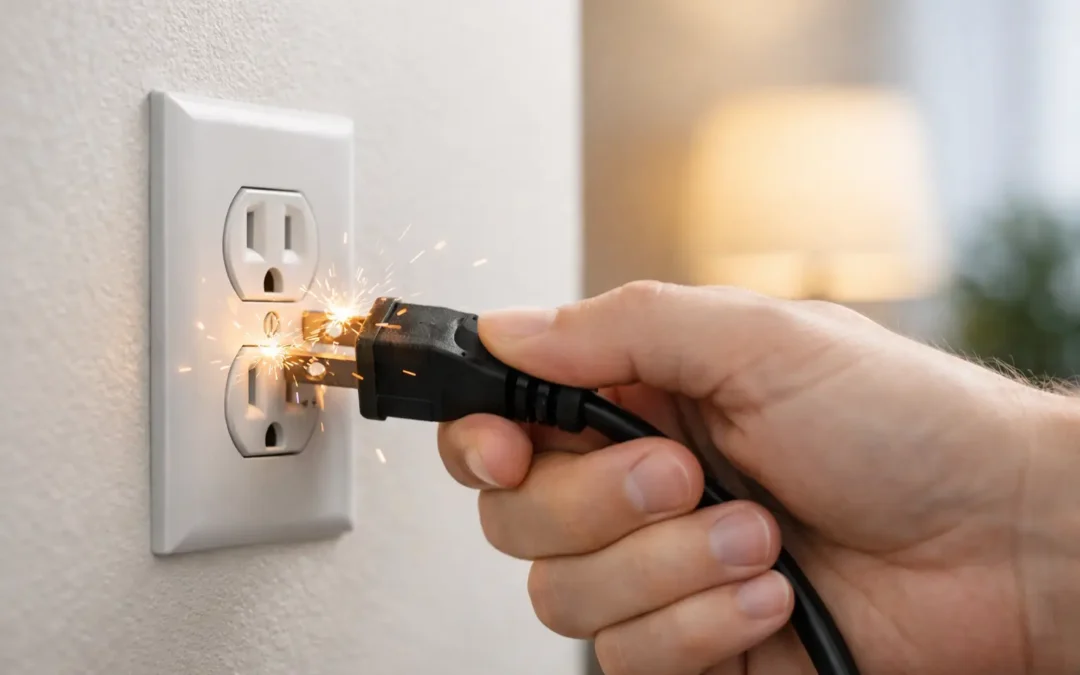
You pull a plug from the wall, see a quick flash, and immediately wonder: why does my outlet spark when unplugging? That reaction is reasonable. Electricity should feel predictable in your home, and anything that looks like a spark can raise concerns about fire, damaged wiring, or a failing outlet.
The good news is that a small spark is not always a sign of trouble. In some cases, it is a normal part of interrupting electrical current. But the size of the spark, the condition of the outlet, and what was plugged in all matter. The difference between normal and hazardous often comes down to context.
Why does my outlet spark when unplugging sometimes?
When you unplug an item that is actively drawing power, you break the electrical connection between the plug and the outlet. For a split second, current may jump through the tiny air gap as the prongs leave the receptacle. That brief jump can create a small blue or yellow spark.
This is more common with appliances and electronics that use more power or have motors, compressors, or heating elements. Window AC units, hair dryers, toasters, vacuums, and even some chargers can create a small spark when unplugged, especially if the device is still switched on.
A small, occasional spark by itself is usually not the issue. What matters is whether the spark is minor and brief or larger and accompanied by other warning signs.
When an outlet spark is normal and when it is not
A normal spark is typically small, quick, and happens only at the moment the plug is removed. You may see it once and not smell anything, hear anything unusual, or notice any damage afterward. In that case, the outlet may simply be reacting to the electrical load being disconnected.
An abnormal spark tends to stand out. It may be large, bright, repeated, or noisy. It may leave black marks, produce a burning smell, or happen with low-power devices that should not create much arc at all. If the outlet feels warm, looks discolored, or has loose contact with the plug, the issue is no longer something to ignore.
That distinction is especially important in older homes or in homes with heavy electrical demand. In Southwest Florida, air conditioning systems, dehumidification equipment, surge events, and storm-related power issues can all put more stress on a home’s electrical system over time.
Signs the spark points to a real electrical problem
If you see sparking along with buzzing, crackling, scorch marks, melted plastic, or a breaker that trips repeatedly, stop using that outlet. Those symptoms can point to loose wiring, a worn receptacle, overloaded circuits, or internal damage.
You should also take it seriously if plugs slide out easily or feel wobbly in the outlet. A loose connection can cause arcing, and arcing generates heat. Heat inside a wall box is where a minor issue can turn into a safety hazard.
If a child has pushed something into the outlet, if the outlet has gotten wet, or if the faceplate is cracked, the safest move is to shut off power to that circuit and have the outlet inspected.
Common reasons an outlet sparks when unplugging
One common cause is simply electrical load. Devices that pull more current are more likely to create a visible spark when disconnected. That does not automatically mean something is wrong, but it does explain why the spark happens with one appliance and not another.
Another common cause is a worn outlet. Receptacles do not last forever. Over time, the internal contacts can loosen and stop gripping the plug blades firmly. That weak connection can increase resistance and make sparking more likely.
Loose wiring is another possibility. If wire connections behind the outlet are not tight, current may arc inside the box. You may not see that internal arcing directly, but you may notice signs at the receptacle, such as heat, odor, flickering, or intermittent power.
Damaged plugs can contribute too. Bent prongs, frayed cords, or partially exposed wiring can all cause poor contact and visible sparking. Sometimes the outlet gets blamed when the real problem is the device being unplugged.
Moisture is also worth considering in Florida homes. Outlets near lanais, garages, kitchens, bathrooms, laundry areas, and exterior walls can be affected by humidity or water intrusion. Moisture and electricity are never a safe combination, and even minor corrosion inside an outlet can lead to erratic behavior.
Why high-power appliances spark more often
If the spark happens mostly when unplugging a heavier appliance, that pattern tells you something. Equipment with motors or compressors stores and uses energy differently than a simple lamp or phone charger. As the connection breaks, a small arc can occur because the device is still drawing power at that instant.
Air conditioners, portable fans, vacuums, and kitchen appliances are common examples. The key question is not just whether a spark appears, but whether the outlet shows stress over time. If a high-power device is frequently used on a standard outlet that was never meant for that demand, the outlet and circuit can wear out faster.
That is one reason it is better to turn an appliance off before unplugging it. You reduce the active load at the moment of disconnect, which can reduce or eliminate that visible spark.
What to do if your outlet sparks when unplugging
Start with the safest basic step: stop and observe. If the spark was tiny and happened once with a high-draw device, turn the device off before unplugging it next time and see whether it happens again.
Check the outlet visually. Look for discoloration, cracking, looseness, or signs of melting around the slots. Pay attention to smell too. A burnt odor is often one of the earliest signs that an outlet is overheating.
Next, think about what was plugged in. If the cord is damaged or the plug blades are darkened, the appliance itself may be part of the problem. Try a different, low-power item only if the outlet shows no visible damage and there is no smell or heat. If anything seems off, do not keep testing it.
If the outlet is warm, continues to spark, or makes noise, turn off the breaker and leave it alone until a licensed electrician can inspect it. That is the right move even if the outlet still appears to work. Functioning and safe are not always the same thing.
Should you replace the outlet yourself?
That depends on your experience, but for many homeowners, this is not the place to guess. Replacing a receptacle may look simple, yet the real issue may be deeper in the circuit. A new outlet will not fix loose wiring, damaged insulation, overloading, or a compromised electrical box.
There is also the question of code compliance and proper device selection. In some areas of the home, you may need GFCI protection, weather-resistant devices, tamper-resistant receptacles, or other updates based on location and use. If the outlet is part of a larger pattern, such as flickering lights or frequent breaker trips, the problem may involve the circuit or panel rather than the receptacle alone.
A licensed electrician can determine whether the spark is normal load-related arcing or a warning sign of something more serious.
How to reduce outlet sparking in the future
The simplest habit is to turn devices off before unplugging them. That alone reduces arcing in many situations.
It also helps to avoid overloading one outlet with power strips and multiple high-draw devices. If an outlet is doing too much work, wear and heat buildup become more likely. Old or loose outlets should be replaced before they become a bigger problem, and any damaged plugs or cords should be removed from use right away.
For homes in areas like Fort Myers, Cape Coral, and North Fort Myers, surge protection is another smart layer of defense. Frequent storms and power disturbances can shorten the life of outlets, electronics, and appliances. While surge protection will not stop every spark caused by unplugging, it can reduce stress on the system overall.
When it is time to call an electrician
Call a professional if the spark is large, frequent, noisy, or paired with heat, smell, discoloration, or breaker trips. You should also call if the outlet is loose, has stopped holding plugs securely, or is located in an area where moisture may be involved.
At Infinite Electric & Air, we encourage homeowners not to wait for electrical warning signs to get worse. A sparking outlet may turn out to be minor, but it is worth verifying before it becomes a repair that affects more of your home.
If your outlet sparks when unplugging, trust what you saw and let that be the reason you get it checked before the next small flash becomes a bigger problem.