
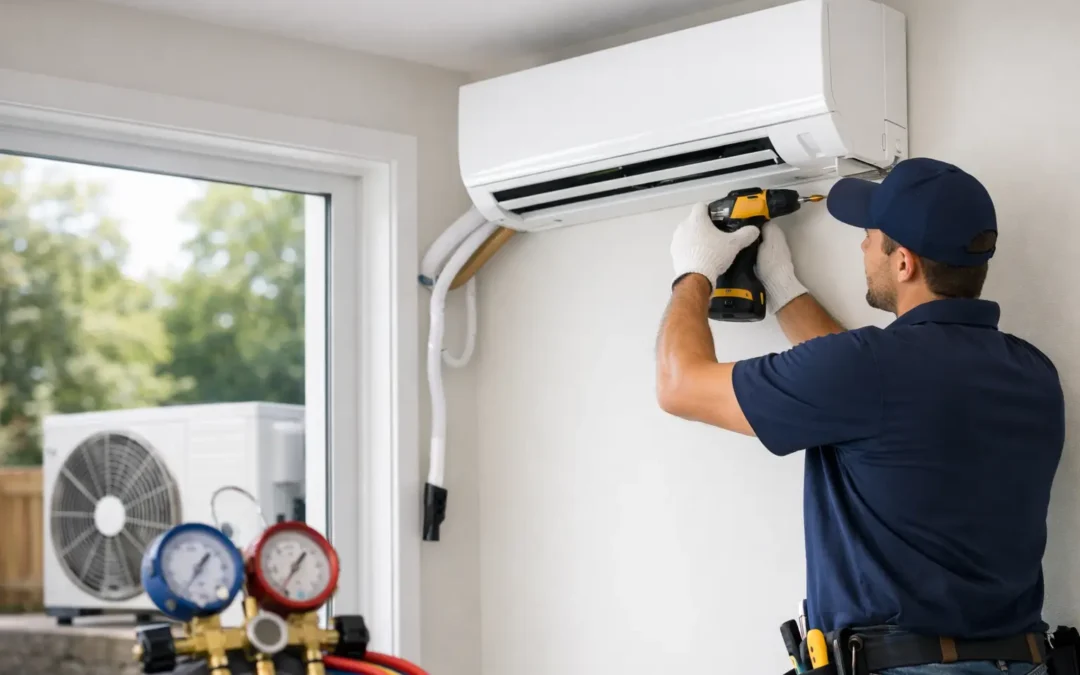
If you are looking for a ductless mini split installation guide, the first thing to know is this: the equipment may look simple, but the installation is not. A mini split can be one of the most efficient ways to cool a garage, sunroom, addition, or older part of the home. But the wrong size, poor placement, or an unsafe electrical connection can leave you with uneven cooling, high energy bills, water leaks, or a system that never performs the way it should.
For homeowners in Southwest Florida, that matters even more. Our heat, humidity, salt air, and storm-related power issues put extra stress on HVAC equipment. A mini split that is installed correctly can handle these conditions far better than one that is rushed into place.
What a ductless mini split does well
A ductless mini split uses an outdoor condenser and one or more indoor air handlers to heat and cool specific areas of the home. Because there is no ductwork, these systems are often a good fit for spaces where adding ducts would be expensive or impractical.
They work especially well in converted garages, room additions, guest suites, workshops, and homes with hot or cold spots. They can also help when one part of the house needs different temperature control than the rest. That said, a mini split is not automatically the best answer for every room. If the space is too open, poorly insulated, or tied into larger comfort problems in the home, the right solution may be more involved than adding one wall-mounted unit.
Ductless mini split installation guide: start with sizing
Sizing is where many installations go off track. Homeowners often assume bigger is better, but oversized equipment can short cycle, which means it turns on and off too often. That reduces humidity control, increases wear, and can make the room feel clammy even when the temperature looks right on the thermostat.
Undersized equipment has the opposite problem. It runs too long, struggles during the hottest afternoons, and may never reach the desired temperature. In Florida, where humidity removal is just as important as cooling, proper sizing is not a detail. It is the foundation of comfort.
A contractor should evaluate square footage, ceiling height, insulation levels, sun exposure, window area, and how the room is used. A shaded bedroom and a west-facing garage gym do not need the same capacity, even if they are similar in size. This is one of the clearest examples of why online sizing charts only get you so far.
Placement matters more than most homeowners expect
Once the system is sized properly, placement of both the indoor and outdoor units becomes the next major decision. The indoor air handler needs enough clearance to move air freely across the room. It should not blow directly onto a bed, sofa, or desk if that will make the space uncomfortable. It also needs to be mounted where condensate can drain properly.
The outdoor unit needs stable mounting, adequate airflow, and protection from debris and standing water. In coastal and storm-prone parts of Florida, placement should also account for weather exposure and service access. Tucking the condenser into a tight corner might look cleaner, but it can restrict airflow and make maintenance harder.
A good installation balances performance, appearance, and long-term serviceability. If one of those is ignored, problems usually show up later.
The electrical side of mini split installation
Mini splits are HVAC systems, but they are also electrical equipment. That means the installation involves more than mounting hardware and refrigerant lines. The unit needs the correct dedicated circuit, proper disconnect, code-compliant wiring, and protection that matches the manufacturer requirements.
This is not an area for guesswork. An undersized circuit, poor wire connections, or an improper breaker can create nuisance trips, equipment damage, or safety hazards. In some homes, especially older properties, the electrical panel may not have the right capacity or available space for a new mini split circuit. When that happens, the project may also require panel work.
That is one reason licensed professionals matter. HVAC performance and electrical safety are tied together here. A clean install is not just about how the finished unit looks on the wall. It is about whether the whole system is protected and operating the way it was designed to.
Refrigerant lines, drainage, and sealing
The line set that connects the indoor and outdoor units carries refrigerant between them, and it has to be installed carefully. The length, routing, insulation, and connections all affect how the system performs. If the lines are kinked, poorly brazed, improperly flared, or left exposed without proper insulation, efficiency and reliability can suffer.
Condensate drainage is another common trouble spot. In Florida, mini splits remove a lot of moisture from the air. That water has to go somewhere. If the drain line is pitched incorrectly, clogged easily, or routed poorly, the result can be water stains, leaks, microbial growth, and damage to walls or floors.
Any wall penetration for the line set and drain should also be sealed properly. That helps keep out moisture, hot air, pests, and unwanted drafts. It sounds minor, but small installation shortcuts often lead to the most frustrating callbacks.
DIY vs. professional installation
Some homeowners start researching mini splits because they have seen do-it-yourself kits advertised as quick weekend projects. While certain kits are marketed that way, a true comparison should include code requirements, warranty terms, electrical work, vacuuming the refrigerant lines properly, drainage setup, and long-term reliability.
The appeal of DIY is understandable. It can look like a way to save money upfront. But if the unit is oversized, wired incorrectly, not evacuated to manufacturer standards, or installed in a poor location, the savings disappear quickly. Even when the system runs at first, hidden installation errors can reduce lifespan and efficiency.
Professional installation costs more at the start, but it usually buys better system performance, safer electrical work, code compliance, and fewer surprises. For many homeowners, that trade-off is worth it.
What to expect during a professional install
A quality installation typically starts with evaluating the room and your overall goals. Are you cooling one problem area, adding comfort to a new space, or reducing strain on the main HVAC system? The answer affects equipment selection and placement.
From there, the installer will confirm electrical needs, choose mounting locations, create the wall penetration for the line set, mount the indoor and outdoor units, run wiring and refrigerant lines, connect drainage, and test the system. Proper startup includes checking pressures, verifying airflow, confirming condensate drainage, and making sure the unit responds correctly in each operating mode.
Homeowners should also receive clear information about filter cleaning, remote control settings, and basic maintenance. Transparent pricing and a straightforward explanation of the work are part of a professional experience, not extras.
Common mistakes this ductless mini split installation guide can help you avoid
The most common problems tend to be predictable. Wrong sizing is near the top of the list. After that, poor indoor placement, bad drainage, sloppy electrical work, and choosing equipment based on price alone are all frequent issues.
Another mistake is expecting a mini split to fix building envelope problems by itself. If a room has little insulation, significant air leakage, or constant sun exposure through old windows, the system may still struggle. The mini split can help, but the room itself may need attention too.
Maintenance is often overlooked as well. Even a well-installed unit needs regular filter cleaning and periodic professional service. In a humid climate, skipping maintenance can lead to reduced airflow and performance faster than many homeowners expect.
When a mini split is the right choice
A ductless system is usually a strong option when you want targeted comfort without extending existing ductwork. It can also be a smart upgrade for areas that are used differently from the rest of the house. If your guest room sits empty most of the time, or your garage workshop needs cooling only when occupied, a mini split gives you more control than trying to force the central system to handle everything.
Still, there are cases where a ductless unit is not the best fit. If your home has widespread comfort issues, high humidity throughout multiple rooms, or aging electrical and HVAC components, the right answer may involve a larger plan. A professional evaluation helps prevent spending money on a partial fix when a more complete solution would serve you better.
For homeowners who want reliable comfort, the best ductless mini split installation guide is one that treats installation as both an HVAC job and an electrical job. When the system is sized correctly, installed safely, and matched to the space, it can be an excellent solution for Florida living. If you are considering one for your home, taking the time to get the details right now can save you a lot of frustration later.