
A whole home generator is easy to forget about until the lights go out, the air conditioning stops, and a summer storm has half the neighborhood in the dark. That is exactly why a whole home generator maintenance guide matters. If your generator only gets attention during hurricane season or after a failed startup, you are putting a lot of trust in equipment that has not been checked when it counts.
In Southwest Florida, backup power is not just about convenience. It protects refrigerated food, keeps medical devices running, supports security systems, and helps your home stay livable during long outages. A generator can do that job well, but only if it is maintained on a regular schedule and inspected by a qualified professional when needed.
Why whole home generator maintenance matters
Standby generators are designed to sit ready for long periods and then perform immediately under stress. That sounds simple, but the reality is harder on the equipment than many homeowners expect. Heat, humidity, salty air, insects, battery wear, and fuel system issues can all affect reliability over time.
A neglected generator may still look fine from the outside while developing problems that only show up during an outage. Weak batteries, old oil, clogged air filters, corroded terminals, and software faults often give little warning. Routine maintenance lowers the chance of surprise failure and can also extend the life of the unit.
There is also a safety side to maintenance. Generators involve fuel, electricity, exhaust, and automatic transfer equipment. Problems in any of those areas can create fire hazards, carbon monoxide risks, or electrical issues that should never be left to guesswork.
Whole home generator maintenance guide: what homeowners should check
Homeowners do not need to handle every maintenance task themselves, and in many cases they should not. But there are a few simple checks that help you spot issues early and know when it is time to call for service.
Start with a visual inspection. The area around the generator should stay clear of leaves, grass, mulch buildup, and stored items. Good airflow matters, and blocked ventilation can hurt performance or create overheating problems. In Florida, it is also worth checking for wasp nests, ant activity, or signs that vegetation has grown too close around the enclosure.
Look at the exterior condition of the unit. Rust, dents, loose panels, or signs of water intrusion should be addressed before they turn into bigger repairs. If the pad has shifted or the generator appears uneven, that is another reason to schedule an inspection.
The battery deserves special attention. Many generator failures trace back to battery issues, especially in hot climates where battery life can shorten. If your system shows low battery warnings, slow cranking, or inconsistent exercise cycles, do not wait. Battery replacement is basic maintenance, but timing matters.
You should also pay attention to alerts on the controller. Modern standby generators often display maintenance reminders or fault codes. Those messages are there for a reason. Resetting an alert without fixing the cause can leave you with a false sense of security.
What professional generator maintenance usually includes
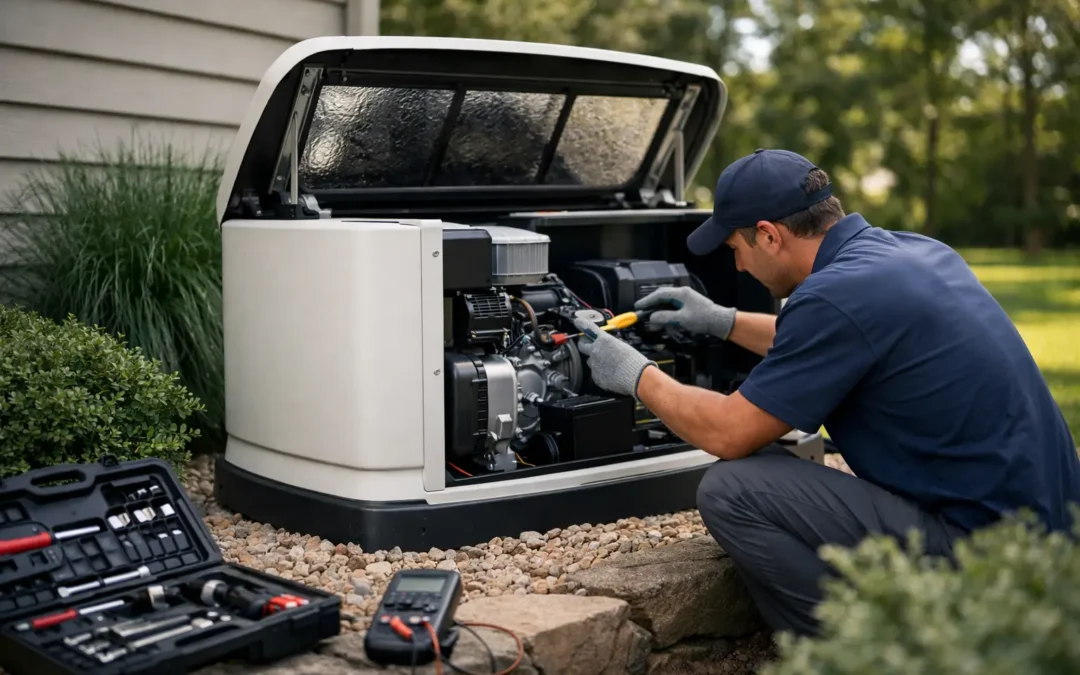
A proper service visit goes beyond a quick glance. A trained technician typically checks the oil and filter condition, inspects spark plugs, tests the battery, verifies fuel delivery, and confirms that the transfer switch is operating correctly. They may also inspect wiring connections, clean components, and review the unit history for warning signs.
Load testing is one of the most valuable parts of professional maintenance. A generator can sound normal while idling and still struggle under actual household demand. Testing the system under load helps confirm that it can carry the circuits or full-home power it was designed to support.
Software updates and controller diagnostics can matter too, depending on the brand and model. Newer units rely on electronic controls, and those systems need proper calibration and troubleshooting tools. This is one reason professional maintenance is worth it even for homeowners who are comfortable with general upkeep.
How often should a whole home generator be serviced?
It depends on the manufacturer, the age of the system, how often it runs, and local conditions. As a general rule, whole home generators should be professionally serviced at least once a year. In many Florida homes, twice-yearly attention makes more sense, especially if the unit sees heavy use during storm season or if the property is exposed to coastal air.
Most manufacturers also recommend maintenance after a certain number of run hours. If your generator has supported your home through multiple outages, run-hour service may come due sooner than your annual checkup. That is one reason it helps to keep service records rather than relying on memory.
Exercise cycles should happen automatically on the schedule programmed into the system. If your generator is not exercising regularly, that is a problem. The weekly exercise helps circulate fluids, charge the battery, and reveal faults before an emergency outage.
Seasonal timing matters in Florida
For homeowners in places like Cape Coral, Fort Myers, and North Fort Myers, spring is a smart time for a generator inspection. It gives you a chance to catch worn parts, battery weakness, or maintenance alerts before summer storms put your backup power to the test.
That said, post-storm service can be just as important. If the generator ran for an extended period, it may need oil service, filter replacement, or a broader inspection before it returns to standby status.
Common generator problems maintenance can prevent
Some generator issues build slowly. Others show up all at once during a power outage. Routine maintenance helps reduce both kinds.
One common problem is fuel-related trouble. Natural gas and propane systems need clean, consistent fuel supply, and even a small regulator or line issue can affect startup and performance. Another frequent issue is battery failure. Because the generator starts automatically, many homeowners do not realize the battery is weak until the system fails to crank.
Low oil level, dirty filters, worn spark plugs, coolant problems on liquid-cooled models, and transfer switch faults are also common. Moisture and corrosion can affect electrical connections over time, especially in humid environments. None of these are unusual, but they do become expensive when left unchecked.
What you should not do yourself
Basic observation is helpful. DIY repairs are another matter.
Do not open up electrical components, bypass safety features, or attempt transfer switch work unless you are properly licensed and trained. The same goes for gas connections and internal engine repairs. A standby generator is tied into critical systems in your home, and mistakes can create shock hazards, fuel leaks, or damage to the unit itself.
Even routine tasks such as changing oil or replacing parts can be more complicated than they seem if the manufacturer has specific procedures or warranty requirements. If your generator is still under warranty, unauthorized work may affect coverage.
Signs it is time to schedule service now
If the generator is showing a warning light, skipping exercise cycles, struggling to start, shutting down unexpectedly, or making unusual noises, do not wait for the next outage to find out what is wrong. Delayed response can turn a minor repair into a larger one.
You should also call if you notice fuel smells, corrosion, rodent or insect activity inside the enclosure, or visible damage after a storm. Even if the system still runs, hidden issues may be developing in the controls or electrical connections.
For older units, proactive service is especially important. Aging generators can still be dependable, but parts wear and availability becomes a factor. Regular inspections help you plan repairs before reliability drops off.
A maintenance mindset protects your investment
A whole home generator is one of those systems you hope never has to prove its value for very long. But when the grid is down for hours or days, it quickly becomes one of the most important pieces of equipment on your property. Treating it like emergency-only equipment is risky. Treating it like a system that needs routine care is what keeps it ready.
For homeowners who want dependable backup power, the goal is not just to keep the generator running. It is to keep it ready to start automatically, carry the load safely, and perform the way it was designed to when your home needs it most. If it has been a while since your last inspection, now is a good time to get ahead of the next outage instead of reacting to it.