
If your AC suddenly shuts off, starts dripping water near the indoor unit, or leaves your house feeling sticky even though it is running, the condensate drain line may be the problem. Homeowners searching for how to clean AC condensate drain line are usually dealing with a clog that has already started causing trouble, and in Southwest Florida, that is a common issue thanks to heavy humidity, algae growth, and long cooling seasons.
Your air conditioner does more than cool the air. It also pulls moisture out of your home, and that water has to go somewhere. The condensate drain line carries it away from the indoor unit. When that line gets blocked with sludge, algae, dirt, or mold, the water can back up into the drain pan and trigger a float switch, shutting the system down to help prevent water damage.
That shutdown is frustrating, but it is also a warning sign worth taking seriously. A clogged drain line can lead to ceiling stains, damaged drywall, musty odors, and extra wear on your system if the issue keeps returning.
What the AC condensate drain line does
As warm indoor air passes over the evaporator coil, moisture condenses and collects. That water drips into a drain pan and flows through the condensate drain line to the outside or another approved drainage point. In a hot, humid climate, your system may remove a significant amount of moisture every day, which means the drain line gets regular use and regular exposure to organic buildup.
Over time, that moist environment becomes a good place for algae and slime to grow. Dust can also find its way into the line, especially if the system is overdue for maintenance or the filter is not changed often enough. The result is a slow drain or a full blockage.
Signs the drain line needs cleaning
Some clogs build gradually. Others seem to appear overnight. Usually, there are a few hints before the issue becomes a full shutdown.
You may notice water around the indoor air handler, a full or rusty drain pan, a musty smell near vents, or an AC that turns off unexpectedly. In some homes, the thermostat is working and the fan seems fine, but cooling stops because the safety switch has been triggered. If the line is only partially clogged, you might still get cooling, but not for long.
How to clean AC condensate drain line safely
If you are comfortable doing basic home maintenance, cleaning the line is often a manageable task. The key is to work carefully and avoid forcing debris deeper into the pipe or damaging PVC fittings.
Before you do anything, turn off the AC system at the thermostat and the breaker. That matters for both safety and equipment protection. You do not want the unit running while you are opening the drain line.
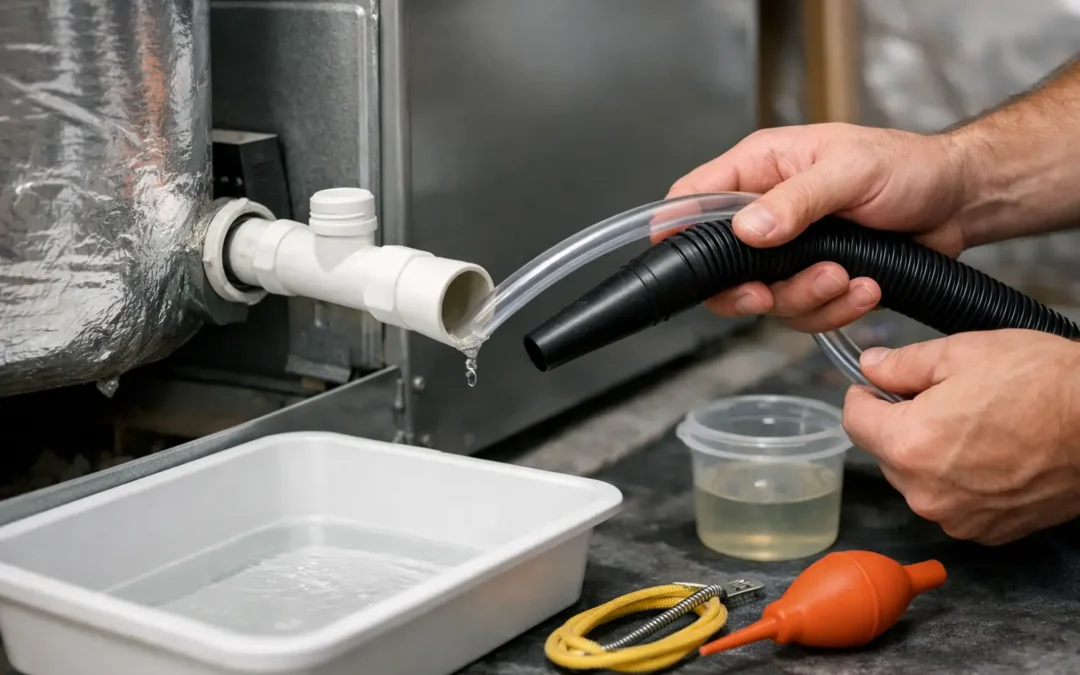
Next, find the condensate drain line. In many homes, it is a white PVC pipe located near the indoor air handler. There is often a vent tee with a cap on it near the unit, and outside you may see the end of the same line near the exterior wall.
Step 1: Inspect the drain line and drain pan
Remove the cap from the vent tee and look for visible standing water or sludge. If the drain pan is full, that is a strong sign of a clog. If there is heavy rust, corrosion, or signs of repeated overflow, the problem may be larger than a simple cleaning.
Check around the air handler for water damage too. If insulation is soaked or the surrounding area is wet, take your time and do not assume clearing the line is the only repair needed.
Step 2: Use a wet/dry vacuum at the outside drain outlet
This is often the most effective first move. Go to the exterior end of the condensate drain line and connect a wet/dry vacuum hose to the pipe opening as tightly as possible. Many homeowners use a rag or duct tape to help create a seal.
Run the vacuum for a minute or two. If the clog is made of algae, slime, or loose debris, the vacuum may pull it out. You might hear a change in sound once the line clears, and you may see dirty water and buildup collected in the vacuum canister.
This method is simple and tends to be safer than trying to push a wire or rigid tool through the line. Using a tool inside the pipe can crack fittings or pack the clog tighter.
Step 3: Flush the line from the vent opening
After vacuuming, pour a small amount of warm water into the vent tee near the indoor unit to see whether it drains properly. If it backs up, the clog may still be there. If it flows through, follow with distilled vinegar to help break down remaining organic growth.
A common approach is to pour about a cup of vinegar into the line and let it sit for 30 minutes. After that, flush it with more water. Some homeowners ask about bleach, but vinegar is usually the better choice. Bleach can be harsher on certain components and may create fumes in enclosed spaces.
If your manufacturer recommends a specific cleaning product, follow that guidance. It depends on the system design and materials.
Step 4: Reassemble and test the system
Replace the cap on the vent tee, make sure everything is secure, and turn the system back on. Watch the drain line for a few minutes if you can. Water should move through the line without backing up into the pan.
If the system starts normally and the pan stays dry, the clog was likely resolved. If the AC still shuts off or the line drains slowly, there may be a deeper blockage, a damaged line, or another issue affecting condensate removal.
What not to do when cleaning the line
A little caution goes a long way here. Do not use high pressure air unless you know the line can handle it and you understand where the blockage is. Too much pressure can separate joints or send water where it should not go.
It is also smart to avoid repeatedly opening the system and guessing. If you have already vacuumed the line, flushed it, and the problem returns quickly, that usually points to a maintenance issue or a component problem rather than a one-time clog.
Why condensate clogs are common in Florida homes
In Southwest Florida, your AC may run most of the year. That means the drain line stays damp for long stretches, which gives algae and biofilm more time to grow. Add dust, household debris, and the occasional neglected filter, and clogs happen fast.
This is one reason routine AC maintenance matters so much in places like Cape Coral, Fort Myers, and North Fort Myers. A system that runs hard in heat and humidity needs regular attention if you want to avoid surprise shutdowns and indoor water damage.
When to call a professional
Knowing how to clean AC condensate drain line is helpful, but not every drain issue is a DIY job. If the clog keeps coming back, the drain pan is damaged, the float switch is malfunctioning, or water has already leaked into ceilings or walls, it is time to have the system inspected.
You should also call a licensed HVAC professional if you cannot access the drain line safely, if your air handler is in a tight attic space, or if you suspect the line was installed with improper pitch. Some clogs are symptoms of a bigger problem, including dirty coils, poor drainage design, or neglected maintenance.
A professional can clear the line thoroughly, check the safety switch, inspect the pan, and make sure the rest of the system is working as it should. That is especially valuable if your AC has shut down more than once during the hottest part of the year.
How to help prevent future clogs
Prevention is usually easier than cleanup. Changing your air filter on schedule helps reduce the dust and debris that can contribute to buildup around the evaporator coil and drain system. Having the unit professionally maintained also helps catch small drainage problems before they become a service call.
Some homeowners benefit from having the condensate line cleaned as part of routine maintenance, especially in high-humidity areas. It is a simple step that can help prevent a much bigger headache later.
If you want to add vinegar to the line periodically, do it carefully and only if your system setup allows for safe access. Monthly or seasonal preventive cleaning can help, but it should never replace a full inspection when there are signs of overflow, system shutdown, or repeated clogs.
A clogged condensate drain line may seem minor compared to a compressor issue or a failed blower motor, but it can still shut your AC down and damage your home. If clearing the line does not solve the problem quickly, the safest move is to have it checked before a small water issue turns into a larger repair.