
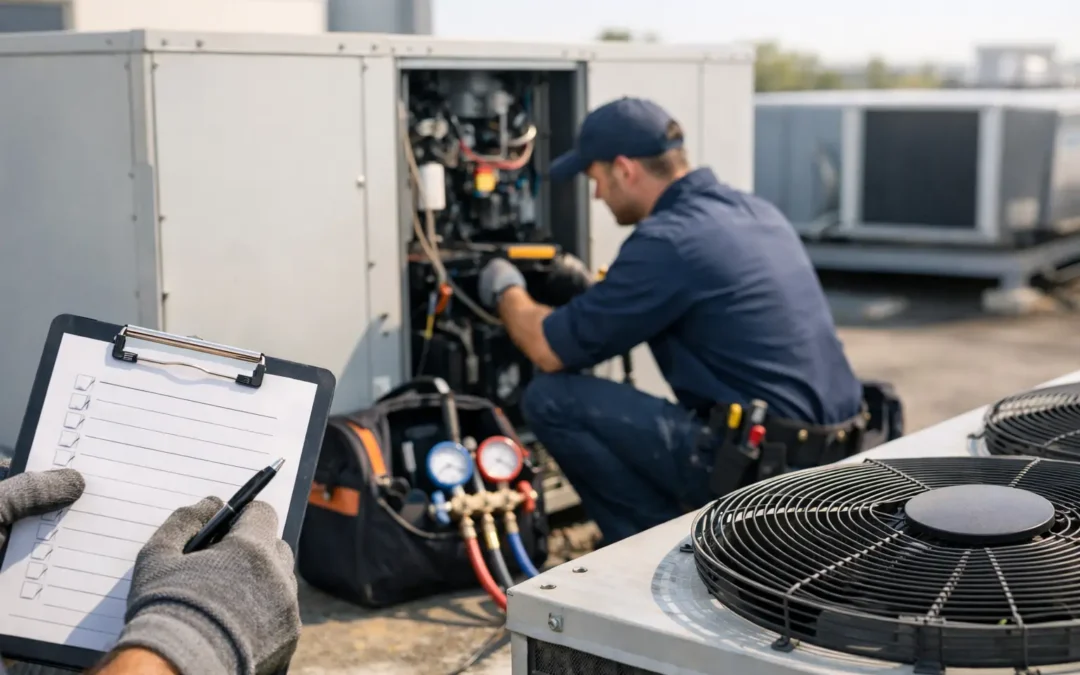
Your AC usually gives you a warning before it quits. Maybe the house feels sticky by midafternoon, one room never cools down, or your energy bill climbs even though your thermostat settings have not changed. A solid HVAC system maintenance checklist helps you catch those issues early, before they turn into a no-cool call on the hottest week of the year.
For homeowners in Southwest Florida, maintenance is not just about efficiency. It is about keeping up with long cooling seasons, heavy humidity, salt air in some areas, and the extra strain storms can place on home systems. A system that runs almost year-round needs more attention than one that only works hard for a few months.
Why an HVAC system maintenance checklist matters
When maintenance gets skipped, the system usually does not fail all at once. Performance slips first. Airflow drops, the unit runs longer, indoor humidity rises, and parts wear down under the extra strain. What starts as a dirty filter or clogged drain line can lead to frozen coils, water damage, or a compressor issue that is far more expensive to address.
Routine service also helps protect safety and equipment life. Electrical connections can loosen over time. Condensate lines can back up. Drain pans can hold standing water. If you have a heat pump, the system still needs seasonal attention even if heating is a smaller concern in Florida. The goal is simple: keep the equipment operating the way it was designed to operate.
The homeowner HVAC system maintenance checklist
Some maintenance tasks are homeowner-friendly and worth doing regularly. These are the checks that help your system breathe, drain, and cool properly between professional visits.
Check and replace the air filter
This is the simplest item on any HVAC system maintenance checklist, and it has one of the biggest effects on performance. A clogged filter restricts airflow, which forces the system to work harder and can reduce comfort throughout the home.
How often you should replace it depends on the filter type, pets, occupancy, and how much construction dust or outdoor debris gets into the house. In many Florida homes, checking the filter monthly is a smart habit. If it looks dirty, replace it. Waiting for a set date can be risky when the system runs as often as it does here.
Keep vents and returns clear
Supply vents should not be blocked by rugs, furniture, or curtains. Return grilles should also stay open and reasonably clean. Closing vents in unused rooms sounds efficient, but it can throw off airflow and pressure in ways that make the system perform worse, not better.
If certain rooms are always warmer than others, that is worth noting. It could be a duct issue, insulation problem, or system sizing concern rather than a thermostat problem.
Look at the thermostat settings
A thermostat is easy to overlook until something feels off. Make sure the mode, temperature setting, and schedule are correct. If you use a programmable or smart thermostat, check that it is not running an outdated schedule that cools the home more than necessary when no one is there.
If the display is blank or erratic, fresh batteries may solve it. If not, the issue may be electrical or system-related and should be checked professionally.
Clear the outdoor unit
Your condenser needs room to release heat. Leaves, grass clippings, overgrown shrubs, and storm debris can restrict airflow and reduce efficiency. Keep the area around the outdoor unit clear, and gently remove visible debris from the cabinet.
Be careful here. Homeowners can tidy the area, but opening panels or washing components aggressively can cause damage. If the coil looks heavily coated with dirt or salt residue, professional cleaning is the better move.
Watch for drain line issues
In Florida, condensate drainage matters. Your AC removes a lot of moisture from the air, and that water has to go somewhere. If the drain line clogs, it can trigger a shutdown or cause water damage around the air handler.
Check for standing water near the indoor unit, musty smells, or signs of staining around the drain pan area. Some homeowners use simple drain line maintenance methods, but if there is an active blockage or repeated clogging, it is best to have the system inspected.
What should happen during professional HVAC maintenance
A true maintenance visit goes beyond swapping a filter and giving the equipment a quick look. A trained technician should inspect system performance, electrical components, drainage, airflow, and the condition of major parts.
Electrical and component inspection
Your technician should inspect wiring, contactors, capacitors, and electrical connections. These parts often show wear before they fail, and catching weakness early can prevent a sudden breakdown. This is especially important in areas where storms and power fluctuations put extra stress on equipment.
Capacitors and contactors are common failure points in residential systems. They may not seem urgent when the unit is still running, but a worn component can quit without much notice.
Coil and blower evaluation
Evaporator and condenser coils should be checked for dirt buildup and proper operation. Dirty coils reduce heat transfer, which means the system runs longer and cools less effectively. The blower assembly also matters because airflow problems can affect everything from humidity control to compressor health.
Not every coil needs deep cleaning at every visit, so this is one of those it-depends areas. Conditions inside the home, system age, filter habits, and outdoor exposure all play a role.
Refrigerant and performance checks
Low refrigerant is not part of normal operation. If levels are low, there is usually a leak or another issue that needs diagnosis. During maintenance, a technician should check temperatures, pressures, and overall cooling performance to see whether the system is operating within expected range.
This matters because poor cooling can look like several different problems. It might be refrigerant, but it could also be airflow restriction, a dirty coil, duct leakage, or a failing part. Good maintenance helps separate symptoms from actual causes.
Condensate system inspection
Drain lines, drain pans, and safety switches should be inspected and cleaned as needed. In humid climates, this is not a minor detail. A backed-up drain line can shut the system down at exactly the wrong time.
If your home has had past drain problems, mention that during service. Repeated clogs may point to a deeper issue with algae growth, slope, insulation, or system operation.
Ductwork and airflow review
Duct issues can quietly waste energy for a long time. Leaks, disconnected sections, poor insulation, or crushed flex duct can reduce comfort even when the AC equipment itself is in decent shape.
A maintenance visit may not always include a full duct redesign evaluation, but airflow concerns should at least be flagged. If some rooms struggle to cool, say so. That information helps the technician look beyond the equipment cabinet.
How often should HVAC maintenance be done?
For most Florida homeowners, professional AC maintenance at least once a year is the minimum. Twice a year can make sense for older systems, homes with heavy AC usage, or households that want a more proactive approach. Since cooling demand stays high for much of the year, many homeowners prefer service before peak summer conditions arrive.
There is a trade-off here. More frequent maintenance costs more upfront, but it can reduce emergency repairs and help the system last longer. On newer equipment, yearly maintenance may be enough if filters are changed regularly and no performance issues are showing up. On aging equipment, waiting too long between visits often becomes more expensive.
Signs your checklist is no longer enough
A maintenance routine helps, but it does not replace diagnosis when the system is already struggling. If your AC runs constantly, trips breakers, leaks water, blows warm air, or produces unusual sounds, that is no longer a checklist issue. It is a service issue.
The same goes for sudden spikes in electric bills or indoor humidity that will not come down. In Southwest Florida, humidity control is part of comfort. If the home feels cool but damp, the system may be oversized, short cycling, or dealing with airflow problems that need attention.
A practical schedule for homeowners
Monthly, check the filter, glance at vents and returns, and watch for any change in sound, airflow, or moisture near the indoor unit. Every few months, clear debris around the condenser and confirm the thermostat settings still fit your routine. At least once a year, schedule professional maintenance that includes electrical inspection, cleaning as needed, condensate checks, and system performance testing.
That schedule is simple enough to keep up with and strong enough to catch many common problems before they get expensive.
For homeowners who want a dependable system through long Florida cooling seasons, maintenance is less about checking a box and more about protecting comfort, efficiency, and the equipment you rely on every day. If anything on your checklist raises a question, it is worth having it looked at before the next heat wave answers it for you.