
When the power drops in the middle of a Florida storm, a whole-home generator stops being a luxury and starts feeling like basic protection. This whole house generator installation review is for homeowners who want the real picture before they invest – not just the sales pitch, but what the installation involves, what it costs, and where the decision can get complicated.
A whole house generator installation review starts with your outage risk
In Southwest Florida, backup power is not just about convenience. It can protect refrigerated food, keep medical devices running, reduce humidity buildup, and keep your air conditioning available during dangerous heat. For many homeowners, the bigger issue is not whether outages happen. It is how often, how long, and what your home needs to keep running safely when they do.
That is why a useful review has to begin with your home, not the generator brochure. A smaller home with gas service and modest cooling needs may be a straightforward project. A larger home with multiple AC systems, a pool, well equipment, or electric appliances across the board may need more planning. The right setup depends on your load calculation, your fuel source, and the condition of your existing electrical system.
What installation actually includes
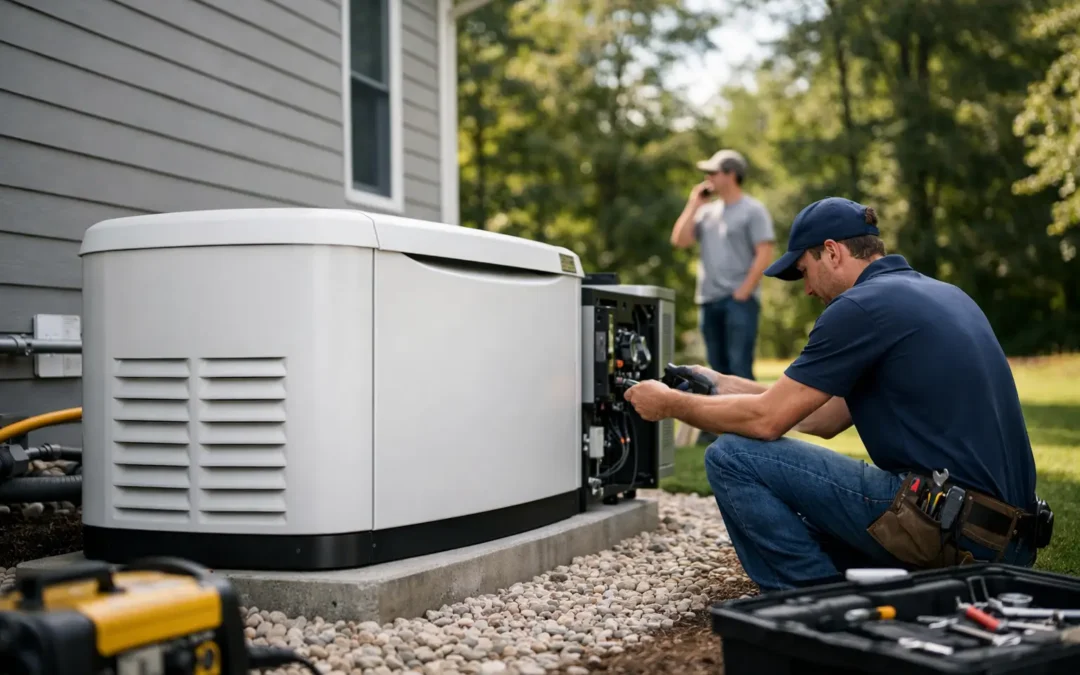
Homeowners are often surprised that generator installation is not one simple swap. The generator itself is only part of the project. A proper installation usually includes site planning, concrete or composite pad placement, transfer switch installation, electrical connections, fuel line work, permitting, and startup testing.
If your panel is outdated or undersized, that can change the job. In some homes, a panel upgrade or service improvement is needed before a generator can be added safely. That is not upselling when it is legitimate. It is a code and safety issue, and it matters even more in older homes where electrical systems may not have been designed for modern loads.
Placement is another detail that deserves more attention than it usually gets. The generator cannot go just anywhere. Clearances from windows, doors, and vents matter. So does drainage. In Florida, standing water, heavy rain, and storm debris are real concerns, so location should be chosen with long-term reliability in mind, not just convenience.
The transfer switch matters as much as the generator
A lot of the day-to-day user experience comes down to the transfer switch. This component detects the outage and shifts your home from utility power to generator power. When it is installed and configured properly, the changeover is automatic and smooth.
This is also where your home’s loads are prioritized. Some systems are set up to power the entire house, while others are designed to manage selected circuits or shed nonessential loads when demand rises. That distinction affects equipment size, installation cost, and how the home performs during an outage.
Fuel choice can make or break the experience
Most whole-home generators run on natural gas or liquid propane. For some Florida homeowners, the choice is easy because the property already has one available. For others, the fuel decision is one of the biggest factors in the project.
Natural gas offers convenience because you do not need on-site refueling in the same way you would with propane. If gas service is stable in your area, that can be a strong advantage. Propane can still be an excellent option, especially where natural gas is unavailable, but tank size and refill logistics should be part of the conversation from the start.
Diesel exists too, but for most residential whole-house applications, it is less common. Fuel storage, maintenance habits, and noise can make it a less practical fit for typical neighborhoods.
A good installer will not treat fuel as an afterthought. They will ask how often outages happen, how long they tend to last, what appliances are mission-critical, and whether you want full-home coverage or strategic backup power. Those answers shape the recommendation.
Cost is important, but cheap installation can get expensive later
Any honest whole house generator installation review needs to talk about price. The total cost varies widely based on generator size, brand, fuel type, electrical upgrades, site conditions, and permit requirements. A simple installation on a generator-ready property is very different from a project that requires trenching, gas work, panel replacement, or extensive load management.
The bigger issue is value over time. The lowest quote is not always the best quote if it leaves out permitting, skimps on startup testing, or ignores the need for service access and proper placement. Generator systems are not forgiving of shortcuts. Incorrect wiring, poor ventilation clearance, or undersized components can lead to nuisance shutdowns, unsafe operation, or expensive corrections later.
Transparent pricing matters here. Homeowners should know what is included, what could change, and whether maintenance plans are available after installation. That level of clarity is often a better sign of a professional contractor than a rock-bottom number.
Maintenance is part of ownership
A standby generator is not a set-it-and-forget-it system. It needs periodic maintenance, just like your AC system or vehicle. Oil changes, filter replacements, battery checks, software updates on newer units, and routine inspections all help make sure the system works when you actually need it.
This is one area where many reviews become overly optimistic. The generator may test itself weekly, but self-testing does not replace scheduled service. In coastal and humid areas, corrosion and wear can show up faster than homeowners expect. Salt air, heat, and storm exposure can all affect long-term performance.
How loud is a whole-home generator?
This is one of the most common questions, and the honest answer is that it depends on the unit and the load it is carrying. Most newer residential standby generators are much quieter than older portable systems, but they are not silent. During an outage, you will hear the engine running, especially during startup and under heavier demand.
For most homeowners, the noise is acceptable because the trade-off is obvious. You keep your refrigerator, lights, internet, and possibly your air conditioning running. Still, generator placement and equipment selection can make a noticeable difference, especially in tighter neighborhoods.
If noise is a top concern, bring that up early. It is easier to plan for it during design than to regret it after the install is complete.
Permits, codes, and inspections are not optional details
In Florida, code compliance matters. A whole-home generator involves electrical work, and often fuel system work, too. Permits and inspections help confirm that the installation meets safety standards and local requirements.
For homeowners, this should be a simple expectation: the contractor handles the process properly and explains the timeline. If a company seems eager to skip permits or brush off inspection requirements, that is a red flag. Generator systems tie directly into your home’s electrical infrastructure, and this is not the place to cut corners.
In areas like Cape Coral, Fort Myers, and North Fort Myers, where storm preparation is part of homeownership, code-compliant installation is part of protecting your investment. It also helps prevent problems if you ever sell the home or file an insurance claim related to storm damage or electrical issues.
Is a whole-house generator worth it?
For some homeowners, absolutely. If you work from home, care for a family member with medical needs, rely on a well pump, or simply want protection against prolonged outages during storm season, the value is easy to see. The comfort factor is real, but so is the safety factor.
For others, it may depend on budget, outage frequency, and what they truly need powered. Not every home requires a large whole-house setup. In some cases, a more selective backup plan makes more sense. That is why a load assessment and a real conversation about priorities matter so much.
A good installation review should leave room for that nuance. The best generator is not necessarily the biggest one. It is the one that fits your home, your fuel options, and your expectations during an outage.
What to look for before you hire an installer
The contractor matters as much as the equipment. You want licensed professionals who understand residential electrical systems, local code requirements, and the specific demands Florida weather puts on outdoor equipment. You also want a company that explains the process clearly, provides transparent pricing, and stays available for service after the job is done.
That after-install support is easy to overlook until the first storm warning arrives. If your generator needs service, software updates, battery replacement, or troubleshooting, you want to know who is responsible and how quickly help is available. Infinite Electric & Air works with homeowners who want that kind of long-term reliability, not just a one-day install.
The best time to think seriously about backup power is before the next outage, not while your refrigerator is warming up and your home is turning into a sauna. If you are considering a generator, focus less on the marketing language and more on the fit, the installation quality, and the support behind it. That is what turns a generator from a large purchase into real peace of mind.