
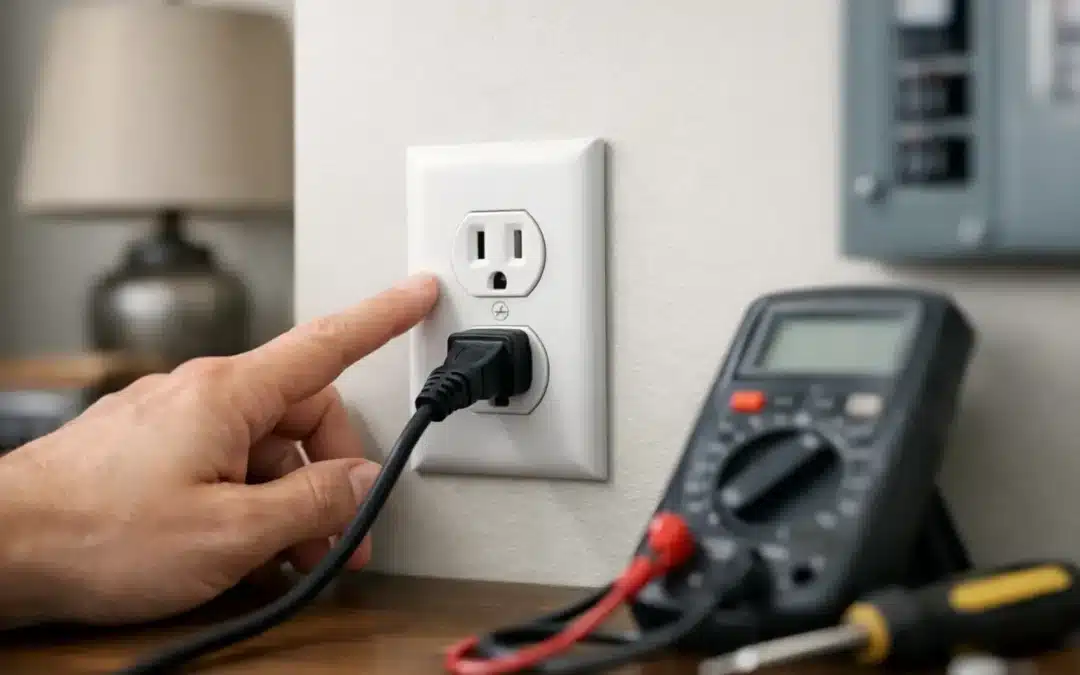
You plug in your phone charger, lamp, or coffee maker and nothing happens. When that happens, homeowners usually want the same answer fast – what are the top reasons outlets stop working, and is this something simple or something unsafe? The truth is that a dead outlet can be a minor reset issue, or it can point to a larger electrical problem that should not be ignored.
In many homes, one failed outlet is not really about that one outlet. It can be tied to a tripped GFCI, a loose wire connection, a breaker issue, or even wear inside an older electrical system. In Southwest Florida, storm activity, humidity, and heavy appliance use can also add stress to a home’s electrical setup over time.
Top reasons outlets stop working
Some outlet failures are straightforward. Others take testing and electrical experience to diagnose safely. The key is knowing which situations are low-risk to check and which ones call for a licensed electrician.
A tripped breaker shut off the circuit
One of the most common causes is a tripped breaker in the electrical panel. Breakers are designed to shut power off when a circuit is overloaded or when a fault is detected. If you were running several devices at once, or if a high-demand appliance kicked on at the same time, the breaker may have done exactly what it was supposed to do.
Sometimes the tripped breaker is obvious. Other times it sits in a middle position and does not look fully off. Resetting it correctly may restore power, but if it trips again, that is a warning sign. Repeated breaker trips usually mean the issue is not random. It may be an overloaded circuit, a short, or a problem with the outlet or wiring itself.
A GFCI outlet tripped somewhere nearby
This is another one of the top reasons outlets stop working, and it surprises a lot of homeowners. A GFCI outlet can control power to other standard outlets downstream on the same circuit. That means the dead outlet in your bedroom, garage, patio, or bathroom may not be the actual problem location.
Check nearby GFCI outlets, especially in kitchens, bathrooms, garages, laundry rooms, and outdoor areas. If one has tripped, pressing the reset button may restore power. If it will not reset, or if it trips repeatedly, there may be moisture intrusion, a wiring fault, or a defective device that needs professional attention.
The outlet has worn out internally
Outlets do not last forever. Over time, the internal contacts can loosen, the device can crack, or the connections can deteriorate from age and use. This is especially common in older homes or in outlets that get frequent use from space heaters, hair dryers, kitchen appliances, or window AC units.
A worn outlet may seem dead one day, but sometimes there are earlier clues. Plugs may feel loose, the faceplate may be warm, or the outlet may work only intermittently. Those are not symptoms to ignore. Even if the fix is simply replacing the outlet, it still needs to be done correctly to protect the circuit and the home.
A loose wire connection interrupted power
Loose wiring is a common reason an outlet stops working, particularly in older electrical systems or in outlets that were installed with push-in backstab connections instead of more secure terminal screws. As wires expand and contract with normal heating and cooling, weak connections can eventually fail.
This kind of problem can affect one outlet or several in a row. In some cases, lights or outlets on the same circuit may flicker or work on and off before failing completely. Because loose wiring can create heat and arcing, this is one of the more serious possibilities behind a dead outlet.
The circuit is overloaded
Not every dead outlet means there is damage. Sometimes the circuit is simply being asked to do too much. Modern households use more electronics and more high-draw devices than many older homes were designed to handle.
If you regularly use power strips, extension cords, or several appliances on the same circuit, the outlet may stop working because the breaker is tripping to prevent overheating. The real fix may not be replacing the outlet at all. It may be redistributing electrical demand, adding dedicated circuits, or upgrading parts of the system.
There is damage from moisture or weather
In Florida homes, outdoor outlets and garage outlets take more abuse than many homeowners realize. Rain, humidity, salt air in coastal areas, and storm-related power events can all contribute to outlet failure. Even properly installed outdoor receptacles can wear down over time if covers are damaged or seals no longer keep moisture out.
Moisture and electricity are a dangerous mix. If an exterior outlet is dead after heavy rain or a storm, do not assume it is just drying out. It could be a GFCI doing its job, or it could be corrosion or water intrusion inside the device or box.
A damaged appliance caused the issue
Sometimes the outlet is not the original problem. A faulty appliance or charger can trip the breaker or GFCI and make it seem like the outlet failed first. If power went out right after plugging in a specific device, unplug it before resetting anything.
This is one of those situations where context matters. If the outlet works again with a different device, the appliance may be at fault. If the outlet still does not work, or if resetting causes another trip right away, there is likely a deeper electrical issue that needs diagnosis.
The outlet is part of a larger wiring problem
A dead outlet can also be a symptom of broader trouble in the home’s electrical system. That might include aging aluminum wiring, panel issues, damaged conductors, improper past repairs, or hidden faults behind the wall. In these cases, replacing the outlet alone will not solve the problem.
This is where professional troubleshooting matters. Electrical problems are not always visible from the outside, and guessing can create more risk than the original issue.
What you can safely check first
There are a few basic steps homeowners can take before calling for service. Check the electrical panel for a tripped breaker. Look for nearby GFCI outlets and press reset if needed. Unplug devices from the dead outlet and see whether the problem happened after using one particular appliance.
You can also note what else lost power. If only one outlet is dead, the cause may be localized. If several outlets or lights are affected, the issue is more likely tied to the circuit, a GFCI, or a wiring connection upstream.
What you should not do is open the outlet, remove the cover, or try to repair wiring yourself unless you are trained and qualified to do so. Even a simple-looking outlet can still involve live conductors and hidden hazards.
When a dead outlet becomes a safety issue
Some outlet failures are more urgent than others. If you notice a burning smell, buzzing, discoloration, sparks, heat, or a breaker that will not stay reset, stop using that circuit and have it inspected. The same goes for outlets that stop working after storm activity or show any sign of water exposure.
An outlet that fails quietly may still be a warning. Electrical systems usually give homeowners small clues before a larger problem develops. Paying attention early can help prevent damage to electronics, nuisance outages, or more serious hazards.
Why professional diagnosis saves time
The challenge with outlet issues is that the symptom is simple, but the cause is not always obvious. The same dead outlet could be tied to a tripped safety device, internal wear, circuit overload, or damaged wiring somewhere else on the line. That is why accurate diagnosis matters more than quick guessing.
A licensed electrician can test the outlet, trace the circuit, inspect the panel, and identify whether the repair is isolated or part of a larger upgrade need. For homeowners in Cape Coral, Fort Myers, North Fort Myers, and surrounding communities, that can be especially valuable after summer storms or in older homes with electrical systems that have seen years of heavy use.
At Infinite Electric & Air, we see this often – what looks like one bad outlet sometimes points to a preventable issue elsewhere in the home. The goal is not just to get power back on, but to make sure the repair is safe, reliable, and built to last.
If an outlet in your home stopped working, start with the simple checks, but trust your instincts if something seems off. Electrical problems are easiest to fix when they are caught early, and peace of mind is worth more than forcing one more reset.