
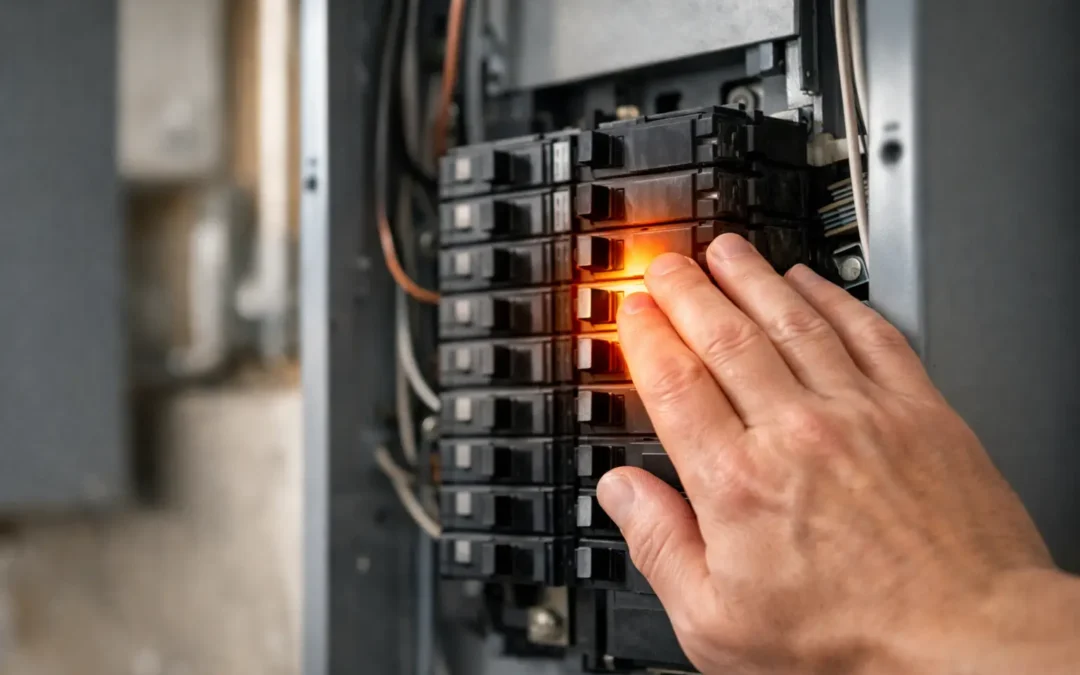
You put your hand near the panel and notice it feels warm. That can be unsettling, and for good reason. If you are asking, why is my breaker box warm to touch, the answer depends on how warm it feels, what else is happening in your home, and whether the heat is coming from normal electrical use or a developing problem.
A breaker box is not supposed to feel hot, but a slight warmth is not always an emergency. Electrical current naturally creates some heat, especially when large appliances, air conditioning systems, or multiple circuits are running at the same time. In Southwest Florida, where cooling systems work hard for much of the year, panels may see heavier demand than homeowners in milder climates. The key is knowing the difference between mild warmth and warning-sign heat.
Why is my breaker box warm to touch sometimes?
A small amount of warmth can be normal. When electricity moves through breakers and wiring, resistance creates heat. Under regular conditions, that heat should stay controlled. You may notice a panel feels slightly warm after the AC has been cycling often, the dryer is running, or several kitchen appliances are in use.
What should not happen is a panel that feels distinctly hot, gives off an odor, makes buzzing or crackling sounds, or shows signs of discoloration. Heat paired with those symptoms usually points to a problem that needs professional attention.
What causes a breaker box to get warm?
There is no single answer. Several electrical issues can make a breaker box feel warmer than it should, and some are more serious than others.
Heavy electrical load
One of the most common reasons is simple demand. If your home is drawing a lot of power at once, the breakers and bus bars inside the panel can warm up. This is especially true in homes with older electrical systems, added appliances, or newer equipment connected to a panel that was never designed for the current load.
That does not automatically mean something is failing. But if the panel is frequently warm during normal household use, it may be a sign your electrical system is working too close to its limit.
Loose connections
Loose wiring inside a panel is a more serious concern. A loose connection increases electrical resistance, and resistance creates heat. Over time, that heat can build, damage components, and in severe cases create a fire risk.
This type of issue is often not visible from the outside. The panel door may look fine while a connection inside is overheating. That is one reason a warm panel should never be ignored if the heat seems unusual or keeps returning.
Overloaded circuits
Sometimes the panel itself is not the real problem. An overloaded circuit can cause one breaker to run hotter than normal. For example, if a single circuit is handling too many devices or a high-demand appliance has been added without proper planning, the breaker may heat up as it protects the circuit.
Breakers are designed to trip when current gets too high, but a circuit can still run hotter than it should before that happens. Repeated overloading also wears down electrical components over time.
Failing breaker
Breakers do not last forever. As they age, internal parts can weaken or fail. A breaker that is wearing out may run hot, trip for no clear reason, or fail to trip when it should. Any of those situations can put your home at risk.
A warm panel with one breaker noticeably hotter than the others can point to this issue. The breaker may still appear functional, but that does not mean it is safe.
Panel age or outdated equipment
Older panels can be less reliable, especially if your household electrical needs have increased over the years. Many homes now use more electronics, larger HVAC systems, garage equipment, and smart home devices than they did when the panel was first installed.
If your panel is outdated, undersized, or has a history of repairs, warmth may be a signal that it is time for a closer evaluation or an upgrade.
When is a warm breaker box dangerous?
Temperature matters, but so does context. A panel that feels slightly warm during heavy use is different from one that feels hot enough to make you pull your hand away.
You should treat the situation as urgent if you notice any of the following: a burning smell, buzzing, popping, frequent breaker trips, flickering lights, visible rust or corrosion, scorch marks, or a panel that feels hot rather than just mildly warm. Water intrusion is also a major concern, particularly in Florida where humidity, storms, and outdoor equipment can affect electrical systems.
If the panel is hot, do not open it, do not touch breakers repeatedly, and do not try to diagnose internal components yourself. Electrical panels contain live parts, even when individual breakers are switched off.
Why is my breaker box warm to touch if nothing seems wrong?
This is where homeowners can get mixed signals. You may not have tripped breakers or obvious power problems, yet the panel still feels warmer than expected. That can happen when an issue is developing quietly.
Loose lugs, aging breakers, corrosion, or a panel carrying near-capacity loads may not create immediate symptoms. The system can continue operating while heat slowly builds over time. In other words, no dramatic warning signs does not always mean no problem.
If the warmth is new, recurring, or stronger than usual, it is worth having a licensed electrician inspect it. A professional can safely test loads, examine breaker condition, and check for hidden trouble inside the panel.
What you can check safely
Homeowner safety comes first, so the list of safe checks is short. You can pay attention to patterns. Does the panel get warm only when the AC, oven, or dryer is running? Do lights dim when major appliances start? Have breakers been tripping more often lately? Is there any odor near the panel?
You can also look at the outside of the panel for obvious warning signs, such as rust, moisture stains, or discoloration around the door. If your panel is in a garage, utility room, or exterior location, think about whether it may be exposed to excessive humidity or heat.
What you should not do is remove the dead front cover, tighten connections, or replace breakers on your own unless you are a qualified electrician. That is not routine DIY territory.
Why Florida homes can see this issue more often
In places like Cape Coral, Fort Myers, and North Fort Myers, electrical systems often work harder because air conditioners run for long stretches and storm-related electrical wear is more common. High humidity can also contribute to corrosion over time, especially in older panels or equipment exposed to damp conditions.
That does not mean every warm panel is a major failure. It does mean local conditions can put more stress on your system than homeowners expect. Panels that are marginally adequate on paper may struggle in real-world Florida use.
When to call a licensed electrician
Call sooner rather than later if the breaker box feels hot, the warmth is getting worse, or you notice any other electrical symptoms. A licensed electrician can determine whether the issue is normal load-related warmth, a failing breaker, a loose connection, corrosion, or an undersized panel.
This is one of those situations where waiting can make the repair more expensive. A minor connection issue caught early is very different from heat damage to the panel or wiring. At Infinite Electric & Air, this is exactly the kind of safety-first issue we encourage homeowners not to ignore.
Can a panel upgrade solve the problem?
Sometimes yes, sometimes no. If the problem is a bad breaker or loose connection, a targeted repair may be enough. If the panel is outdated, crowded, damaged, or too small for the home’s electrical demand, a panel upgrade may be the smarter long-term fix.
A good electrician should not push an upgrade automatically. They should explain what they found, what is causing the heat, and whether repair or replacement makes more sense for your home and budget. Transparent recommendations matter, especially with electrical work tied directly to safety.
A warm breaker box is not something to panic over, but it is also not something to brush off. If your panel feels warmer than normal, trust that instinct and have it checked before a small warning turns into a larger repair.