
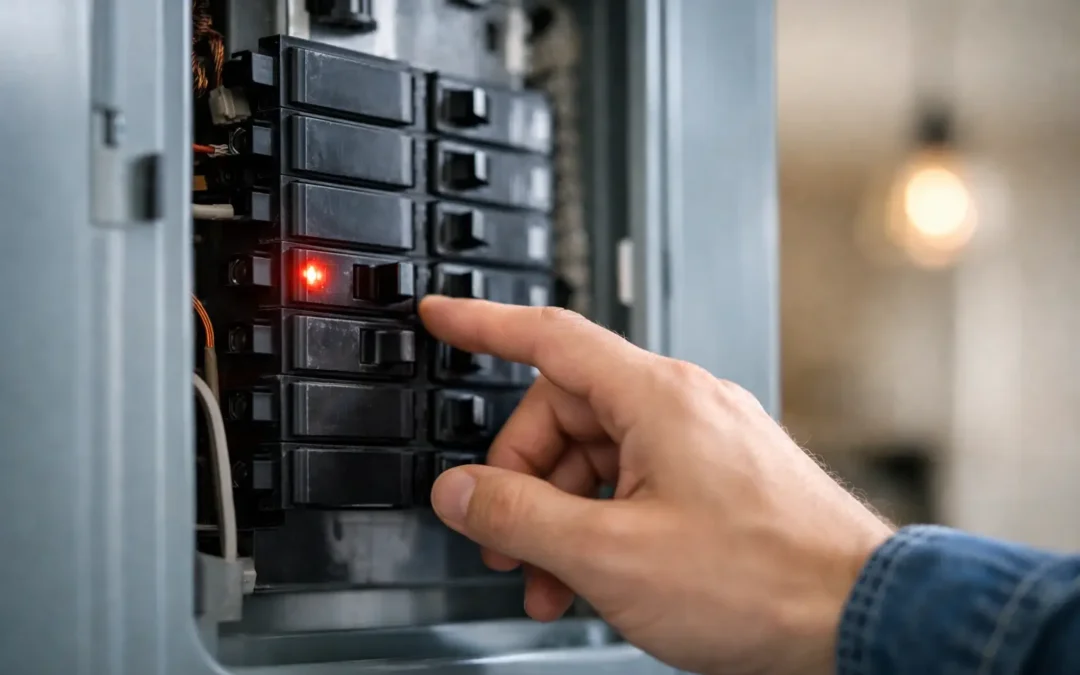
That moment when the lights cut out, the microwave stops, or the AC suddenly goes quiet usually leads to the same question: why does my breaker keep tripping? A tripped breaker is not just an inconvenience. It is your electrical system doing its job by shutting off power before wiring overheats, equipment is damaged, or a more serious hazard develops.
In many homes, especially in Southwest Florida where air conditioners, pool equipment, and storm-related power issues put extra demand on electrical systems, repeated breaker trips can point to anything from a simple overload to a wiring problem that needs professional repair. The key is knowing the difference.
Why does my breaker keep tripping in the first place?
A circuit breaker trips when it senses a condition that is unsafe for that circuit. Most often, that means too much current is flowing, a short circuit has formed, or a ground fault is present. The breaker shuts power off fast to protect the wiring behind your walls.
If it trips once after you plug in too many things, that may be an isolated overload. If it keeps happening on the same circuit, or the breaker will not stay reset, there is usually an underlying issue that should not be ignored.
Overloaded circuits are the most common cause
An overload happens when a circuit is asked to power more than it was designed to handle. This is very common in kitchens, laundry rooms, garages, and older living areas where today’s appliances draw more power than the original wiring anticipated.
Space heaters, air fryers, toaster ovens, hair dryers, portable AC units, and even multiple chargers can add up quickly. In Florida homes, it is also common to see overloads when large appliances or cooling equipment share a circuit that should be dedicated.
If the breaker trips only when certain devices run at the same time, overload is a likely cause. That does not always mean anything is broken. It may mean the circuit is undersized for how the space is being used now.
Short circuits are more serious
A short circuit happens when a hot wire touches another wire or a neutral wire where it should not. This creates a sudden surge of current, and the breaker trips to stop it. Shorts can happen inside outlets, switches, fixtures, appliances, or hidden wiring.
Signs can include a breaker that trips immediately, a burning smell, buzzing, discoloration around an outlet, or a device that causes the trip every time it is used. This is not a wait-and-see situation. If you suspect a short, leave the breaker off and have it inspected.
Ground faults are another safety issue
A ground fault is similar to a short, but the electricity takes an unintended path to ground. These are especially common in bathrooms, kitchens, garages, outdoor outlets, and pool-related circuits where moisture is part of the environment.
Because Southwest Florida homes deal with humidity, rain, and outdoor electrical exposure year-round, ground faults are not unusual. A damaged outdoor receptacle, wet connection, or worn appliance cord can all trigger repeated trips.
Sometimes the breaker itself is the problem
Not every tripping issue means the wiring is bad. Breakers can wear out over time. If a breaker is old, weak, hot to the touch, or feels loose when resetting, it may be tripping too easily or failing to hold under a normal load.
That said, a failing breaker can look a lot like an overloaded or damaged circuit. Replacing it without diagnosing the cause first can miss the real problem. This is one reason electrical troubleshooting should be methodical rather than guesswork.
What you can safely check before calling an electrician
There are a few reasonable steps a homeowner can take. Start by identifying what went off when the breaker tripped. Was it one room, one appliance, or a larger section of the house? Then think about what was running at the time.
If several high-demand devices were on together, unplug or turn off a few of them and reset the breaker once. If it stays on, that supports the overload theory. If it trips again right away, stop there.
You can also look for obvious warning signs such as scorched outlets, warm wall plates, a breaker that will not fully reset, or a specific appliance that triggers the problem every time. If an appliance seems to be the cause, leave it unplugged until it can be checked.
What you should not do is keep resetting the breaker over and over. Repeated trips are telling you something. Forcing the system to keep trying can make damage worse.
When a tripping breaker points to a bigger panel issue
Sometimes the circuit is not the only problem. The electrical panel itself may be outdated, undersized, or struggling to support the home’s current electrical load. This becomes more common in older homes that have added new appliances, EV chargers, remodeled kitchens, or upgraded HVAC systems without a corresponding panel upgrade.
In practical terms, your home may be using electricity in a very different way than it did when the panel was installed. If breakers trip in multiple areas, lights flicker when major equipment starts, or there is no room left in the panel for dedicated circuits, the issue may be capacity rather than a single bad breaker.
This is especially worth considering if your air conditioner runs hard for much of the year. Cooling systems place real demand on a home’s electrical system, and that demand tends to show up during the hottest part of the day, when everything else is working hard too.
Why does my breaker keep tripping when the AC turns on?
If the breaker trips when your air conditioner starts, the problem could be electrical, mechanical, or both. A struggling compressor, failing capacitor, dirty condenser, or aging blower motor can draw more current than normal. In other cases, the issue is with the circuit, disconnect, breaker, or panel.
This is where electrical and HVAC experience both matter. Replacing a breaker will not fix an air conditioner that is pulling excessive amperage, and servicing the AC will not solve a loose connection in the panel. Accurate diagnosis is what saves time and money.
Storms, surges, and Florida conditions can play a role
Breaker problems are not always caused by everyday use. In Florida, power surges, lightning activity, salt air, humidity, and storm damage can all affect electrical components over time. Outdoor equipment, pool systems, condensers, and exterior outlets are especially exposed.
A breaker that starts tripping after a storm may be reacting to damaged equipment, moisture intrusion, or a weakened component. Even if power came back on normally, hidden damage is possible. That is one reason surge protection and professional inspection matter so much in this region.
When it is time to call a licensed electrician
Call for professional help if the breaker trips repeatedly, trips immediately after resetting, smells hot, shows visible damage, or is tied to a major appliance or HVAC equipment. You should also call if you notice buzzing sounds, warm outlets, flickering that affects multiple rooms, or any sign of burning.
A licensed electrician can test the circuit, inspect the breaker and panel, evaluate connected devices, and determine whether the fix is a simple repair, a dedicated circuit, or a larger panel upgrade. Good troubleshooting is not about swapping parts until something works. It is about finding the actual source of the fault and correcting it safely.
For homeowners in places like Cape Coral, Fort Myers, and North Fort Myers, that local knowledge matters. Heat, storms, and year-round equipment use create patterns that a qualified local team will recognize quickly.
The safest way to think about breaker trips
A breaker is supposed to trip when something is wrong. That is the good news. The less helpful part is that the same symptom can come from several different causes, and some are much more serious than others.
If the issue turns out to be too many appliances on one circuit, that is usually manageable. If it is a hidden short, moisture problem, failing breaker, or overloaded panel, the right repair matters for both safety and reliability. Infinite Electric & Air helps homeowners track down those issues clearly, explain the options, and fix the problem without guesswork.
When your breaker keeps tripping, the goal is not just to get the power back on. It is to make sure your home is safe, your system is working the way it should, and the same problem does not keep showing up at the worst possible time.