
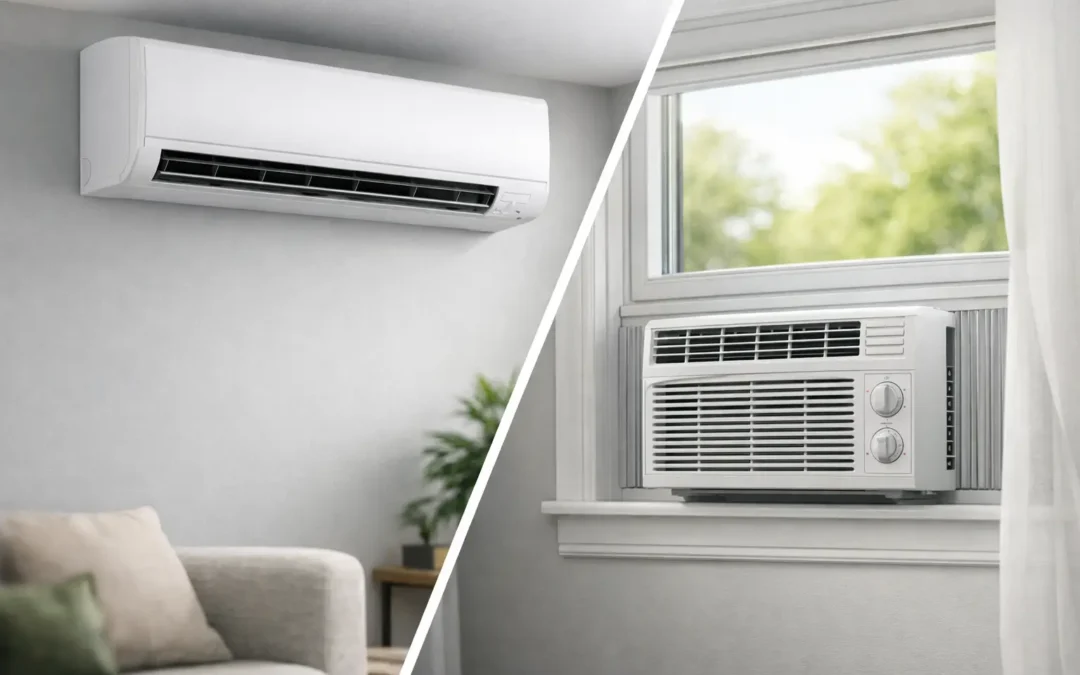
A hot bedroom, garage, or Florida room can make the ductless mini split vs window unit decision feel urgent. Both can cool a single space without replacing your central AC system, but they solve the problem in very different ways. The right choice depends on how often you use the room, how well it is insulated, your electrical setup, and whether you want a temporary fix or a long-term upgrade.
For homeowners in Southwest Florida, humidity and long cooling seasons raise the stakes. A unit that looks inexpensive at checkout can become frustrating if it runs constantly, trips a circuit, leaks water, or cannot keep up during a July afternoon.
Ductless Mini Split vs Window Unit: The Core Difference
A window unit is a self-contained air conditioner installed in a window or, in some cases, through an exterior wall. It pulls heat and moisture from the room and sends that heat outdoors through the back of the unit. It is usually the fastest and least expensive way to add cooling to one room.
A ductless mini split has two main components: an indoor air handler and an outdoor condenser. Refrigerant lines and electrical wiring connect the two through a small opening in the wall. The indoor unit quietly circulates conditioned air, while the louder heat-rejection equipment stays outside.
That design difference affects almost everything else: installation cost, noise, efficiency, appearance, maintenance, and performance during Florida’s hottest months.
Upfront Cost: Lower Purchase Price vs Long-Term Investment
Window units generally cost less to buy and install. A homeowner may be able to purchase a properly sized unit and have it operating the same day, provided the window, outlet, and electrical circuit are suitable. This can be a sensible answer for a guest room, a short-term rental need, or a space that is only used occasionally.
A ductless mini split costs more because it is a permanent HVAC installation. Proper installation involves sizing the equipment, mounting the indoor and outdoor components, running refrigerant lines, making electrical connections, pressure testing, evacuating the system, and commissioning it. Depending on the system and home, it may also require a dedicated electrical circuit and permit work.
The higher mini split price is often easier to justify when the room is used every day. A converted garage office, enclosed lanai, master bedroom addition, or workshop may benefit from better comfort and lower operating costs over time. If you only need occasional cooling for a spare room, a window unit may be the more practical choice.
Energy Efficiency Matters More in Florida
Air conditioning is not a rare convenience in Cape Coral, Fort Myers, and surrounding communities. It is a major part of household energy use for much of the year. That makes efficiency more than a specification on a box.
Many ductless mini splits use inverter-driven compressors. Rather than cycling fully on and off as often, an inverter system can adjust its output to match the room’s needs. This often provides steadier temperatures, quieter operation, and efficient performance during long cooling periods.
Window units vary widely. Higher-efficiency models are available, but budget units may use more electricity and cycle more noticeably. A window unit that is too small will run continuously without reaching a comfortable temperature. One that is oversized may cool the room quickly but remove less humidity, leaving the space chilly and clammy.
Neither system can overcome poor insulation, direct sun exposure, air leaks, or an uninsulated garage door. Before selecting equipment, consider the room itself. Improving weatherstripping, insulation, window coverings, or attic conditions can reduce the size of system needed and improve comfort with either option.
Comfort, Humidity, and Noise
Cooling capacity is only part of comfort. In Southwest Florida, humidity control matters just as much. Excess indoor moisture can make a room feel warmer than the thermostat setting and contribute to musty odors or mold concerns.
A correctly sized mini split typically offers more consistent temperature and humidity control than a basic window unit. Its indoor air handler is also quieter because the compressor is outdoors. That can make a meaningful difference in bedrooms, nurseries, home offices, and media rooms.
Window units have the advantage of simplicity, but their fan and compressor are both in the room. Some homeowners do not mind the sound. Others find it disruptive during sleep, work calls, or television time. The unit also occupies part of a window, reducing natural light, limiting the view, and potentially affecting how securely the window closes.
Installation and Electrical Safety
A window unit may appear to be a plug-in appliance, but electrical safety still deserves attention. Smaller units may operate on a standard 120-volt outlet. Larger units can require 240 volts or a dedicated circuit. Plugging an air conditioner into an extension cord or power strip is not a safe workaround. These devices can overheat, especially under the sustained load of air conditioning equipment.
A ductless mini split commonly needs a dedicated circuit, outdoor disconnect, and correctly sized wiring. The work should be completed by qualified HVAC and electrical professionals who can verify that the panel has adequate capacity and that the system is installed to current code requirements.
This is especially relevant in older homes where electrical panels, outlets, or branch circuits may not have been designed for added cooling equipment. If breakers trip when the AC runs, the solution is not simply to install a larger breaker. The circuit and wiring must be evaluated first.
Storm Season and Security Considerations
Florida homeowners also have to consider storms. A window unit can leave a vulnerable opening in the home, particularly if it is not properly secured or if the unit must be removed before a severe weather event. Removal is possible, but it is not always convenient with heavier models.
A mini split keeps windows clear and is permanently mounted. Its outdoor condenser must be installed on an appropriate pad or bracket and secured correctly. Like any outdoor HVAC equipment, it should be considered as part of the home’s storm-preparation plan. Surge protection is also worth discussing because sensitive HVAC electronics can be vulnerable to voltage spikes caused by lightning or utility disruptions.
Neither option cools your home during a power outage unless you have properly sized backup power. A whole-home generator or appropriate backup solution requires careful load planning, particularly when air conditioning is involved.
Which Rooms Are Best for Each Option?
A window unit is often a good match for a small bedroom, temporary cooling need, rental situation, or lightly used room where low upfront cost is the priority. It can also provide short-term relief while a central AC repair is being scheduled.
A ductless mini split is often the stronger fit for a garage conversion, home addition, detached workspace, sunroom, frequently used bedroom, or any area that your central system does not cool well. It can also be a smart solution when adding ductwork would be disruptive or expensive.
For larger areas, one indoor head may not be enough. Multi-zone mini split systems can serve several rooms from one outdoor unit, but they need thoughtful design. Room sizes, sun exposure, ceilings, occupancy, and heat-producing equipment all affect sizing. Bigger is not automatically better.
Maintenance Is Part of the Decision
Window units need regular filter cleaning and should be checked for drainage issues, mold growth, damaged cords, and loose mounting hardware. At the end of their service life, replacement is often more economical than major repair.
Mini splits also need clean filters, but their indoor coils, drain lines, blower wheels, and outdoor condenser need periodic professional attention. A clogged condensate drain can lead to water damage, while neglected coils reduce efficiency and strain the system. Routine maintenance helps protect the investment and keeps humidity control on track.
Make the Choice Based on How You Live
The best cooling option is the one that safely serves the room without creating a larger comfort, electrical, or moisture problem. A window unit can be an effective, affordable answer when the need is simple and temporary. A ductless mini split is usually the better long-term option when comfort, quiet operation, energy efficiency, and daily use matter.
Before buying either system, have the room, electrical capacity, and cooling needs assessed. Infinite Electric & Air can help homeowners determine whether a dedicated circuit, mini split installation, central AC adjustment, or another solution will provide dependable comfort when Florida heat is at its worst.