
A little water around your indoor AC unit can turn into a much bigger problem fast in Southwest Florida. If you want to clean AC condensate drain line safely, the goal is not just clearing a clog – it is protecting your system, your ceiling or walls, and your home from unnecessary water damage.
Why the condensate drain line matters
Your air conditioner does more than cool the air. It also removes humidity, which is a major job in places like Fort Myers, Cape Coral, and North Fort Myers. As warm indoor air passes over the evaporator coil, moisture collects and drains away through the condensate line.
When that line starts to clog with algae, sludge, dirt, or debris, the water has nowhere to go. Sometimes it backs up into the drain pan. Sometimes it triggers a float switch that shuts the system off. In worse cases, it leaks into surrounding materials and causes staining, moisture damage, or mold concerns.
That is why cleaning the line matters. But there is a right way to do it, and there are a few mistakes homeowners should avoid.
Signs you may need to clean AC condensate drain line safely
Most drain line clogs do not announce themselves all at once. They usually build up gradually. You might notice water near the air handler, a musty odor, an AC system that suddenly stops running, or visible gunk near the drain pipe access point.
If your system has a safety shutoff switch, a clog may look like an equipment failure when it is really a drainage issue. If you do not have a shutoff switch, the first sign may be water where it should not be.
It also depends on your system setup. Some homes have attic air handlers, and those can create a more urgent situation because an overflowing drain pan above the ceiling can lead to interior damage quickly.
Before you start, think safety first
Cleaning a condensate line is one of the more approachable AC maintenance tasks for many homeowners, but safe preparation matters. Start by turning off power to the air conditioner at the thermostat and breaker. You do not want the system running while you are opening the drain access or working around the indoor unit.
You will also want to avoid using harsh chemicals, drain cleaner, or anything that could damage the piping. Standard household drain cleaners are not made for AC condensate systems. They can harm the line, create fumes, and potentially damage parts of the unit.
Wear gloves if you are dealing with standing water or buildup. If your unit is in the attic, make sure your footing is secure and do not step anywhere that is not properly supported.
What you usually need
For most basic cleanings, a wet/dry vacuum, a cup of distilled vinegar, a funnel or small measuring cup, and a towel are enough. In some cases, you may also need a screwdriver to remove the drain line cap or access panel.
A wet/dry vacuum is often the safest and most effective way to pull a clog from the outside drain termination. It removes debris without forcing it deeper into the line, which can happen if the wrong tool or too much pressure is used.
How to clean AC condensate drain line safely at home
1. Shut the system off
Turn the thermostat to off, then switch off power at the breaker if possible. This protects both you and the equipment.
2. Find the drain line and access point
Most systems have a PVC condensate drain line near the indoor air handler. There is often a vertical vent tee with a cap on it. That opening is commonly used for inspection and cleaning.
You should also locate where the drain line ends outside the home. That is the point where many technicians connect a wet/dry vacuum.
3. Check for visible blockage or standing water
Remove the cap carefully and look inside. If you see backed-up water in the line or pan, that is a strong sign of a clog. If the drain pan is already full or rusted through, cleaning the line may not be the only repair needed.
4. Use a wet/dry vacuum on the outside drain opening
Go to the outdoor end of the drain line and connect the vacuum hose as tightly as possible. Some homeowners use a cloth or duct tape to help seal the connection for a minute or two. Run the vacuum long enough to pull out sludge, algae, and water.
This method is preferred because it draws the blockage out rather than pushing it inward. That is usually safer for the piping and more effective on soft clogs.
5. Flush the line from the indoor access point
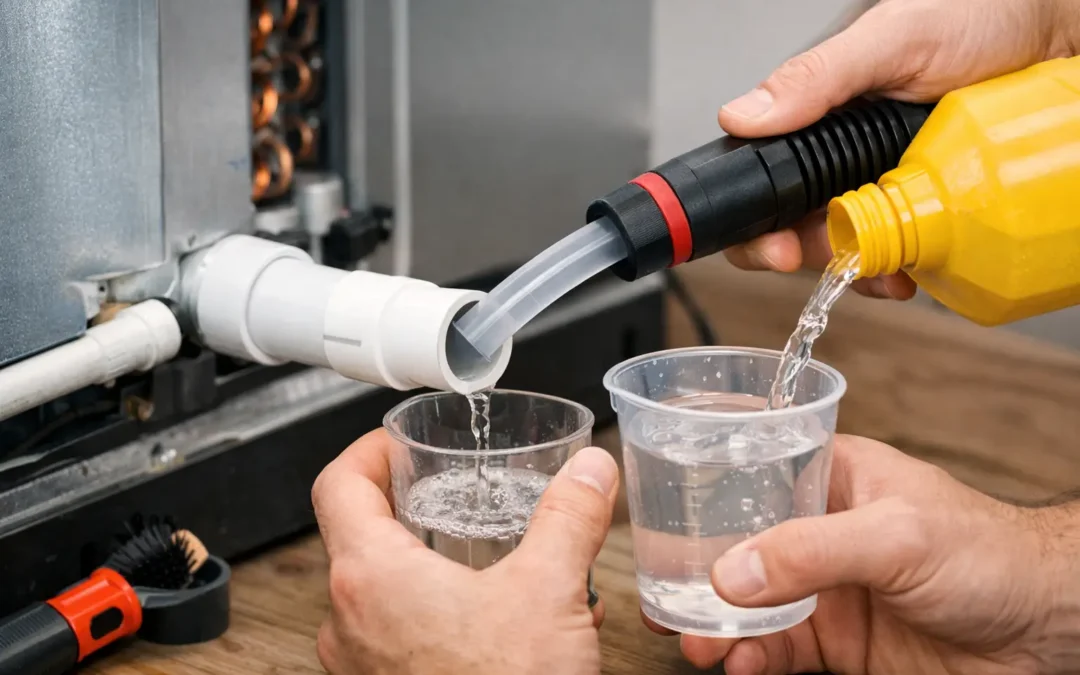
After vacuuming, pour distilled vinegar into the vent tee opening. A small amount is usually enough to help break down remaining buildup and discourage algae growth. Let it sit for about 30 minutes, then flush with water if your manufacturer allows it.
This is where restraint matters. You are flushing the line, not pressure-washing it. Too much force can separate fittings or create leaks, especially on older PVC.
6. Reassemble and test the system
Replace the cap, make sure everything is secure, and restore power. Turn the AC back on and monitor the drain line and pan for normal drainage.
If the system does not restart, the float switch may still be triggered or there may be a larger issue than a simple clog.
What not to do
Trying to clear a condensate line with a wire hanger, pressurized air without proper control, or chemical drain opener can create more trouble than the clog itself. You could puncture the line, damage a fitting inside the cabinet, or force debris into a harder-to-reach section.
Bleach is another common question. Some homeowners use it, but it is not always the best choice. It can be harsh on components, and fumes are not something you want around your indoor equipment. Vinegar is generally the safer maintenance option for routine flushing.
If your system is older, your drain line is brittle, or your air handler is difficult to access, a cautious approach is better than an aggressive one.
When a clog points to a bigger AC problem
Sometimes a blocked drain line is just a maintenance issue. Other times, it is a symptom. If your evaporator coil is dirty, airflow is restricted, or the system is short cycling, you may have excess condensation or recurring drainage problems.
A repeatedly clogged line can also mean the drain pitch is off, the pan is deteriorating, or the line was never installed for easy service. In Florida homes, heavy AC use and high humidity can make these issues show up faster.
If the line clogs again soon after cleaning, that is worth a closer look. Frequent backups are usually a sign that more than basic cleaning is needed.
How often should you clean it?
For many homeowners, checking and flushing the condensate line every few months is a smart preventive habit, especially during cooling season. Homes that run the AC nearly year-round, which is common in Southwest Florida, may benefit from more regular attention.
That said, frequency depends on the system, indoor air quality, filter maintenance, and how prone the line is to algae growth. A newer system with regular professional maintenance may stay cleaner longer than an older unit in a humid attic.
When it is better to call a professional
If water is overflowing into the home, the drain pan is damaged, the line appears disconnected, or the clog will not clear with a vacuum and flush, it is time to bring in an HVAC professional. The same goes for any situation where you are not comfortable working around the unit or accessing an attic installation.
Professional service can also help if the drain issue is tied to a dirty coil, a failing float switch, or a deeper system problem. A proper inspection can keep a simple moisture issue from becoming an expensive repair.
For homeowners who want peace of mind, routine AC maintenance is often the easiest way to stay ahead of drain line problems. A trained technician can inspect the condensate system, test safety switches, and catch early signs of trouble before water ends up where it should not.
A safer way to think about drain line cleaning
The best approach is not to treat condensate line cleaning like a one-time fix. Think of it as part of keeping your AC system reliable during long Florida cooling seasons. Clear drainage helps your unit run as it should, helps protect your home, and reduces the chance of a sudden shutdown on a hot day.
If you can clean AC condensate drain line safely with a careful vacuum-and-flush method, that can be a useful homeowner task. If the situation looks messy, repeated, or uncertain, getting expert help is the safer call – and often the less expensive one in the long run.