
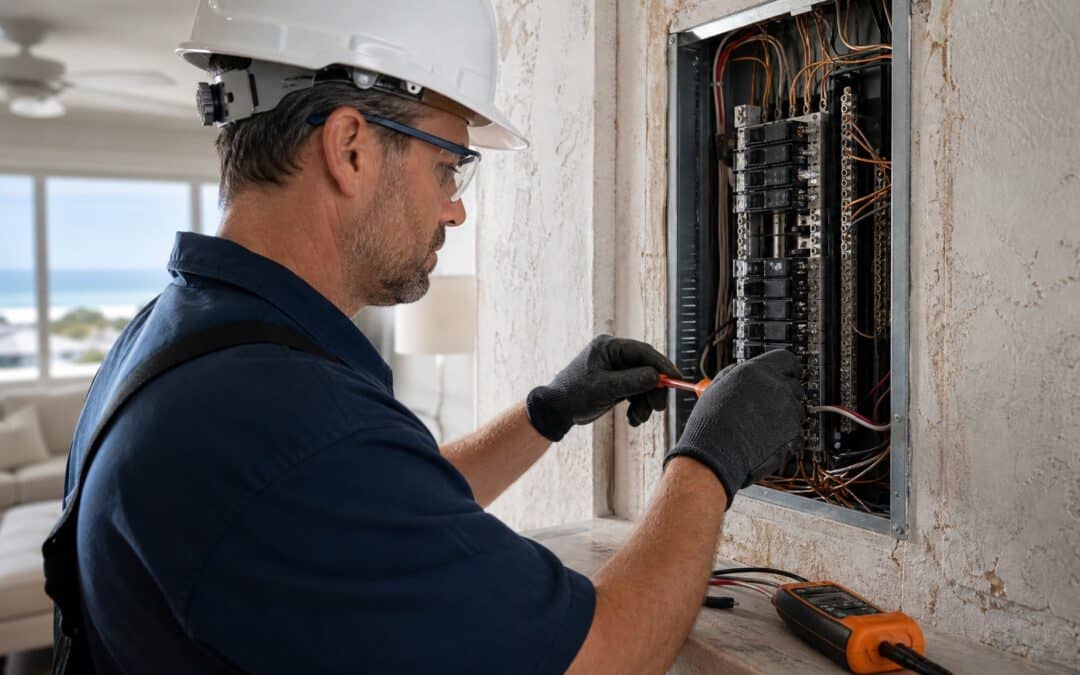
Hiring someone to work on your home’s electrical system is an act of trust, not just a transaction. In Southwest Florida, where salt air and summer storms test every connection in your walls, that trust needs to be backed by verifiable credentials and local expertise. The distinction between a licensed electrician vs handyman in Florida is not merely bureaucratic. It defines who can legally and safely protect your family from fire hazards and financial liability.
We understand the temptation to save money on quick fixes, especially when a friendly neighbor recommends a capable generalist for small jobs. But electrical systems don’t forgive shortcuts, and the consequences of unlicensed work often stay hidden until a breaker trips or an insurance adjuster asks for permit records. This guide explains exactly where the legal lines are drawn so you can make decisions that honor both your budget and your safety.
Florida Law: Licensed Electrician vs Handyman Scope
Understanding the legal boundaries between general maintenance and specialized electrical contracting protects you from accidentally hiring someone working outside their authorized scope. Florida Statute Chapter 489 requires a certified or registered license for electrical contracting work, and violations can be charged as a first-degree misdemeanor. That statute exists because electricity demands training that general home repair experience just doesn’t provide.
What Electrical Work Requires a License in Florida?
State law draws a firm line between maintenance and contracting. Any task involving the installation, alteration, repair, or addition to an electrical wiring system needs a state-certified or registered electrical contractor. That covers panel upgrades, new circuit installations, service entrance work, and any modification to existing wiring behind your drywall.
You can’t legally hire a handyman to rewire a room or add outlets to your kitchen island. Those tasks involve load calculations and code compliance checks that fall strictly under the jurisdiction of licensed professionals. Even jobs that sound simple, like replacing a breaker or extending a circuit, require understanding amperage ratings and wire gauge specs that keep wires from overheating.
Legal Limits for Handyman Electrical Tasks
Handymen play a valuable role in home maintenance, but their electrical scope is intentionally narrow. They may replace existing light fixtures, swap out switches and receptacles, or change ceiling fans where the wiring and box already exist and stay unaltered. Florida treats these as minor repairs because they don’t change the system’s capacity or configuration.
The moment a job calls for pulling new wire, modifying a panel, or installing a dedicated circuit for an appliance, the handyman exemption ends. Florida electrical code requirements treat that work as contracting because it changes the system’s safety profile. Hire someone without a license for this kind of job, and you’re exposed to liability no matter how skilled they look with other tools.
Insurance Risks of Unlicensed Electrical Work
Your homeowner’s insurance policy assumes that all permitted work on your property was done by qualified professionals following code. When that assumption breaks down because of unlicensed modifications, your coverage can break down with it. Insurance carriers commonly deny coverage, or write exclusions, for fire damage that traces back to unpermitted electrical work done by non-licensed individuals.
Homeowner Liability and Claim Denials
If an electrical fire starts in a wall where unpermitted work was done, the burden of proof shifts to you. Adjusters will ask for permit records and contractor licenses to validate the claim, and missing documentation can trigger a denial based on negligence or a policy exclusion. You’re then facing repair costs, temporary housing expenses, and potential liability if the fire spreads to neighboring properties.
This risk goes beyond fires. It covers injuries from faulty installations too. If a guest gets shocked by an improperly grounded outlet an unlicensed worker installed, your liability umbrella may have gaps. Proper licensing shifts professional responsibility onto the contractor, so their insurance covers the mistake instead of your personal assets.
Why Permits Protect Your Property Value
Permits create an official record that county authorities inspected and approved the work. When you eventually sell your home, buyers and their agents will scrutinize these records during due diligence, particularly in coastal markets where storm resilience matters. An electrical inspection before buying a house frequently uncovers unpermitted work that derails closings or forces expensive remediation.
Unpermitted improvements also complicate renovations down the road. Contractors working on your home years later may find unsafe wiring buried in walls with no documentation explaining where it came from. That uncertainty adds cost and delay, because they have to verify or replace unknown work before they can safely proceed.
Safety Standards and Florida Electrical Code Requirements
Southwest Florida presents environmental challenges that national electrical codes only address through specific state and local amendments. High humidity, salt spray, and frequent lightning strikes demand installation practices that go beyond the baseline standards built for drier climates. Proper grounding and bonding here calls for specialized knowledge of soil conductivity and salt-air corrosion resistance, knowledge general handymen typically don’t have.
NEC Compliance in High-Humidity Environments
Florida’s electrical code builds on National Electrical Council standards and adds critical adaptations for our subtropical climate. Outdoor equipment must meet specific corrosion-resistance ratings, and conduit installations need sealing methods that keep moisture out during driving rains. Licensed electricians train specifically on these regional requirements, because generic textbook knowledge doesn’t account for Gulf Coast conditions.
GFCI protection requirements here extend past standard indoor locations to cover garages, lanais, and outdoor entertainment areas where moisture exposure never lets up. Arc-fault circuit interrupters have to go in bedrooms and living spaces to catch the kind of degraded insulation that humidity speeds along. These protections save lives, but only when someone who understands why they matter locally installs them correctly.
Common Code Violations by Unlicensed Workers
Unlicensed workers often miss subtle but critical safety requirements unique to our region. Improper grounding electrode connections fail silently in sandy soil, leaving homes vulnerable to surge damage during thunderstorms. Bonding straps on metal plumbing and gas lines get overlooked, creating shock hazards that pass a visual check but fail safety testing.
Wire sizing errors compound over time as circuits carry loads they were never designed to handle. A flickering lights safety guide often traces the problem back to undersized conductors or loose connections someone unfamiliar with voltage drop calculations put in. These defects sit there building up heat inside walls for years before they show up as failures or fires.
Cost Comparison: Upfront Savings vs Long-Term Value
The lower hourly rate of an unlicensed handyman rarely reflects the true cost of electrical work. Reworking improper installations typically costs two to three times what doing it right would have cost the first time, since licensed contractors have to remove non-compliant materials before they can even begin safe repairs. As a third-generation home services professional serving SWFL, we see firsthand the costly corrections needed when unlicensed work fails inspection or causes safety issues.
Licensed electrical work is an investment in protecting what you own, not a discretionary expense. Properly permitted and documented improvements keep your home insurable and keep its resale value intact, while eliminating the anxiety of hidden hazards. Knowing your family sleeps safely under code-compliant wiring has no line item, but going without it carries a price no discount can justify.
Choosing trusted local electrical services means paying once for work that lasts decades instead of paying repeatedly for corrections that compound problems. Honest pricing includes permits, inspections, and warranty-backed craftsmanship that protects your investment long after the truck drives away.
How to Verify a Florida Electrical Contractor License
Verification takes less than five minutes and eliminates guesswork entirely. The Florida Department of Business and Professional Regulation maintains a free online database where you can confirm active licensure, insurance status, and complaint history for any contractor. Learning choosing a contractor you can trust starts with this simple verification step before any money changes hands.
Using DBPR to Check Credentials
Visit the DBPR license lookup portal and search by business name or license number. Confirm the license type matches electrical contracting specifically, not general construction or another trade. Check that the status reads “Current,” and look for disciplinary actions or unresolved complaints that might signal reliability concerns.
Cross-reference the listed business address and phone number with what the contractor gave you directly. Legitimate operators keep consistent contact information across every platform and welcome verification as standard practice. Any hesitation to share license details is a problem worth looking into before you schedule the work.
Red Flags in Contractor Vetting
Cash-only payment demands should immediately disqualify any electrical contractor from consideration. Licensed professionals run transparent businesses with traceable transactions, proper accounting, and tax compliance, the exact things cash arrangements are built to dodge. A refusal to pull permits, or a suggestion to skip inspections to “save money,” means someone is operating outside legal boundaries.
Missing physical business addresses, vague company names, or pressure tactics should trigger caution. Established contractors build reputations over years and have nothing to hide from verification. Your safety depends on telling the difference between legitimate professionals and opportunists who disappear after collecting deposits.
Trusted Local Service in Southwest Florida
At Infinite Electric & Air, we believe honest work speaks louder than sales pitches. Founded by Vinny as a third-generation home services professional, our team serves Fort Myers, Cape Coral, Naples, Estero, and the surrounding communities with the same care we’d give our own families. We lead with love, because your home deserves more than technical competence. It deserves people who honor the trust you place in them.
Every technician we send carries full state licensure, comprehensive insurance, and deep familiarity with Southwest Florida’s unique electrical demands. We pull permits because transparency protects you, and we explain every recommendation in plain language so you understand exactly what your home needs. When you call us, you’re not getting a faceless corporation. You’re partnering with neighbors who stake their reputation on showing up on time and doing right by you.
Frequently Asked Questions
Can a handyman legally install new outlets or light fixtures in Florida?
A handyman may only replace existing outlets or fixtures where the wiring and electrical box remain completely unmodified. Installing new outlets, running additional wire, or adding fixtures where none existed previously constitutes electrical contracting that requires a state-certified or registered license under Florida Statute Chapter 489.
Will my insurance cover fire damage from unpermitted electrical work?
Most Florida homeowner policies contain exclusions for damage resulting from unpermitted or non-code-compliant work performed by unlicensed individuals. If an adjuster discovers missing permits or improper installations during a claim investigation, they may deny coverage entirely and leave you responsible for all repair costs and liability.
How do I check if an electrician is properly licensed in Florida?
Use the free license lookup tool on the Florida Department of Business and Professional Regulation website to verify active status, license type, and complaint history. Search by business name or license number, confirm the credential specifically covers electrical contracting, and cross-reference the listed contact information against what the contractor provided you directly.
Why does electrical work in Southwest Florida cost more than national averages?
Florida’s electrical code requires specialized corrosion-resistant materials, enhanced grounding for sandy soil, and additional GFCI protection due to high humidity and salt exposure. These regional adaptations demand specific training and higher-grade components that exceed baseline national standards, reflecting the real cost of building safely in our subtropical coastal environment.