
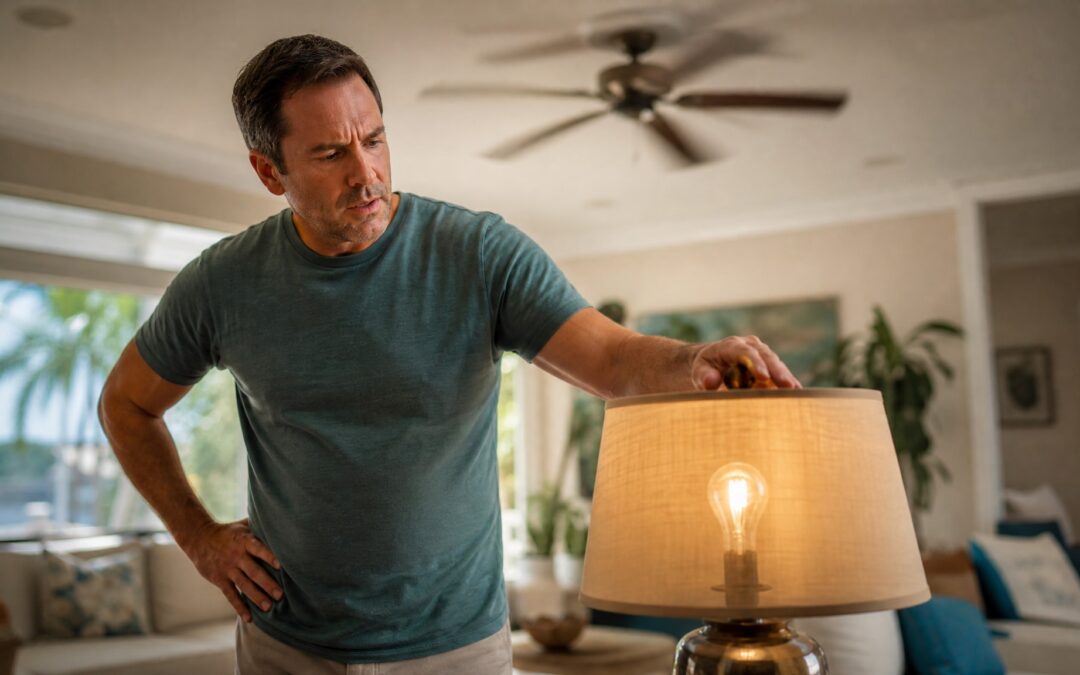
Seeing your lights flicker can be unsettling, especially when you’re not sure if it’s a simple bulb issue or something more serious hiding behind the walls. Some causes are harmless. Others signal faults that need a qualified professional’s attention right away, to keep your home safe.
Common Reasons Why Lights Flicker in Southwest Florida Homes
Not every flickering light means you have an emergency on your hands. But knowing the difference between a nuisance and a hazard means knowing what to look for in your own home. You might notice the living room lamp dim briefly when the air conditioner kicks on during a hot Cape Coral afternoon. That usually points to normal voltage fluctuation, not danger.
Loose bulbs are the most frequent culprit behind intermittent flickering, and you can usually fix this one yourself.
Vibration from ceiling fans, nearby construction, or heavy foot traffic can loosen a bulb over time, creating a poor connection that mimics a wiring failure. Incompatible dimmer switches also cause persistent flickering when paired with modern LED bulbs, since many LEDs lack the internal drivers needed to work with older switching technology. These issues are frustrating, but they generally aren’t a safety risk, which is what separates them from the patterns below that do need a professional.
Simple DIY Checks Before Calling a Professional
A few basic checks before you schedule a service call can save you time and money, and they help you give your technician better information up front. Start by turning off the switch and tightening any accessible bulbs so they’re seated properly against their contacts. This simple step solves a surprising number of flickering problems on its own.
Check whether the flickering happens on just one circuit, or across multiple areas of your home at once.
If it’s isolated to a single fixture, swap the bulb with one you know works, from another room, to see whether the bulb has failed or the socket is at fault. Try running different appliances on the same circuit to see if the flickering lines up with specific device use. That tells you whether you’re dealing with a load issue or a standalone fixture problem. These observations give your electrician useful context before they even arrive at your door.
Warning Signs That Indicate a Serious Electrical Problem
Certain flickering patterns cross the line from annoying to dangerous, and catching these red flags early could prevent a fire or equipment damage in your home. Licensed electricians recognize that flickering lights coinciding with major appliance startup often point to overloaded circuits or failing panel connections, not simple bulb trouble.
Buzzing sounds from outlets, switches, or the electrical panel itself mean electricity is arcing, generating dangerous heat inside your walls.
A burning smell near any electrical component means shut the power off and call for an immediate assessment. That smell usually means insulation breaking down or active melting inside junction boxes or wire nuts. Whole-house flickering that happens randomly, with no appliance trigger, often signals a loose neutral connection at the main service entrance or utility meter, which creates unstable voltage that can destroy sensitive electronics. If you see any of these signs, stop using the affected circuits and call a licensed Fort Myers electrician right away for an emergency evaluation.
Why Older Fort Myers Wiring Needs Special Attention
Southwest Florida homes built before 1990 often have aluminum wiring or outdated panels, and the humid, salt-air environment here makes them degrade faster, which is why they need specialized inspection. Coastal moisture and decades of thermal cycling create corrosion at connection points that newer copper systems simply don’t experience to the same degree.
Aluminum wiring expands and contracts differently than copper. Over time, that loosens connections and creates high-resistance joints that generate excessive heat under load.
Federal Pacific and Zinsco panels, installed throughout Fort Myers and Naples in the mid-twentieth century, have documented failure rates high enough that many insurance carriers won’t cover them today. Salt air speeds up oxidation on exposed bus bars and breaker contacts, which cuts conductivity and raises the odds of an arc fault during peak demand. This is why generic national advice often misses the mark for local homeowners dealing with aging electrical systems.
What Happens During a Home Electrical Safety Inspection
Scheduling an inspection should feel reassuring, not intimidating. Knowing what to expect helps take the anxiety out of inviting someone into your home to evaluate systems this critical. A thorough inspection goes well beyond the flickering light itself. It examines the whole electrical pathway, from the service entrance to the individual branch circuits serving the affected fixtures.
Your technician will test voltage stability under various loads to find drops that point to resistance buildup or undersized conductors.
Thermal imaging cameras reveal hot spots invisible to the naked eye, showing exactly where a connection has degraded before it fails outright. We check panel interiors for signs of past arcing, improper modifications, or recalls that compromise safety no matter how minor the current symptoms seem. This approach means we’re fixing root causes, not just treating what you can see, so you can trust the repair will actually hold.
Choosing a Trusted Local Electrician Over National Chains
Electrical work carries too much risk to hand your home’s safety to a contractor with no accountability to the community they serve. Vinny, a third-generation home services professional, founded Infinite Electric & Air on a simple principle: electrical work should be guided by integrity and personal care, not sales pressure.
You deserve a technician who treats your home like their own family lives there, telling you the truth about what they find instead of pushing upgrades you don’t need.
Local ownership means reputation matters more than quarterly numbers, which gives us a real incentive to get the diagnosis right the first time rather than bring you back for a repeat visit. National chains rotate technicians across huge territories, which gets in the way of the relationship-building that builds trust and local knowledge of a neighborhood’s electrical quirks. When you’re weighing your options, choosing a trustworthy contractor protects your wallet and your peace of mind for years to come.
Infinite Electric & Air holds a 4.9 Google rating across hundreds of reviews from Fort Myers and Cape Coral homeowners, who consistently point to honest diagnostics and on-time service.
Protecting Your Family With Timely Electrical Repairs
Addressing flickering lights promptly is, at bottom, an act of love for everyone who sleeps under your roof. Electrical maintenance isn’t just about keeping the lights steady. It’s about making sure the infrastructure you don’t see stays safe and reliable for decades to come.
A proactive inspection catches degradation before it turns catastrophic, which costs you far less than an emergency repair after the damage is done.
Some homeowners put off calling because they’re worried about finding an expensive problem. But ignoring a warning sign never makes it cheaper or safer to fix later. If you’re facing a significant panel concern, understanding electrical panel upgrade costs up front takes the uncertainty out of budgeting. We invite you to learn more about why homeowners choose us when they want a partner who shares their commitment to faith, family, and honest craftsmanship.
Flickering lights deserve prompt attention from people who understand both the technical realities and the personal stakes of protecting a Southwest Florida home.