
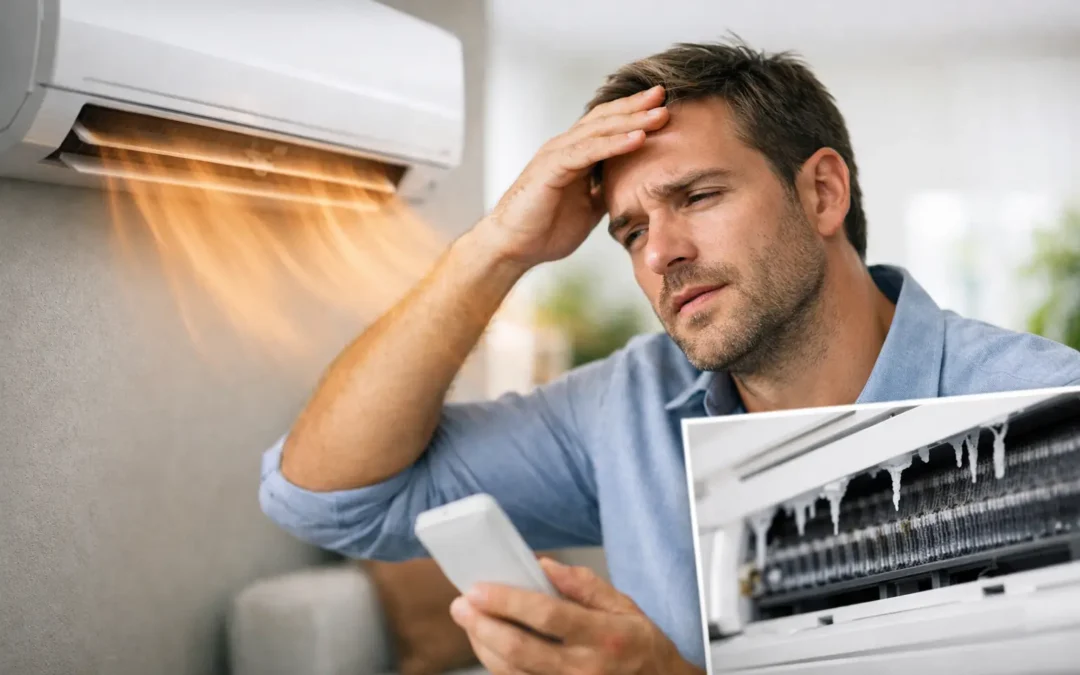
You notice it fastest in a Southwest Florida afternoon – the thermostat says cool, the vents are running, and somehow the house keeps getting hotter. If you’re asking, why is my AC blowing warm air, the problem may be simple, or it may be the first sign that your system needs professional attention before it quits completely.
A central air conditioner can blow warm air for several different reasons, and not all of them mean a major repair. Sometimes the issue is as basic as a thermostat setting or a clogged filter. Other times, it points to low refrigerant, a frozen evaporator coil, a dirty outdoor unit, or an electrical problem that keeps part of the system from doing its job. The key is knowing what you can check safely and what should be left to a licensed HVAC technician.
Why is my AC blowing warm air all of a sudden?
When an AC system is working correctly, it pulls heat from inside your home and releases it outdoors. Warm air from the vents usually means that process is getting interrupted somewhere. The blower may still be moving air, but the system is not cooling it properly.
In Florida, where AC systems run hard for much of the year, that interruption can happen faster than homeowners expect. High heat, heavy humidity, salt air, storm-related power issues, and long run times all put extra stress on both HVAC and electrical components. That is why a problem that seemed minor yesterday can feel urgent today.
Start with the simplest checks
Before assuming the worst, look at the basics. These are the issues that cause a surprising number of service calls, and they are worth ruling out first.
Check the thermostat settings
Make sure the thermostat is set to cool, not fan or heat. It sounds obvious, but thermostats can get bumped, batteries can weaken, and programmable settings can change without much warning. If the fan is set to ON instead of AUTO, the system may keep blowing air even when the cooling cycle is not active, which can make the air feel warm or room temperature.
If your thermostat uses batteries, replace them. If the display is blank or acting strangely, that may be part of the problem.
Look at the air filter
A dirty filter restricts airflow. When air cannot move properly through the system, the evaporator coil can get too cold and freeze. Once that happens, cooling performance drops and you may start feeling warm air at the vents.
If the filter looks packed with dust, pet hair, or debris, replace it with the correct size and type for your system. An overly restrictive filter can also create airflow problems, so it helps to use what your manufacturer or HVAC technician recommends.
Check the circuit breakers
Your AC system has indoor and outdoor components, and each may be tied to its own breaker. In some cases, the indoor air handler keeps running while the outdoor condenser loses power. When that happens, the vents still blow air, but it will not be cold.
Check your electrical panel for a tripped breaker. If you reset it once and it trips again, stop there. Repeated tripping can signal a deeper electrical issue, and that is not something to ignore.
Common mechanical reasons your AC blows warm air
If the settings and filter look fine, the problem is more likely inside the system itself.
Low refrigerant or a refrigerant leak
Refrigerant is what allows your air conditioner to remove heat from the air. If the system is low, it usually means there is a leak somewhere. Contrary to what many people assume, refrigerant is not something an AC just “uses up” like fuel.
Low refrigerant can cause weak cooling, longer run times, ice buildup, hissing sounds, and higher electric bills. The trade-off here is simple: topping it off without fixing the leak may bring temporary relief, but it does not solve the real problem.
Frozen evaporator coil
A frozen coil can happen because of poor airflow, a dirty filter, blocked return vents, refrigerant issues, or blower problems. When the coil is covered in ice, your system cannot cool air the way it should.
You might notice little or no airflow at first, followed later by warm air once the ice begins to melt and the cooling cycle is disrupted. If you suspect a frozen coil, turn the system off at the thermostat and let it thaw. Running it continuously can make the damage worse.
Dirty outdoor condenser unit
Your outdoor unit needs to release heat efficiently. If it is clogged with dirt, grass, leaves, or coastal buildup, heat transfer suffers and the system can struggle to cool your home.
This is especially common after storms, lawn work, or long periods without maintenance. Homeowners can gently clear obvious debris around the unit, but deeper coil cleaning should be done carefully. Using too much pressure or the wrong method can damage the fins.
Compressor or capacitor problems
The compressor is a major part of the cooling process, and the capacitor helps motors start and run properly. If either part fails, the blower may keep moving air indoors while the outdoor unit is not actually cooling.
These problems usually need a trained technician. Capacitors and related electrical components can hold a charge even when power is off, so this is not a safe DIY repair.
Why is my AC blowing warm air in Florida?
Florida homes put different demands on HVAC systems than homes in milder climates. Long cooling seasons mean more wear on motors, contactors, capacitors, coils, and drain lines. High humidity adds stress because your system is not just cooling the air – it is also removing moisture.
In coastal and storm-prone areas like Cape Coral, Fort Myers, and North Fort Myers, salt exposure and power fluctuations can also play a role. A surge, a partially failed breaker, or weather-related electrical wear may affect system performance even if the AC has not fully shut down. That overlap between HVAC and electrical issues is one reason warm-air complaints are not always as straightforward as they seem.
A clogged drain line can also affect cooling
Air conditioners remove moisture as they cool, and that water needs somewhere to go. If the condensate drain line clogs, some systems will trigger a safety switch that shuts off cooling to prevent water damage.
To a homeowner, it can look like the AC is running but not cooling correctly, or the system may stop cycling the way it normally does. If you see water near the indoor unit or notice a musty smell, a clogged drain line is worth considering.
What you can safely do before calling for service
There are a few reasonable steps you can take without risking damage to the system.
Set the thermostat to COOL and the fan to AUTO. Replace a dirty filter. Make sure return vents are not blocked by furniture or rugs. Check that the outdoor unit has clear space around it. Look for a tripped breaker, but only reset it once. If you suspect ice on the indoor coil or refrigerant lines, turn the AC off and let it thaw.
If the system starts cooling again after these checks, that does not always mean the issue is gone. For example, a frozen coil may thaw and seem normal for a while, but the underlying cause may still be there.
When it is time to call a professional
Warm air is more than a comfort problem in Florida. It can quickly become a health, safety, and humidity problem, especially for older adults, young children, pets, or anyone with medical concerns.
Call for professional service if the breaker keeps tripping, the outdoor unit is not running, the system has ice buildup, you hear buzzing or humming without cooling, or the house temperature keeps climbing despite basic troubleshooting. You should also call if you suspect a refrigerant leak or if your AC is short cycling, leaking water, or producing weak airflow throughout the house.
A licensed technician can test refrigerant pressure, inspect electrical components, confirm whether the compressor is running correctly, check for airflow restrictions, and identify whether the issue is mechanical, electrical, or both. That matters because guessing can get expensive fast.
How to lower the chances of warm air problems
Most warm-air calls do not come out of nowhere. There is often a maintenance issue building in the background. Regular service gives a technician a chance to catch worn capacitors, dirty coils, drain line buildup, airflow problems, and failing parts before they leave you without cooling on the hottest day of the week.
For homeowners in Southwest Florida, consistent maintenance is less about checking a box and more about protecting a system that works hard almost year-round. Keeping filters changed, scheduling tune-ups, and addressing small performance changes early can help you avoid bigger repairs later.
If you are asking why is my AC blowing warm air, start with the simple checks, but do not wait too long if the problem continues. Warm air is your system’s way of telling you something is off, and the sooner it is diagnosed, the better your chances of keeping the repair smaller, safer, and more affordable. When your home stops cooling the way it should, a clear answer and a reliable fix make all the difference.