
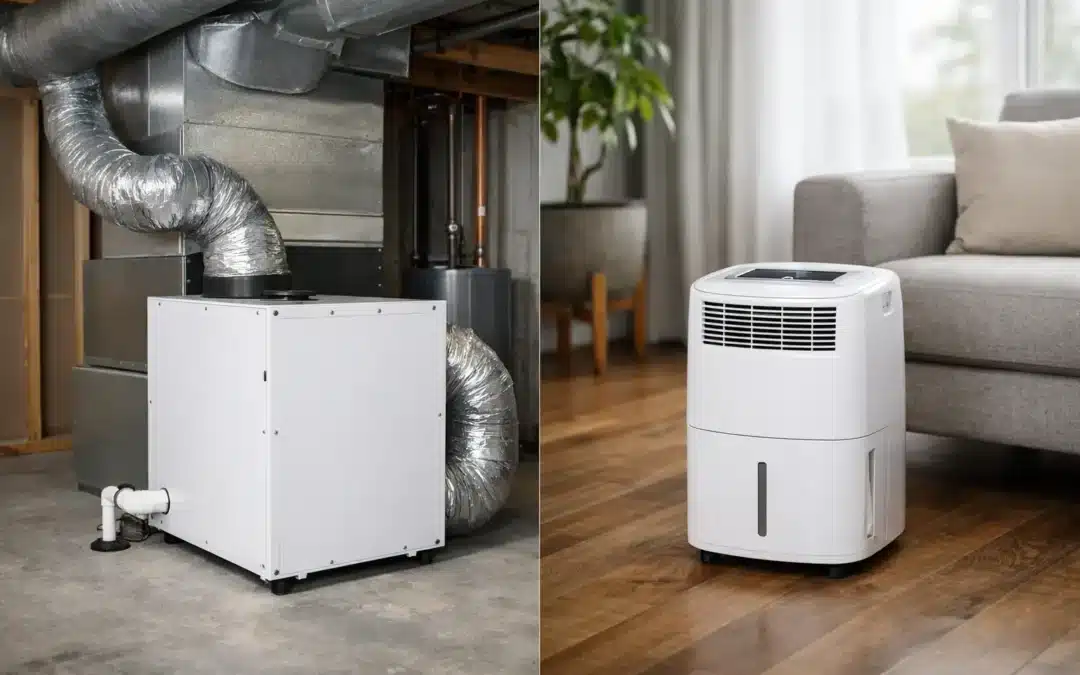
That sticky feeling in a Southwest Florida home is not always an air conditioning problem. Your AC may be cooling the house, yet indoor air can still feel clammy, smell musty, or leave condensation on vents and windows. When comparing a whole house dehumidifier vs portable unit, the right choice depends on whether you need relief in one room or dependable humidity control throughout the home.
For many homeowners in Cape Coral, Fort Myers, and nearby communities, humidity is a year-round concern. A dehumidifier can help protect comfort, indoor air quality, furnishings, and parts of your HVAC system. The key is choosing equipment that matches the size of the problem.
Whole House Dehumidifier vs Portable: The Main Difference
A portable dehumidifier is a stand-alone appliance that treats the air in the room or nearby area where it is placed. It pulls moisture from the air into a collection bucket or a drain hose. It is a practical option for a bedroom, laundry room, garage, closet, or other isolated trouble spot.
A whole-house dehumidifier is installed as part of, or alongside, your home’s HVAC system. It draws in air from across the home, removes moisture, and returns drier air through the ductwork. Most systems drain automatically, and many can be controlled with a dedicated humidistat or compatible thermostat.
The difference is not just capacity. It is consistency. A portable unit can improve one space. A professionally selected whole-house system is designed to manage humidity across multiple rooms without requiring you to empty a bucket every day.
When a Portable Dehumidifier Makes Sense
A portable unit is often a reasonable first step when the moisture issue is limited and easy to identify. For example, a guest room that stays closed, a laundry area with poor airflow, or a small storage space may not need a whole-home solution.
Portables also have a lower upfront cost and do not require HVAC modifications. You can move one from room to room as needed, which may be useful during a short-term water intrusion concern or while investigating the source of a musty odor.
That convenience comes with trade-offs. Most portable units need regular attention. If the bucket fills and the unit shuts off, humidity can rise again quickly. A drain hose can reduce that task, but it must be routed correctly and remain clear. The unit also takes up floor space, produces some operating noise, and adds heat to the room while it runs.
A portable dehumidifier can be helpful, but it is not always an effective answer when every room feels damp. Running several portable units around the home can become noisy, inconvenient, and inefficient.
When Whole-Home Humidity Control Is Worth It
A whole-house dehumidifier is generally the better fit when humidity affects the home broadly or returns quickly after a portable unit is turned off. Common signs include persistent musty smells, damp-feeling furniture or bedding, condensation on supply vents, mildew in closets, and indoor humidity that remains above 60 percent even when the AC is operating.
Florida homes can face a particular challenge during mild but humid weather. Your air conditioner removes some moisture as it cools, but it only runs when the thermostat calls for cooling. On rainy days or during cooler seasons, the home may not need much cooling even though outdoor moisture levels are high. That is when indoor humidity can climb.
A whole-house dehumidifier can remove moisture independently of the cooling cycle. This allows homeowners to maintain a more stable relative humidity level, often around 45 to 55 percent, without overcooling the home just to make it feel dry.
This approach can improve comfort at a slightly higher thermostat setting because dry air feels more comfortable than humid air. It may also help reduce conditions that support mold and mildew growth. While no dehumidifier can correct a roof leak, plumbing leak, drainage problem, or major air leak by itself, it can be an important part of a healthier moisture-control plan.
Cost, Installation, and Ongoing Maintenance
The upfront price difference between these options is significant. A portable unit costs less to purchase, making it attractive for a small, localized issue. A whole-house unit requires professional sizing, installation, electrical connections, ductwork integration when needed, and a reliable condensate drain. Those factors make it a larger investment.
However, homeowners should consider the long-term operating experience, not only the purchase price. A single portable unit may be economical for one room. Multiple units running constantly can use considerable electricity, create noise, require frequent cleaning, and still leave parts of the home untreated.
Whole-house equipment is usually quieter in living areas because it is installed near the HVAC equipment rather than sitting in a bedroom or hallway. It also drains automatically in most installations, which eliminates the daily bucket routine. The system will still need maintenance, including checking the filter, cleaning components as recommended by the manufacturer, and confirming the drain line is flowing properly.
Installation quality matters. An incorrectly sized unit may not keep up with the home’s moisture load, while an oversized or poorly integrated system may not operate as efficiently as expected. A qualified HVAC professional should assess the home’s square footage, layout, insulation, ductwork, occupancy, moisture sources, and current humidity levels before recommending equipment.
Do Not Overlook the AC System
If your air conditioner is short-cycling, improperly sized, low on refrigerant, or struggling with airflow, adding a dehumidifier alone may not resolve the comfort problem. Your HVAC system should be inspected first when humidity has changed suddenly or the home feels warm and damp at the same time.
Air leaks and ventilation issues also matter. Warm, humid outdoor air can enter through poorly sealed doors, attic penetrations, damaged ductwork, or gaps around plumbing and electrical openings. Bathrooms and kitchens need effective exhaust ventilation, and those fans should vent outdoors rather than into the attic.
In some homes, the right answer is a portable unit plus a repair. In others, it is a whole-house dehumidifier paired with AC maintenance and air-sealing improvements. The best solution should address the cause of excess moisture, not merely mask the symptoms.
How to Choose for Your Home
Start by looking at where the problem occurs. If one small area is damp while the rest of the house is comfortable, a portable unit may be enough. If the issue shows up in bedrooms, closets, living spaces, and bathrooms, whole-home control is likely worth exploring.
Next, pay attention to how often you are managing the equipment. Emptying a bucket once in a while is manageable. Emptying it every day, running multiple units, or constantly moving a unit around the house is a sign that a more permanent solution may be appropriate.
Finally, consider your goals. A portable unit is designed for flexibility and targeted relief. A whole-house dehumidifier is designed for convenience, consistency, and broad protection. Neither option is automatically better in every situation.
For homeowners who want a clear recommendation, Infinite Electric & Air can evaluate your AC system, humidity concerns, and installation options with straightforward guidance. Before moisture becomes a recurring comfort problem, place an inexpensive humidity monitor in the areas that feel damp and track the readings for a week. Those numbers can make the next decision much easier.