
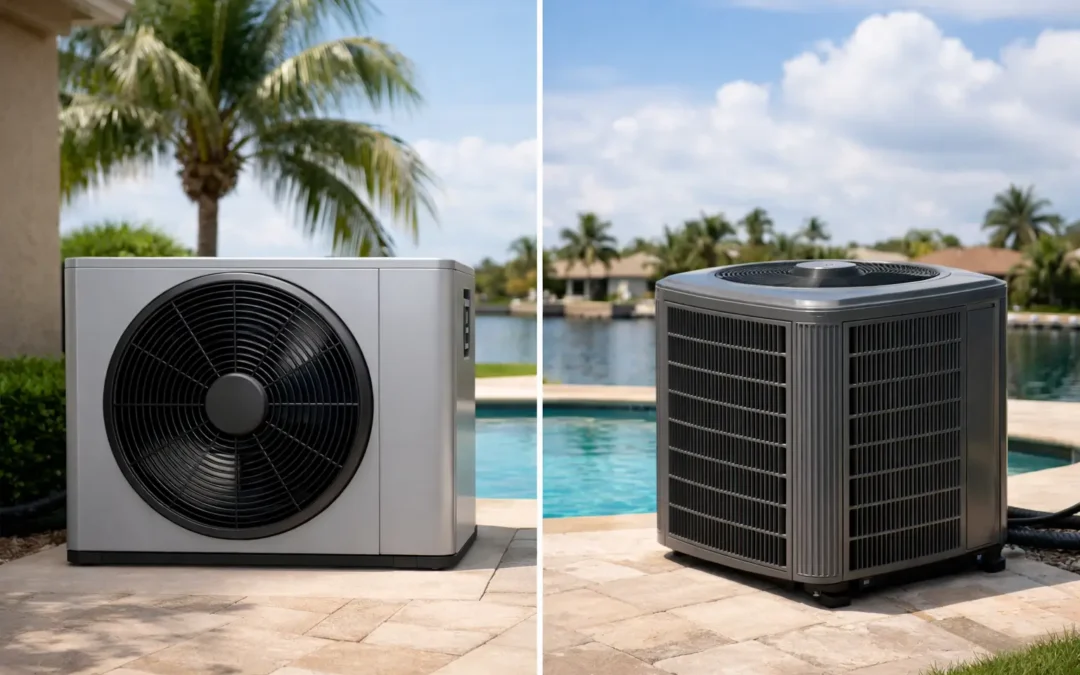
If your air conditioner is struggling through another Southwest Florida summer, the question usually comes up fast: heat pump vs AC Florida – which one actually makes more sense for your home? In this climate, the answer is not just about cooling power. It comes down to humidity control, winter comfort, energy use, installation cost, and how long you plan to stay in the house.
For many homeowners, the surprise is that a heat pump and a central AC can look almost identical from the outside. Both can cool your home. Both use refrigerant. Both rely on an indoor and outdoor unit working together. The key difference is that a heat pump can reverse direction and provide heat in winter, while a standard AC system only cools and needs a separate furnace or electric heat source for colder weather.
Heat pump vs AC in Florida: the basic difference
In Florida, cooling is the main job. That is why standard central air has been the default choice for years. It is built to remove heat from your home and move it outside, which is exactly what you need for most of the year.
A heat pump does the same cooling job, but it also has a reversing valve that lets it pull heat from outdoor air and move it inside when temperatures drop. In a state with short, mild winters, that feature can be very appealing. You get one system that handles both seasons without needing a gas furnace.
That sounds like an easy win for the heat pump, but there are trade-offs. The right choice depends on your current setup, your utility costs, and whether your home already has effective supplemental heat.
Why Florida changes the equation
In colder states, homeowners compare heating performance first. In Southwest Florida, cooling performance and moisture removal usually matter more. A system can have a high efficiency rating on paper and still leave a home feeling sticky if it is oversized, poorly installed, or mismatched to the ductwork.
That is why the heat pump vs AC Florida debate is different from the same conversation in Georgia, Tennessee, or Ohio. Here, winter heating demand is low. The system you choose will spend most of its life cooling your home and managing humidity.
For that reason, installation quality matters as much as equipment type. A properly sized AC can outperform a poorly sized heat pump, and the reverse is also true. Homeowners often focus on the unit itself, but real comfort comes from the full system working correctly.
When a heat pump is a smart fit
A heat pump is often a practical choice for Florida homes because our winters are generally mild. It does not need to fight subfreezing temperatures for months at a time, which is where heat pumps lose efficiency in colder regions.
If your home currently uses electric resistance heat, a heat pump can be especially attractive. Electric strip heat works, but it is expensive to operate. A heat pump can usually provide much more efficient heating during the cooler parts of the year. That can lower winter energy bills while still giving you strong cooling in summer.
Heat pumps also make sense for homeowners who want an all-electric setup. If there is no gas service to the home, or you simply want to avoid separate heating equipment, a heat pump offers a straightforward solution.
That said, not every heat pump installation delivers the same comfort. In humid climates, proper sizing is critical. An oversized system may cool the air quickly but short-cycle before it removes enough moisture. The result is a house that reaches the thermostat setting but still feels clammy.
When a standard AC still makes sense
A standard central AC can still be the better option in Florida, especially if your home already has a separate heating system that works well. If you have an air handler with electric heat strips and rarely use the heat, paying extra for a heat pump may not always produce meaningful savings.
This is also true for homeowners focused almost entirely on cooling performance and initial budget. In some cases, a traditional AC system can have a lower upfront cost than a comparable heat pump. If winter heating demand is minimal in your household, that lower purchase price may be the deciding factor.
There is also a simplicity factor. Some homeowners prefer sticking with a conventional cooling system because it matches the equipment they already know, and service decisions can be more straightforward when replacing like for like.
The key is to look beyond the label. A high-quality AC system with correct duct design, proper airflow, and strong humidity control can be an excellent fit for homes in Cape Coral, Fort Myers, and nearby areas where long cooling seasons put systems to the test.
Energy efficiency and operating costs
This is where homeowners understandably want a clear winner. The reality is more nuanced.
In cooling mode, both heat pumps and central AC systems can be highly efficient. Their efficiency depends on the specific model, the SEER2 rating, and how well the system is installed. A heat pump is not automatically more efficient than an AC in summer just because it can also heat.
The bigger difference shows up in heating mode. A heat pump typically heats much more efficiently than electric resistance heat. In Florida, where heating days are limited, those savings may be modest over the course of a year, but they can still be worthwhile.
If your current home setup already makes heating inexpensive or rarely necessary, a standard AC may offer a better value. If you rely on expensive electric backup heat every winter, a heat pump often has the edge.
Utility bills also depend on insulation, windows, duct leakage, thermostat settings, and maintenance habits. Equipment choice matters, but it is only one piece of the monthly cost picture.
Comfort is more than temperature
Florida homeowners know that 74 degrees can feel comfortable or miserable depending on humidity. That is why comfort should not be judged by thermostat reading alone.
Both heat pumps and AC systems can manage indoor comfort well when they are properly selected. The bigger comfort question is whether the system runs long enough to remove moisture effectively. In many homes, variable-speed or two-stage equipment can improve comfort because it runs at lower levels for longer periods, which helps with dehumidification.
This matters in older homes and in homes with uneven airflow between rooms. If one bedroom is always warmer than the rest of the house, replacing equipment without addressing ductwork or airflow may not solve the problem. A new heat pump will not fix bad duct design any more than a new AC will.
Installation cost and long-term value
Upfront price always matters, especially when a system replacement is unexpected. In many cases, a heat pump costs more than a straight AC replacement, though the difference varies by brand, efficiency level, and the work required to install it.
Long-term value depends on how you use the system. If the added heating efficiency will save enough over time, the higher initial cost may be worth it. If your household almost never turns on the heat, the payback may be limited.
This is where transparent pricing and an honest load calculation matter. Homeowners should know whether they are paying for features they will actually benefit from. A good recommendation is based on the house, not a one-size-fits-all sales script.
Which one is better for Southwest Florida homeowners?
For many homes in Southwest Florida, a heat pump is a strong option because it matches the region’s mild winter conditions and offers efficient year-round operation. But that does not mean it is always the best answer.
A standard AC may still be the right move if you want lower upfront cost, already have a workable heating setup, or are replacing a cooling system in a home where heating needs are minimal. A heat pump may be the better investment if you want an all-electric system, better heating efficiency, and one piece of equipment that handles both jobs.
The deciding factors usually come down to three things: how your home is currently heated, how much you use heat in winter, and whether the installation plan addresses airflow and humidity instead of just swapping boxes.
For homeowners comparing options, the most useful next step is not guessing from the outdoor unit or choosing based on a neighbor’s system. It is having the home evaluated as a complete comfort system. That includes equipment size, duct condition, insulation, and how the house performs during our long cooling season.
A system that is right for Florida should do more than lower the temperature. It should keep your home consistently comfortable, control moisture, run efficiently, and hold up under the demands of heat, salt air, and storm season. That is the kind of choice that feels better long after installation day.