
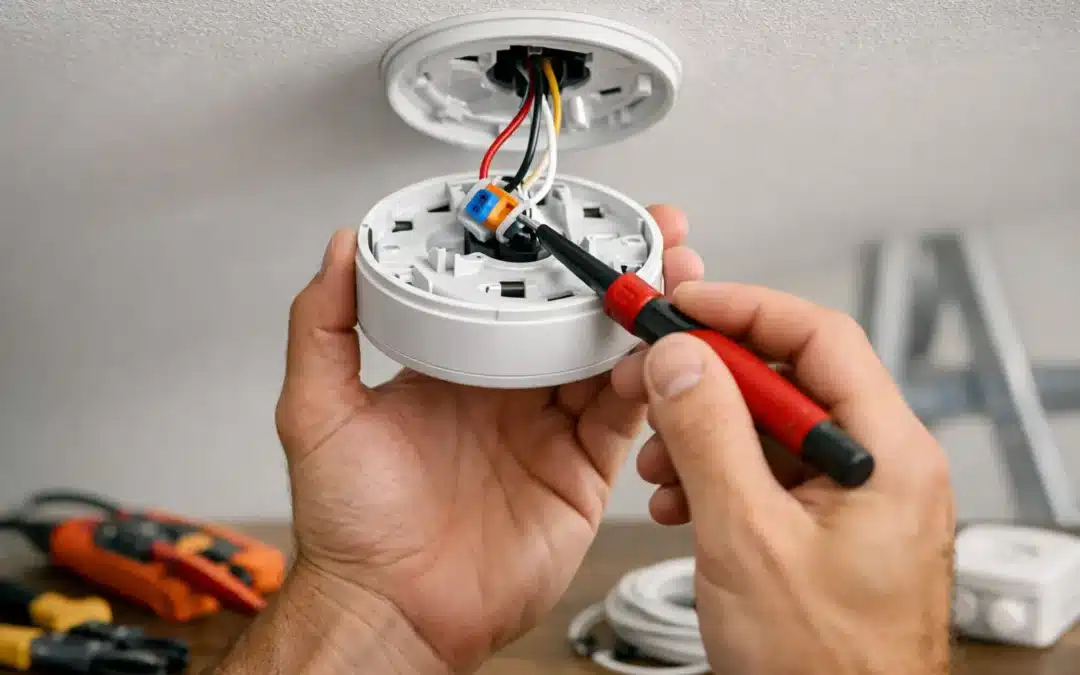
A chirping detector at 2 a.m. is annoying. A missing or outdated detector is a real safety risk. This smoke detector hardwired installation guide is for homeowners who want to understand how hardwired alarms work, what a proper installation involves, and where the line is between a smart upgrade and a job that should stay in licensed hands.
Hardwired smoke detectors are connected to your home’s electrical system and usually include a battery backup. That setup gives you more dependable protection than a battery-only unit, especially when power flickers during storms or a backup battery starts to weaken. For many homeowners, the biggest advantage is interconnection. When one alarm detects smoke, every connected alarm sounds.
Why hardwired smoke alarms make sense
A hardwired system is designed for consistency. You are not relying on someone remembering to swap batteries in every hallway and bedroom. You also get better whole-home coverage when alarms are interconnected, which matters in larger homes or split-bedroom layouts where a fire on one side of the house may not be heard right away on the other.
In Southwest Florida, power quality and storm activity are part of normal life. Battery backup matters, but so does proper installation. A detector tied into the home’s electrical system needs correct wiring, secure connections, and placement that meets current safety standards. A detector in the wrong location can create nuisance alarms. A poorly wired one can fail when you need it most.
Smoke detector hardwired installation guide: start with placement
Before anyone touches wiring, placement comes first. The best detector in the wrong spot is still a problem.
In most homes, smoke alarms belong inside each bedroom, outside each sleeping area, and on every level of the home, including basements if the home has one. Larger homes may need additional coverage in hallways or living areas depending on layout. If ceilings are pitched or unusually high, detector position may need to be adjusted to account for how smoke rises and collects.
There are also places to avoid. Installing too close to a bathroom can trigger false alarms from steam. Placing a detector near a supply vent can interfere with smoke reaching the sensor. Kitchens require special care because normal cooking can cause repeated nuisance alarms if the unit is too close to appliances. In many cases, the right answer is not fewer alarms. It is better alarm type selection and better spacing.
What a hardwired installation actually includes
Homeowners sometimes assume a hardwired detector is just a battery alarm with one extra wire. In practice, the system is more specific than that.
A typical hardwired smoke alarm uses a 120-volt branch circuit and includes a hot wire, neutral wire, and an interconnect wire that allows all alarms to communicate. Each detector mounts to an electrical box, and each unit contains a backup battery in case utility power drops. If the alarms are combination smoke and carbon monoxide units, installation requirements may vary based on model and local code.
This is where details matter. Not all detectors are compatible with all existing wiring setups. Newer alarms may not match the harness used by older models, even from the same brand family. If you are replacing outdated units, you may need adapter plugs or full rewiring at each location.
Is this a DIY project or a job for an electrician?
It depends on what kind of work you are actually doing.
If you are replacing an existing hardwired alarm with a compatible new unit at the same location, that can be fairly straightforward for a homeowner who is comfortable shutting off the correct breaker, verifying power is off, and following manufacturer instructions exactly. Even then, compatibility issues can turn a simple swap into a troubleshooting job.
If you are adding new detector locations, running cable, installing new electrical boxes, or tying alarms into the home’s electrical system for the first time, that is usually not a casual weekend project. Electrical work needs to be done safely and in line with current code. In many cases, that means hiring a licensed electrician.
The trade-off is simple. DIY can look cheaper upfront, but mistakes with alarm placement, circuit selection, interconnection, or box wiring can leave gaps in protection or create code issues during a home sale. Professional installation costs more than a battery alarm off the shelf, but it buys confidence that the system works as intended.
Smoke detector hardwired installation guide: wiring basics
A basic overview can help homeowners understand the process, even if a licensed professional is doing the work.
First, power to the circuit must be shut off and verified off with proper testing equipment. The installer mounts an approved electrical box at each alarm location and runs the appropriate cable between units so they can share power and the interconnect signal. At each box, conductors are stripped to the correct length, connected with approved wire connectors, and carefully folded into the box without damaging insulation.
The detector mounting plate is attached, the wiring harness is connected to the alarm, and the alarm is secured to the plate. Once all units are installed, power is restored, backup batteries are installed, and every detector is tested. On an interconnected system, one test should trigger all units.
That sounds simple written out. The reality is that older homes, remodeled ceilings, mixed circuits, and limited attic access can complicate the job quickly. Homes in Florida also deal with heat, humidity, and attic conditions that can make installation more demanding than it appears on paper.
Code, age, and compatibility issues homeowners miss
A lot of smoke alarm problems come from assumptions. Homeowners often assume any hardwired alarm can replace any old one. They assume existing locations are still acceptable. They assume a detector that lights up is functioning properly. Those assumptions are not always safe.
Modern standards have changed over time. Homes built years ago may not have the same number of alarms now recommended or required. Units also have a service life. Many alarms need replacement after 10 years, even if they still chirp, light up, or pass a basic button test. Sensors lose reliability with age.
Compatibility is another common problem. Interconnected alarms must be designed to work together. Mixing brands or incompatible models can cause communication failures, false alarms, or a system where one detector sounds alone when all should activate.
Choosing the right detector for your home
Not every alarm is the same, and the cheapest option is rarely the best fit for the entire house.
Some homes benefit from photoelectric alarms in areas near kitchens because they are generally less prone to nuisance alarms from cooking particles. Ionization alarms can respond faster to certain fast-flaming fires, but placement and use case matter. Many homeowners choose dual-sensor or combination units for broader protection. If carbon monoxide detection is also needed, combination alarms can reduce wall and ceiling clutter, though they still need to be installed in the right places.
For homeowners planning updates, it also makes sense to think about long-term maintenance. Models with sealed 10-year backup batteries can reduce routine battery changes, but they do not remove the need for regular testing or full unit replacement at end of life.
After installation, testing is not optional
Once the alarms are mounted and powered, the job is not done until the system is tested correctly.
Every unit should respond to a test, and interconnected units should activate together. Homeowners should also confirm that backup batteries are installed where required and note the manufacture date on each detector. A written reminder for monthly testing and future replacement helps avoid the common problem of forgetting about alarms until they start chirping.
It is also worth paying attention to nuisance alarms in the first few weeks. Frequent false alarms may point to a placement issue, the wrong alarm type for that location, or airflow problems nearby. Those issues are fixable, but they should not be ignored or solved by simply removing the alarm.
When to call for professional help
If your home has aging wiring, no existing hardwired alarms, frequent false alarms, or detectors that do not all sound together, it is time to bring in a licensed electrician. The same goes for renovations, panel upgrades, or any situation where you are unsure whether your current system meets today’s safety expectations.
A professional can evaluate placement, wiring, compatibility, and code concerns in one visit. For homeowners in Cape Coral, Fort Myers, North Fort Myers, Lehigh Acres, Punta Gorda, or Estero, local experience matters because home age, storm-related power issues, and regional construction patterns all affect how these systems are installed and maintained.
A hardwired smoke alarm system is one of those upgrades you hope never has to prove its value. That is exactly why it needs to be installed with care, tested thoroughly, and treated as part of your home’s essential safety equipment, not just another item on the ceiling.