If your breakers keep tripping when the microwave, dryer, and AC seem to run at the same time, your home is trying to tell you something. One of the clearest signs your electrical panel needs replacement is that everyday power use starts feeling unreliable. In Southwest Florida, where air conditioning works hard for much of the year and storm activity can stress home electrical systems, panel problems are not something to ignore.
Your electrical panel is the control center for your home. It directs power where it needs to go, protects circuits from overload, and helps reduce the risk of electrical hazards. When it is outdated, damaged, or simply too small for the way your household uses electricity now, the warning signs often show up long before a complete failure.
Why an old or failing panel matters
A panel that is no longer doing its job properly can create more than inconvenience. It can affect appliance performance, make your home less prepared for modern electrical demand, and increase safety concerns. Many older homes were built for a very different load than what most families use today. Between larger HVAC systems, kitchen appliances, home offices, EV chargers, and backup power equipment, the average panel has a lot more to handle than it did decades ago.
Sometimes a repair is enough. In other cases, replacement is the safer and more cost-effective choice. The difference depends on the age of the panel, its condition, the type of equipment installed, and whether the system can still support your home safely.
8 signs your electrical panel needs replacement
1. Breakers trip regularly
An occasional trip can be normal. A breaker is supposed to shut off power when a circuit is overloaded or a fault is detected. But if you are resetting breakers often, especially on circuits that serve everyday appliances, the issue may be larger than a single overloaded outlet.
Frequent tripping can point to a panel that is struggling to distribute power properly or a system that no longer has enough capacity for your household. If this keeps happening, it is worth having the panel evaluated rather than treating each trip as a one-time annoyance.
2. You notice burning smells or heat near the panel
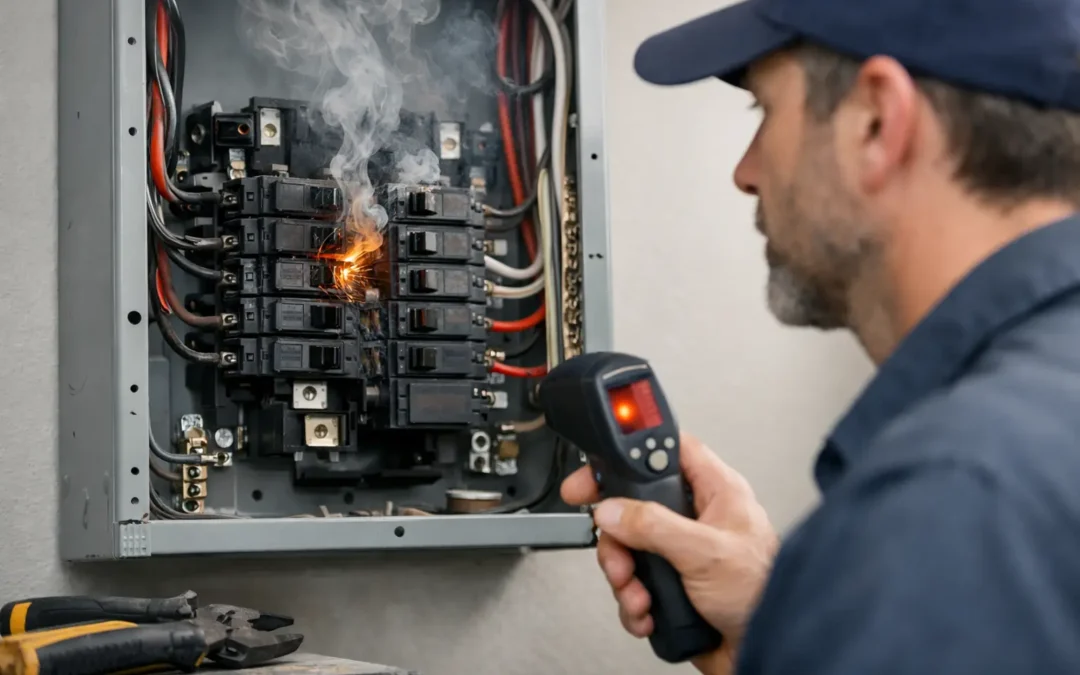
This is one of the most urgent warning signs. A panel should never smell like something is overheating. You also should not feel unusual warmth coming from the panel door or surrounding wall.
A burning odor can indicate damaged wiring, overloaded breakers, loose connections, or internal arcing. Those conditions can escalate quickly. If you notice heat, a burnt smell, or discoloration around the panel, turn off what you safely can and contact a licensed electrician right away.
3. Lights flicker or dim for no clear reason
Flickering lights are not always caused by the panel, but they should not be dismissed. If lights dim when the AC starts, or flicker when major appliances turn on, your electrical system may be dealing with voltage fluctuations or inadequate capacity.
In some homes, the problem is limited to a single fixture or circuit. In others, the panel is part of the issue because it is outdated, worn, or not sized for the load your home now requires. This is especially relevant in Florida homes where heavy cooling demand can put added strain on the system.
4. Your panel still uses fuses or is severely outdated
If your home still has a fuse box, it is time to take a hard look at an upgrade. Fuse-based systems are older technology and are generally not as practical or as safe for modern residential electrical use. Even if the system still works, that does not mean it is a good fit for current demands.
Age alone does not automatically mean replacement, but it does increase the odds that your panel may no longer meet your household’s needs. Some older panel brands and models are also known for safety concerns or unreliable breaker performance. A professional inspection can determine whether the equipment is still serviceable or whether replacement is the better path.
5. You hear buzzing or crackling sounds
Your panel should operate quietly. Buzzing, crackling, or popping noises are not normal and can signal loose connections, breaker failure, or arcing inside the panel.
Electrical sounds are easy to ignore if power still seems to work, but that is exactly what makes them risky. A noisy panel needs prompt attention. Even if the issue turns out to be minor, it is not something to leave unchecked.
6. There is visible rust, corrosion, or water damage
Moisture and electrical equipment are a bad combination. If you see rust inside or around the panel, signs of corrosion on breakers, or evidence that water has entered the enclosure, the system needs immediate evaluation.
This matters in any home, but it carries added weight in coastal and storm-prone areas. Humidity, wind-driven rain, and weather events can all affect electrical components over time. Corrosion can weaken connections and compromise the panel’s ability to operate safely. Depending on the extent of the damage, replacement may be necessary.
7. You are adding major electrical loads
Sometimes the panel is not failing, but it is no longer enough. If you are installing a new AC system, replacing appliances, adding a hot tub, setting up a workshop, or considering an EV charger or whole home generator, your existing panel may not have the capacity or the space required.
This is one of the less obvious signs your electrical panel needs replacement because the current system may seem fine day to day. But once a home starts asking for more power, an undersized panel can become a bottleneck. An upgrade can help your system run more safely and give you room for future needs.
8. Breakers will not reset or you see physical damage
A breaker that will not stay reset is a sign something is wrong. The same goes for breakers that feel loose, look scorched, or show signs of melting. If the panel door is damaged, labels are missing, or the interior appears messy or modified, those details can point to deeper issues.
Physical damage does not always mean full replacement, but it often means the panel has been through years of wear, improper repairs, or unsafe conditions. In that case, replacing the panel may be the clearest way to restore reliability and safety.
Repair or replacement depends on the full picture
Not every panel problem means you need a completely new panel. Sometimes the issue is a bad breaker, a loose connection, or a circuit that needs to be redistributed. But if the panel is outdated, overloaded, damaged, or tied to known safety concerns, replacement often makes more sense than repeated patchwork repairs.
The key is getting a proper diagnosis. A licensed electrician can inspect the panel, evaluate your home’s electrical load, and tell you whether a targeted repair is reasonable or whether replacement is the safer investment. Transparent pricing matters here because homeowners should understand not just the cost, but the reason behind the recommendation.
What homeowners should do next
If you have noticed one or more of these warning signs, avoid the temptation to keep resetting breakers and hoping the issue goes away. Electrical panels rarely improve on their own. What starts as flickering lights or nuisance trips can turn into damaged appliances, lost power, or a serious safety problem.
Start with a professional inspection. An electrician can check for overheating, test breakers, inspect connections, and confirm whether your panel is properly sized for your home’s current demands. If replacement is recommended, ask what capacity makes sense now and what will still serve you well a few years from now.
For homeowners in places like Cape Coral, Fort Myers, and North Fort Myers, this can be especially worthwhile before storm season or before installing new high-demand equipment. A healthy panel supports more than convenience. It supports the safety, performance, and long-term reliability of your entire home.
When your electrical system is giving you warnings, listening early is almost always easier than dealing with a bigger problem later. If your panel has become unpredictable, hot, outdated, or undersized, getting it checked now is one of the smartest ways to protect your home and the people in it.