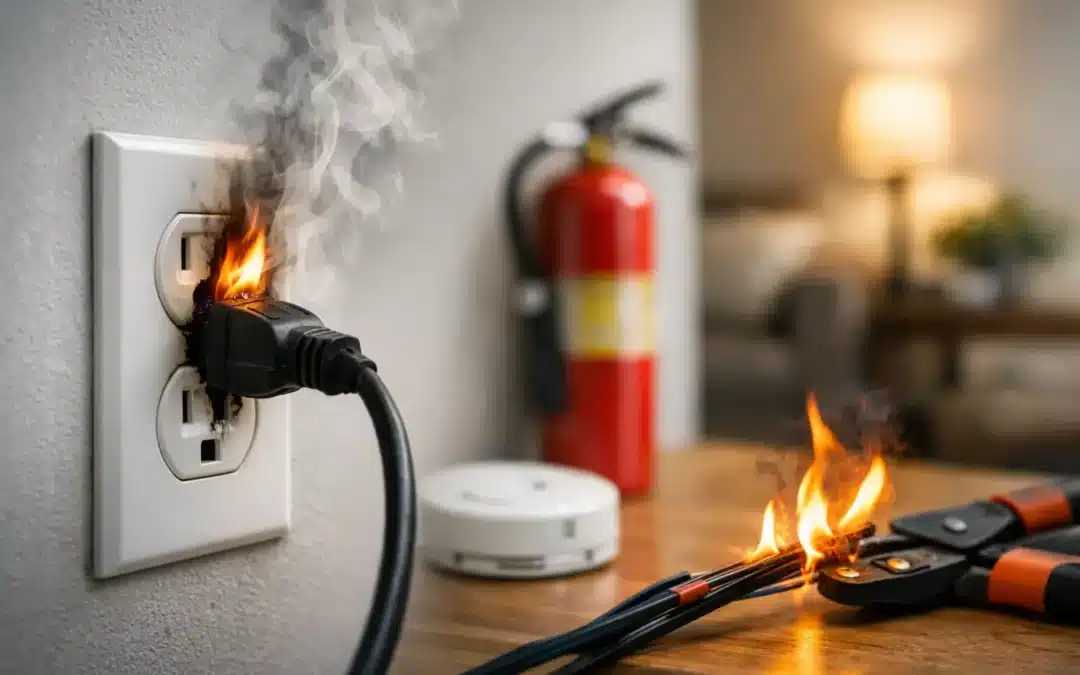
A warm outlet plate, a breaker that trips every time the microwave runs, or lights that dim when the AC starts are not small annoyances to ignore. They can be early warnings that part of your electrical system is under strain. To prevent electrical fires safely, homeowners need to recognize those warnings, reduce avoidable overloads, and call a licensed electrician before a minor issue becomes a dangerous one.
In Southwest Florida, electrical systems work hard. Long cooling seasons, high humidity, frequent thunderstorms, and storm-related power disturbances can expose weaknesses in aging wiring, panels, outlets, and appliances. A safe home starts with paying attention to how your electrical system behaves every day.
Why electrical fires start in homes
Electrical fires are usually caused by heat. That heat can build when electricity moves through damaged wiring, loose connections, overloaded circuits, or equipment that is not designed to handle the demand placed on it. The trouble is that much of the electrical system is hidden behind walls, inside panels, or in outlets, so homeowners may not see the problem developing.
Older homes can have additional concerns, especially if the electrical panel has not kept pace with modern living. Years ago, a home may have had one television, a few lamps, and basic kitchen appliances. Today, the same home might power multiple TVs, computers, chargers, a large refrigerator, an electric range, pool equipment, and a powerful air conditioning system. The total demand adds up quickly.
Age alone does not automatically mean a home is unsafe. A well-maintained older system can perform reliably, while a newer home can develop issues from poor connections, water intrusion, storm damage, or improper DIY work. What matters is whether the system is correctly sized, in good condition, and professionally maintained.
Warning signs that need attention
Electrical problems often give homeowners clues. Do not wait for smoke, sparks, or a complete power loss before responding. If you notice any of the following, stop using the affected outlet or appliance when possible and arrange for an electrical evaluation:
- Outlets, switches, plugs, or breaker panels that feel warm, look discolored, or smell burnt
- Breakers that trip repeatedly or fuses that blow more than once
- Lights that flicker, dim, or brighten without an obvious reason
- Buzzing, crackling, or sizzling sounds from outlets, switches, or the electrical panel
- Sparks when plugging in a device, or a shock or tingling sensation when touching an appliance
A single breaker trip can happen when a circuit is temporarily overloaded. Repeated trips are different. The breaker is doing its job by interrupting power, but resetting it again and again without finding the cause can allow a serious issue to continue.
Likewise, a warm charger may be normal during use, but a hot outlet, melted plug, or burning odor is not. Unplug the device if it is safe to do so, avoid touching damaged equipment, and have the circuit inspected.
Prevent electrical fires safely with everyday habits
Small changes in how you use power can lower risk without making your home less convenient. Start by giving high-demand appliances their own proper outlets. Portable space heaters, window AC units, microwave ovens, hair dryers, air fryers, and other heating appliances should not share an overloaded power strip or extension cord.
Extension cords are meant for temporary use, not permanent wiring. Running one under a rug, through a doorway, or behind furniture can damage the cord and trap heat. If you regularly need an extension cord to power something in the same place, the safer solution is usually to have an outlet installed where you need it.
Power strips should also be used carefully. A quality surge-protecting power strip can be useful for low-to-moderate electronics, but it cannot turn one wall outlet into a high-capacity source for several heat-producing appliances. Avoid plugging one power strip into another, a practice commonly called daisy chaining. It can overload the circuit and increase fire risk.
Keep cords visible and in good condition. Replace cords that are frayed, crushed, cracked, loose at the plug, or hot during normal use. Do not repair a damaged cord with tape. It may cover the damage, but it does not restore safe insulation or connections.
Give your panel and circuits the attention they deserve
Your electrical panel distributes power throughout the home and provides critical protection when a circuit experiences a fault or overload. It should be easy to access, clearly labeled, dry, and free of storage piled in front of it. A panel is not a closet, and quick access matters during an emergency.
If your breakers trip often, you have added major appliances, or your home still relies on an outdated panel, a licensed electrician can determine whether a panel upgrade or dedicated circuit is appropriate. This is particularly relevant when adding equipment such as a pool pump, electric vehicle charger, hot tub, workshop tools, or a new HVAC system.
Do not replace a breaker with a larger one just to stop it from tripping. Breakers are sized to protect the wiring connected to them. Installing the wrong size can let wires overheat before the breaker shuts power off. That is a job for a qualified professional who can evaluate the complete circuit, not just the breaker.
Protect your home from Florida storms and surges
Lightning and utility disturbances are a fact of life across Cape Coral, Fort Myers, North Fort Myers, and nearby communities. A surge can damage sensitive electronics in an instant, but repeated smaller surges can also wear down equipment over time. HVAC systems, kitchen appliances, televisions, computers, and smart-home devices may all be affected.
Point-of-use surge protectors offer a layer of protection for electronics, but they do not protect every circuit or appliance in the house. Whole-home surge protection installed at the electrical panel provides broader coverage and is worth discussing with an electrician, especially for homes with valuable electronics, newer appliances, or modern HVAC equipment.
After a major storm, look for signs of water near outlets, the electrical panel, outdoor equipment, or service connections. Never touch standing water near electrical equipment. If you suspect water intrusion or storm damage, turn off power only if you can do so safely and contact a licensed electrician for guidance.
Use GFCI and AFCI protection where it matters
Modern electrical safety devices can reduce the risk of shocks and fires, but they must be installed correctly and tested regularly. Ground-fault circuit interrupters, commonly called GFCIs, are designed to cut power quickly when they detect an electrical imbalance. They are especially important in bathrooms, kitchens, garages, laundry areas, outdoor spaces, and other locations where water is present.
Arc-fault circuit interrupters, or AFCIs, detect certain dangerous arcing conditions that can occur when wiring or cords are damaged. An arc can create intense heat even when a circuit is not visibly overloaded. AFCI protection is commonly required in many living areas in newer or renovated homes.
Test GFCI outlets using the built-in test and reset buttons according to the manufacturer’s instructions. If an outlet will not reset, trips repeatedly, or has no test button where one may be expected, have it inspected. Electrical code requirements can vary depending on the home’s age and the type of work being completed, so professional advice is helpful before upgrades or renovations.
Be cautious with DIY electrical work
Replacing a light bulb or resetting a breaker is one thing. Rewiring an outlet, changing panel components, adding a circuit, or troubleshooting an unexplained electrical problem is another. Electrical work can appear simple until a hidden wiring issue, incorrect connection, or improper grounding creates a shock or fire hazard.
DIY mistakes may not show up immediately. A loose connection behind an outlet can heat up gradually for weeks or months. That delayed risk is one reason permits, inspections, and licensed electrical work matter. They help ensure repairs and installations are done to code and suited to the home’s actual electrical load.
For homeowners planning a remodel, garage conversion, appliance upgrade, or generator installation, involve an electrician early. Proper planning can prevent undersized circuits, crowded panels, and expensive changes later in the project.
When to call a licensed electrician
Call promptly for burning smells, visible sparking, smoke, hot electrical components, repeated breaker trips, or any sign of water affecting electrical equipment. If there is an active fire, get everyone out of the home, call 911, and do not attempt to put out an electrical fire with water.
For less urgent concerns, a professional inspection can identify loose connections, overloaded circuits, outdated equipment, insufficient grounding, and surge-protection needs before they become emergencies. Infinite Electric & Air helps Southwest Florida homeowners address these concerns with clear recommendations, licensed workmanship, and straightforward pricing.
The safest electrical system is not one you have to think about every day. It is one that has been properly installed, protected, and inspected when its behavior changes. If something in your home feels, smells, sounds, or operates differently than it should, trust that signal and have it checked.