
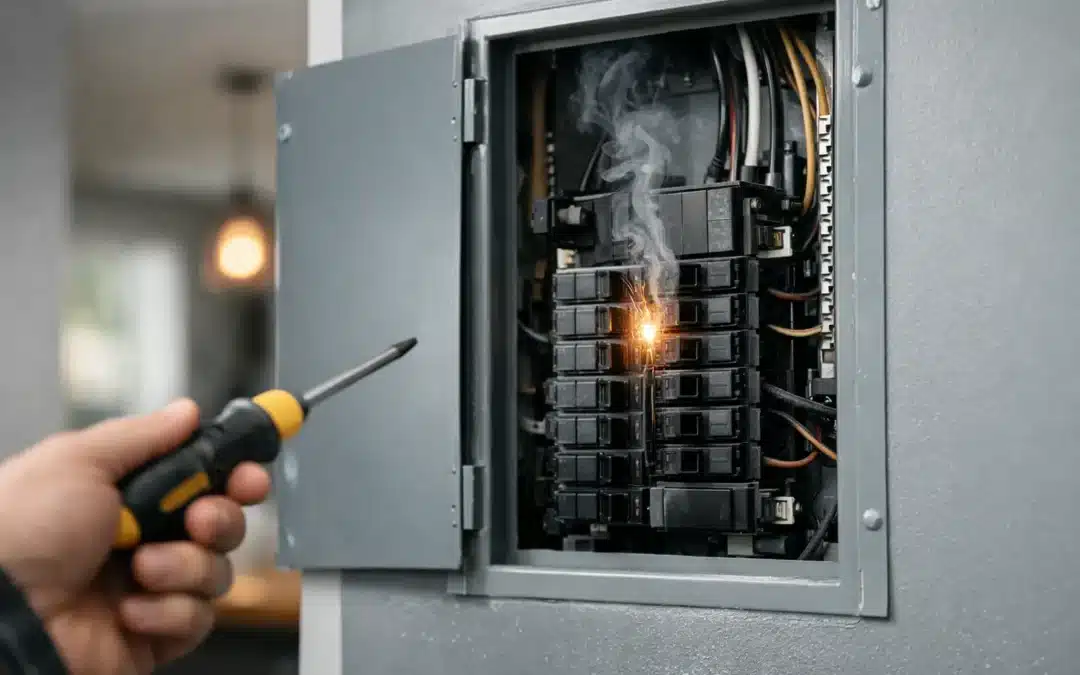
You hear it when the house gets quiet – a low hum or a sharper buzzing coming from the electrical panel. If your first thought is, is a buzzing electrical panel dangerous, the short answer is yes, it can be. Some panel noise is minor, but buzzing can also point to loose wiring, overloaded breakers, arcing, or a failing panel component, all of which deserve prompt attention.
A healthy electrical panel should not make obvious buzzing sounds that come and go, get louder, or seem tied to certain appliances turning on. In Florida homes, where air conditioners run hard and storms can put extra stress on electrical systems, unusual panel noise is something to take seriously. The safest move is to treat it as a warning sign until a licensed electrician can determine the cause.
Is a buzzing electrical panel dangerous or just annoying?
It depends on what is creating the sound. A very faint transformer hum in some electrical equipment can be normal, but a residential breaker panel is not something that should be audibly buzzing across the room. If the sound is new, persistent, or paired with warm breakers, a burning smell, flickering lights, or tripped circuits, the concern moves from inconvenience to a potential safety issue.
Buzzing often happens when electricity is not flowing cleanly through the panel. A loose breaker connection can create vibration and heat. A damaged breaker can fail to seat properly on the bus bar. In more serious cases, electrical arcing may be present. Arcing means electricity is jumping through air between connections instead of following the intended path, and that can increase fire risk.
Older panels add another layer of concern. If your home has an aging or outdated panel, a buzzing sound may be an early sign that the panel is struggling to handle modern household demand. That is especially common in homes that have added large loads over time, such as a new HVAC system, pool equipment, electric vehicle charging, or a renovated kitchen.
What causes a buzzing electrical panel?
There is no single answer, which is why diagnosis matters. The most common causes range from simple repairs to conditions that require panel replacement.
Loose electrical connections
Loose wiring inside the panel is one of the most common reasons for buzzing. When a connection is not tight, current can create resistance at that point. Resistance creates heat, and heat can damage surrounding components over time. Left alone, a loose connection can worsen and eventually lead to breaker failure or arcing.
A failing breaker
Breakers wear out. If one internal component is failing, it may buzz under load, trip without a clear reason, or fail to trip when it should. A bad breaker can also feel warm or hot compared to the others. This is not a part to ignore or guess at.
Overloaded circuits
If one breaker is serving too many devices or high-demand appliances, it may start to buzz as the load increases. You may notice the sound when the air conditioner starts, the microwave is running, or multiple appliances are in use at the same time. Overload issues are common in homes where electrical needs have grown faster than the system was designed to handle.
Arcing inside the panel
This is the condition homeowners should take most seriously. Arcing can produce a sharper buzzing or crackling sound and may come with a burnt odor, discoloration, or intermittent power issues. Arcing should be treated as an urgent electrical hazard.
Moisture or corrosion
In Southwest Florida, humidity and storm exposure matter. Moisture intrusion around electrical equipment can contribute to corrosion, poor connections, and component damage. If your panel is in a garage, exterior wall, or another area exposed to moisture, buzzing may be part of a larger issue.
Warning signs that mean you should act quickly
If the panel is buzzing and you also notice any of the following, do not wait a week and hope it goes away. A hot panel door, a burning or fishy smell, scorch marks, repeated breaker trips, flickering lights, or outlets that stop working unexpectedly all suggest that the problem may be escalating.
Another red flag is a buzzing sound that changes when a major appliance turns on. That pattern can point to an overloaded circuit, weak breaker, or panel capacity issue. If the buzzing is loud enough to hear clearly several feet away, that is generally not normal.
You should also pay attention if the panel itself is older and has never been evaluated after a major home upgrade. A panel that once handled a smaller home load may now be undersized for current usage.
What you should do if your panel is buzzing
Start by staying safe. Do not remove the panel cover or try to tighten anything yourself. The inside of an electrical panel contains energized components even when individual breakers are turned off, and that makes DIY panel work risky.
If the sound is mild and there are no signs of heat, smoke, or burning odor, reduce electrical demand if you can. Turn off high-load appliances you do not need right away, such as the dryer or pool pump, and monitor whether the buzzing changes. Then schedule an inspection with a licensed electrician.
If the panel is hot, smoking, crackling, or giving off a burning smell, treat that as urgent. If it is safe to do so, shut off the main breaker and call for professional help immediately. If you see flames or active smoke, leave the home and call emergency services.
Can weather and HVAC use make panel problems worse?
Yes, and this matters for homeowners in places like Cape Coral, Fort Myers, and North Fort Myers. Florida homes often place heavy demand on the electrical system for long stretches, especially during the hottest months when air conditioning runs almost nonstop. That sustained load can expose weak breakers, aging panel components, or circuits that are already close to their limit.
Storms can also play a role. Power surges, lightning activity, and utility interruptions can stress the panel and connected devices. In some cases, a buzzing panel starts after a storm event or after repeated surge exposure. That does not always mean the panel is ruined, but it does mean the system should be checked carefully.
When repair is enough and when a panel upgrade makes sense
Sometimes the solution is straightforward. A licensed electrician may find a single failing breaker, a loose connection, or corrosion isolated to one area. In that case, a targeted repair may resolve the sound and restore safe operation.
Other times, buzzing is a symptom of a bigger issue. If the panel is outdated, fully loaded, damaged, or no longer suited to your home’s electrical needs, replacement may be the smarter long-term choice. A panel upgrade can improve safety, make room for new circuits, and better support today’s appliances and comfort systems.
That is especially worth considering if you have noticed a pattern of electrical problems rather than one isolated noise. Frequent breaker trips, dimming lights, limited circuit space, or the need for generator integration and surge protection can all point toward upgrading rather than patching.
Why this is not a wait-and-see problem
Electrical issues rarely improve on their own. A buzzing panel may stay the same for a while, but that does not make it harmless. Heat, vibration, and poor connections tend to get worse with use, not better. Waiting can turn a manageable repair into a more expensive and more dangerous situation.
A professional inspection gives you clarity. It tells you whether the problem is a single breaker, a wiring issue, moisture damage, or a panel nearing the end of its service life. It also helps you avoid the opposite problem, which is replacing equipment unnecessarily when a focused repair would do the job.
For homeowners, that balance matters. You want the issue fixed correctly, without guessing and without being pushed into more work than the home actually needs. That is why licensed diagnosis matters so much with panel noise.
The bottom line on a buzzing panel
So, is a buzzing electrical panel dangerous? It certainly can be, and it should never be brushed off as normal household noise. The sound may come from a loose connection, failing breaker, overload, corrosion, or arcing, and some of those conditions carry real fire and shock risk.
If your panel is buzzing, the safest next step is to have it inspected promptly by a licensed electrician. At Infinite Electric & Air, we believe homeowners deserve clear answers, transparent recommendations, and repairs that put safety first. When your electrical panel starts making noise, trust that instinct telling you something is off – and get it checked before a small warning becomes a bigger problem.