
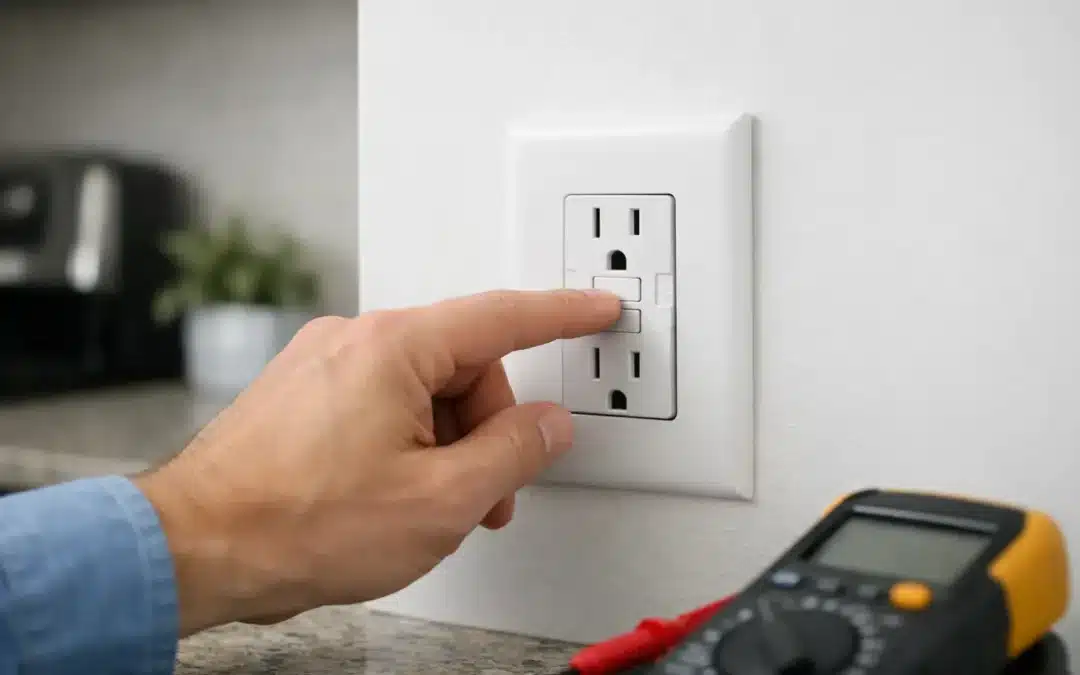
That outlet by the bathroom sink or on the lanai is supposed to protect you when water and electricity get too close. If you need to test GFCI outlet with button controls, the good news is that the built-in process is simple. The part that matters is doing it the right way, knowing what result you should see, and recognizing when a failed test points to a real safety issue.
A GFCI, or ground fault circuit interrupter, is designed to shut off power quickly when it senses electricity flowing somewhere it should not. In a home, that can mean protection in bathrooms, kitchens, garages, laundry rooms, outdoor areas, and other damp or wet locations. In Southwest Florida, where humidity, storms, and outdoor living spaces are part of daily life, keeping these outlets working properly is not just routine maintenance. It is basic home safety.
How to Test GFCI Outlet With Button Safely
Start by plugging a small lamp, phone charger, or night-light into the GFCI outlet. You want something simple that clearly shows whether the outlet has power. If the device turns on, press the TEST button on the face of the outlet.
When you press TEST, the power should shut off immediately. The lamp or other plugged-in device should turn off. That tells you the GFCI tripped as designed.
Next, press the RESET button. Power should come back on, and your lamp or test device should work again. If that happens, the outlet passed a basic function test.
It sounds almost too easy, but that is the intended design. The built-in buttons are there so homeowners can confirm that the safety mechanism still responds.
Before you begin, keep your hands dry and stand on a dry surface. If the outlet is in a damp area, wait until conditions are dry enough to test it safely. Never open the outlet, remove the cover, or touch wiring unless you are qualified to do electrical work.
What the TEST and RESET Buttons Actually Do
The TEST button creates a small simulated fault inside the device. It is not just cutting power for show. It is checking whether the GFCI can detect an unsafe condition and trip.
The RESET button restores power after the outlet has tripped, assuming the outlet is functioning correctly and the circuit does not have an active fault. If RESET will not stay in, that usually means one of two things. Either the outlet has no incoming power, or it is detecting a problem and refusing to energize.
That distinction matters. A GFCI that trips during a proper test is usually doing its job. A GFCI that trips repeatedly during normal use, or will not reset at all, deserves closer attention.
What a Passing Test Looks Like
A successful test follows a clear sequence. Your plugged-in device starts on, turns off when you press TEST, and turns back on after you press RESET. If your outlet does that, the built-in mechanism appears to be working.
Some newer GFCI outlets also include a status light. Depending on the model, that light may change color or blink to show normal operation, a trip condition, or end-of-life failure. The details vary by manufacturer, so the light is helpful, but the button test is still the main check most homeowners rely on.
Passing one test does not mean the outlet will last forever. GFCIs wear out over time, especially in high-use or high-moisture locations. Outdoor outlets, garage outlets, and devices near pool equipment or patios tend to have a harder life than an outlet in a dry spare room.
When the Button Test Fails
If you press TEST and nothing happens, that is a red flag. The outlet may have failed internally, may be wired improperly, or may not have power in the first place. If the plugged-in device stays on after pressing TEST, stop using that outlet for any safety-critical purpose until it is inspected.
If the outlet trips with TEST but will not reset, there are a few possible causes. The circuit breaker may be off. Another GFCI upstream may have tripped and cut power to this outlet. There could also be a wiring issue, moisture intrusion, or a failed outlet.
If the outlet resets but keeps tripping during everyday use, that can mean a real ground fault, a bad appliance, or a nuisance trip caused by moisture or deterioration. The answer depends on the pattern. An outlet that only trips when you plug in one hair dryer or one pressure washer points to the device. An outlet that trips randomly with different loads points more toward the outlet or circuit.
Should You Use a Plug-In Tester Too?
A basic plug-in GFCI tester can be useful, but it is not a perfect replacement for the built-in button. The outlet’s own TEST button checks the internal protection mechanism directly. A plug-in tester can help identify some wiring issues and gives you another way to verify response, but it can also miss certain conditions or create confusion if the outlet is miswired.
For most homeowners, the built-in test is the first step. If results are inconsistent, or if you suspect wiring problems, that is where professional diagnosis becomes more valuable than more gadgets.
How Often Should You Test a GFCI Outlet With Button Controls?
A common recommendation is monthly testing. In real homes, many people do not remember to test that often, but more frequent checks are better than never checking at all. A practical approach is to test GFCI outlets during other home maintenance tasks, such as changing air filters, checking smoke alarms, or preparing for storm season.
In Southwest Florida, this matters even more for exterior outlets and any outlet exposed to humidity, rain, salt air, or irrigation overspray. Those conditions can shorten the life of electrical components. If an outlet protects your bathroom, kitchen counter area, garage refrigerator, or outdoor equipment, it should not be left on a set-it-and-forget-it basis.
Common GFCI Locations Homeowners Forget
Most people think of bathrooms first, but GFCI protection often extends beyond the most obvious spots. Kitchens, laundry rooms, garages, exterior walls, pool-related areas, and even some unfinished spaces may have GFCI outlets or GFCI protection at the breaker. In some homes, one GFCI outlet protects several downstream outlets, which means a single trip can shut off multiple locations.
That is why an outlet that seems dead may not actually be broken. It may simply be protected by another GFCI device somewhere else in the home. If you lose power at a garage or patio outlet, check nearby bathrooms, the kitchen, and other utility areas for a tripped GFCI before assuming the problem is isolated.
A Few Safety Limits to Keep in Mind
Testing with the built-in buttons is homeowner-friendly. Troubleshooting beyond that is not always simple. If an outlet shows signs of heat, buzzing, discoloration, loose fit, or moisture inside the cover, do not keep resetting it and hoping for the best.
The same goes for older homes with questionable wiring, homes with frequent breaker trips, or outlets that stopped working after a storm. Florida weather can be rough on electrical systems. Surges, moisture, and corrosion can all play a role, and those problems are bigger than a button test.
A licensed electrician can determine whether the issue is the outlet itself, the wiring, the breaker, or another part of the circuit. That matters because replacing a GFCI without correcting the root cause may only give you a temporary fix.
When It Makes Sense to Call a Professional
If your GFCI fails the test, will not reset, trips for no clear reason, or protects multiple outlets that are acting strangely, it is time to get it checked. The same is true if you are not sure whether the outlet is wired correctly or whether your home has the right protection in the first place.
For homeowners in places like Cape Coral, Fort Myers, and North Fort Myers, outdoor and moisture-prone electrical components often need more attention than they would in a drier climate. A professional inspection can catch wear before it turns into a bigger safety problem.
At Infinite Electric & Air, we believe homeowners should feel confident testing the safety devices in their homes, but also know when not to push past a warning sign. A GFCI outlet is one of those small electrical components that does a very big job. If the TEST and RESET buttons do not behave exactly as they should, that is your cue to take it seriously and get the right help.