
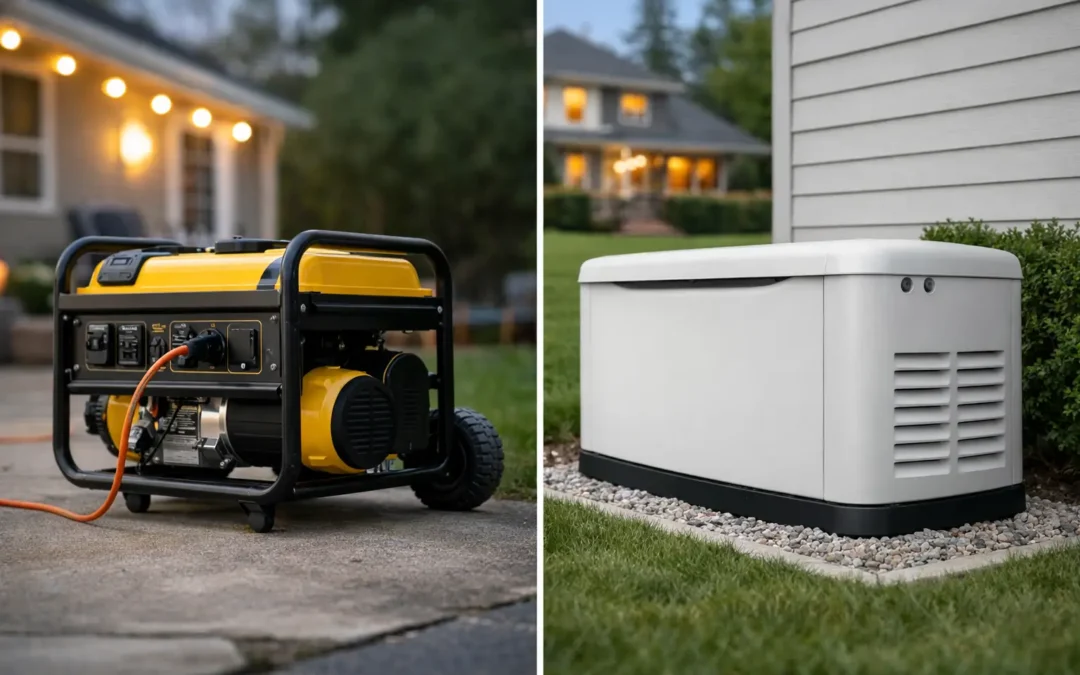
When a summer storm knocks out power in Southwest Florida, the question is not whether electricity is convenient. It is whether your refrigerator stays cold, your medical equipment stays on, and your air conditioning can keep your home safe in extreme heat. Choosing a portable generator vs whole home generator comes down to how much of your home you need to power, how quickly you need it available, and how hands-on you want the process to be.
A portable unit can be a practical, lower-cost option for short outages and essential appliances. A whole home generator, also called a standby generator, is a permanent system designed to start automatically and support far more of your home. Both have a place, but they solve very different problems.
Portable Generator vs Whole Home Generator: The Core Difference
A portable generator is a movable, fuel-powered unit that you set up outside after an outage begins. Depending on its size and your home’s electrical setup, it may power a few appliances through extension cords or selected circuits through a professionally installed generator inlet and transfer switch.
A whole home generator is permanently installed outside the home, much like an air conditioning condenser. It connects to a fuel source, typically natural gas or propane, and to an automatic transfer switch. When utility power fails, the system detects the outage, starts the generator, and transfers the home’s electrical load automatically. When utility power returns, it switches back and shuts itself down.
That automatic operation is the biggest distinction. A portable generator requires someone to be home, bring it out, fuel it, start it, and connect it safely. A standby system is built for outages that happen while you are asleep, away from home, or unable to handle equipment during severe weather.
When a Portable Generator Makes Sense
For homeowners who mainly want to protect a few essentials, a portable generator may be enough. A properly sized unit can support a refrigerator, freezer, lights, phone chargers, internet equipment, and perhaps a small window AC unit. It can be especially useful for brief outages or as an affordable first step toward emergency preparedness.
The purchase price is generally lower than a permanently installed standby system. Portable generators also give you flexibility because they can be used at another property or for outdoor projects when they are not needed for backup power.
The trade-off is effort and limitation. You need to store fuel safely, monitor fuel levels, perform routine maintenance, and be ready to operate the unit after every outage. Gasoline can be difficult to obtain after a major hurricane, and it has a limited storage life. Portable units also have limited capacity. Running central air conditioning, an electric water heater, an oven, a pool pump, and the rest of a typical home at once is usually unrealistic.
A portable generator should never be used indoors, in a garage, under a carport, or near doors, windows, or vents. Carbon monoxide is odorless and can become deadly quickly. Set the generator outdoors in a dry, well-ventilated area, following the manufacturer’s clearance instructions, and keep working carbon monoxide alarms inside the home.
Why a Whole Home Generator Is Different
A whole home generator is designed for homeowners who want a reliable response without making emergency setup part of the plan. Within seconds of an outage, it can restore power to either the entire house or a carefully selected group of critical circuits, depending on the system design.
For many Florida homes, central AC is a key reason to consider standby power. Heat and humidity can become more than an inconvenience during an extended outage, particularly for older adults, young children, pets, or anyone with health concerns. A properly sized standby generator can be designed to handle your HVAC equipment along with refrigeration, lighting, water systems, security devices, and everyday outlets.
It also eliminates the need to run extension cords through a doorway, refuel in heavy rain, or worry about whether someone is available to start the generator. If connected to natural gas or a correctly sized propane tank, the generator can run for extended periods as long as fuel remains available.
This convenience requires a larger investment. Whole home generators need professional load calculations, electrical installation, transfer-switch work, fuel connections, permits, and local code compliance. They also need scheduled maintenance, including exercising the unit and servicing the engine according to the manufacturer’s requirements.
Capacity Matters More Than the Generator Label
The phrase “whole home” can be misleading if it is treated as a one-size-fits-all promise. Not every standby generator powers every electrical item in every home at the same time. The correct size depends on the home’s square footage, service capacity, HVAC system, major appliances, well or pool equipment, and the loads you want to prioritize.
Central air conditioners are a major factor because they draw a high amount of power when starting. Electric ranges, dryers, water heaters, and EV chargers can also add significant demand. A licensed electrician can calculate your expected loads and determine whether a load-management system or a larger generator is appropriate.
Portable generators require the same careful thinking. Do not simply add the running wattage on appliance labels. Motors and compressors often require a higher starting wattage. Overloading a generator can damage appliances, trip breakers, or cause the generator to shut down when you need it most.
Safe Connection Is Not Optional
One of the most dangerous generator mistakes is attempting to power a home by plugging a generator into a wall outlet. This practice, often called backfeeding, can energize utility lines and put utility workers, neighbors, and your household at serious risk. It can also damage your electrical system when power is restored.
If you want a portable generator to power selected household circuits, have a licensed electrician install a generator inlet and a transfer switch or interlock device designed for your panel. This equipment prevents utility power and generator power from feeding the home at the same time.
A standby generator also requires a transfer switch, but its operation is automatic. The installation must account for the electrical panel, grounding, generator location, fuel source, clearances, and local permitting requirements. In coastal and storm-prone areas, proper installation is especially important for dependable performance when conditions are at their worst.
Comparing Cost, Convenience, and Maintenance
A portable generator has a lower upfront cost, but it can bring ongoing practical costs. You may need fuel containers, a weather-appropriate cover used only while the generator is operating safely outdoors, heavy-duty cords, a transfer setup, and periodic fuel replacement. During a long outage, fuel runs can become stressful and expensive.
A whole home generator has higher installation costs, yet it offers greater long-term convenience and property value appeal. Maintenance is still necessary. Most systems perform a scheduled weekly exercise cycle, but that does not replace professional inspections, oil and filter service, battery checks, and fuel-system evaluations.
Your outage history should guide the decision. If outages are rare and usually last a few hours, a portable generator may meet your needs. If your household has frequent storm-related outages, relies on central AC, includes medical needs, or is often vacant during hurricane season, a standby generator may provide worthwhile peace of mind.
Questions to Ask Before You Decide
Start with what must stay powered for the first 24 to 72 hours. Consider refrigeration, lighting, communication, garage access, water, medical devices, security, and cooling. Then consider who will operate the equipment. A portable generator is only useful if someone can safely set it up and keep it fueled.
Next, look at your home’s electrical system. An older panel, limited service capacity, or existing electrical concerns may need attention before adding generator equipment. This is also a good time to discuss whole-home surge protection. Power interruptions and restoration can create voltage events that are hard on sensitive electronics and appliances.
For homeowners in Cape Coral, Fort Myers, North Fort Myers, and nearby communities, a professional electrical assessment can replace guesswork with a practical backup-power plan. Infinite Electric & Air can help evaluate your electrical load, panel condition, transfer-switch options, and the generator setup that fits your home and priorities.
The best generator is the one that matches your real needs before the forecast turns serious. Decide which comforts are essential, make safe connection equipment part of the budget, and test your backup plan before the next outage puts it to work.