
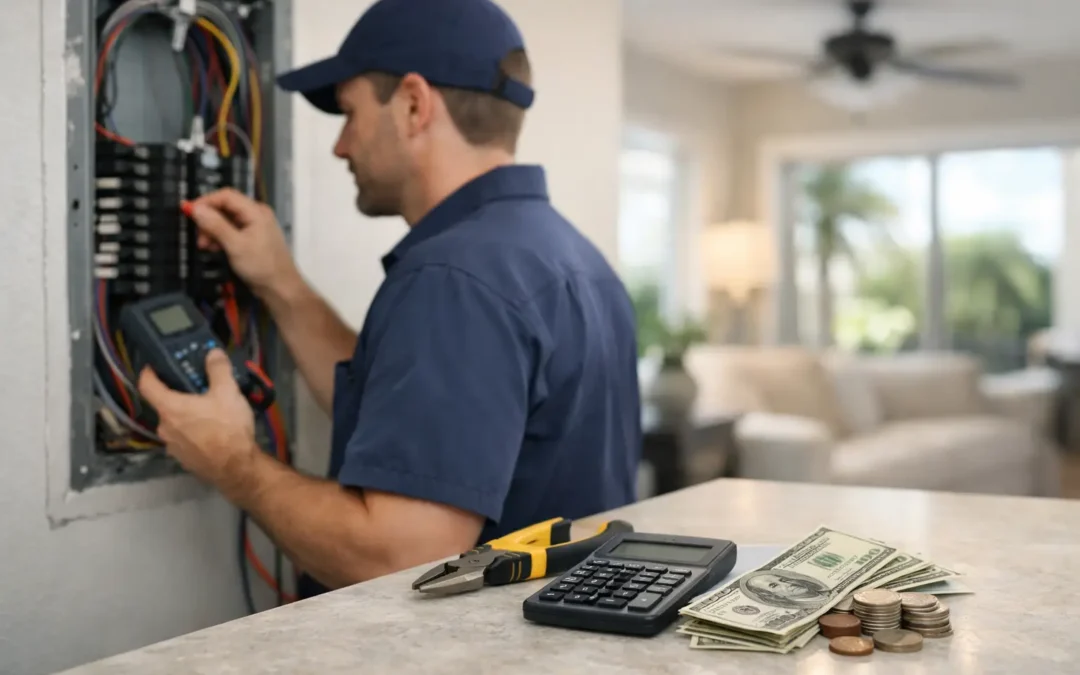
A flickering kitchen light may be a simple fixture issue. A breaker that trips every time the microwave runs may point to an overloaded circuit, damaged wiring, or a panel problem. The electrical repair cost can vary widely because the visible symptom is not always the source of the problem. A proper diagnosis protects your home, your appliances, and most importantly, the people inside it.
For Southwest Florida homeowners, electrical work also has to stand up to intense heat, humidity, salt air in coastal communities, and storm-related power events. The lowest initial price is not always the best value when the repair affects a safety-critical system.
Typical Electrical Repair Cost Ranges
Most residential electrical repairs begin with a service call and diagnostic visit. The electrician inspects the affected circuit, identifies the cause, explains the options, and provides pricing before work begins. The final cost depends on accessibility, materials, permit requirements, the age of the home, and whether the repair reveals a larger issue.
Here are common ballpark ranges homeowners may see. These are general estimates, not a substitute for an in-home evaluation.
| Repair or service | Typical cost range | |—|—:| | Electrical diagnostic or service call | $100-$250 | | Replace a standard outlet or switch | $150-$350 | | Install or replace a GFCI outlet | $175-$400 | | Repair a tripping breaker or replace a breaker | $175-$500 | | Repair a loose connection or damaged wiring section | $250-$900+ | | Replace a ceiling fan or light fixture | $200-$600+ | | Add a dedicated circuit | $500-$1,500+ | | Electrical panel repair or component replacement | $400-$1,500+ | | Full panel upgrade | $2,000-$6,000+ |
A small repair can become more involved if the electrician finds aluminum wiring, water intrusion, an outdated panel, overheated connections, or wiring that does not meet current safety standards. That does not mean every issue requires a major upgrade. It does mean the repair should address the cause rather than temporarily quiet the symptom.
What Drives Electrical Repair Cost?
Labor is usually the largest factor in electrical work. Replacing an accessible outlet may take a short visit. Tracking down an intermittent connection behind a wall, in an attic, or in a crowded panel takes more time and testing. Older homes can require additional troubleshooting because circuits may have been modified more than once over the years.
Materials matter as well. A standard receptacle costs far less than a weather-resistant GFCI outlet, a specialty breaker, or a new circuit run for an electric range, pool equipment, HVAC system, or EV charger. If a repair requires opening walls or ceilings, the electrical work may be only part of the project. Drywall, paint, and other restoration costs should be discussed separately.
Permits and inspections can also affect pricing for larger jobs. Panel replacements, service upgrades, new circuits, and generator-related work may require permits under local rules. While that adds steps, permits and inspections help confirm that major electrical work is performed safely and documented correctly.
Emergency and after-hours service
An electrical problem does not always wait for business hours. If you smell burning, see smoke, notice a hot panel, or lose power to part of your home, prompt professional service is worth the added emergency cost. Do not keep resetting a breaker, use extension cords as a permanent workaround, or remove a panel cover to investigate on your own.
After-hours rates may be higher than scheduled daytime service, but delaying a genuine electrical hazard can create a much more expensive and dangerous situation.
When a Repair May Become an Upgrade
Sometimes a targeted repair is the right answer. A failed GFCI outlet, worn switch, loose neutral connection, or faulty breaker can often be corrected without replacing a larger part of the electrical system.
Other times, a repair exposes limits in the existing system. For example, a panel may technically still function but lack the capacity for a new air conditioner, pool heater, induction range, generator interlock, or electric vehicle charger. In that case, repeatedly adding circuits to an undersized or outdated panel can cost more over time than planning a panel upgrade.
This is especially relevant in Southwest Florida, where homes often rely heavily on air conditioning and may benefit from whole-home surge protection or standby generator equipment. A licensed electrician can help separate what must be repaired now from what is smart to plan for later. That gives homeowners control over the budget without overlooking safety.
Signs You Should Call an Electrician Soon
Some electrical symptoms deserve a prompt inspection even if the power is still on. Call a licensed electrician if you notice frequent breaker trips, lights dimming when appliances start, buzzing outlets or switches, scorch marks, a burning odor, shocks or tingling from an appliance, or outlets that feel warm.
GFCI outlets that will not reset should also be checked, particularly in kitchens, bathrooms, garages, laundry areas, and outdoor spaces. In Florida homes, moisture exposure can contribute to outlet failures and corrosion. Outdoor electrical components need the right weather-resistant materials and protective covers to remain safe in wet conditions.
If your home has an older fuse box, a Federal Pacific or Zinsco panel, damaged meter equipment, or a panel that shows corrosion, schedule an evaluation rather than waiting for a failure. These issues are not always emergencies, but they should not be ignored.
How to Get a Clear, Useful Estimate
A trustworthy estimate should make it clear what the electrician found, what work is recommended, and what is included in the price. Ask whether the quote covers diagnostic time, labor, parts, permits, and any anticipated repair to walls or ceilings. If there are multiple options, ask which one solves the immediate problem and which one improves long-term capacity or protection.
It is also reasonable to ask about the warranty on labor and materials. A professional electrician should be able to explain the repair in plain language, not pressure you into work you do not understand.
Before the appointment, make note of when the problem occurs. Does the breaker trip only when the dryer and air conditioner run at the same time? Did the issue begin after a storm? Does one outlet affect several rooms? Those details can shorten troubleshooting time and help the electrician locate the correct circuit faster.
Why Licensed Electrical Work Is Worth It
Electrical repairs are not a place to gamble on a quick fix. Incorrect wiring can cause repeated equipment failures, shocks, code issues, and fire hazards. It can also complicate a future home sale or insurance claim if unpermitted work is discovered.
Licensed professionals bring the testing equipment, code knowledge, and experience to diagnose the whole circuit, not just replace the part that appears damaged. At Infinite Electric & Air, that approach means explaining the condition of your electrical system clearly and recommending work based on safety, reliability, and your home’s actual needs.
If something in your home is flickering, tripping, buzzing, or overheating, treat it as useful information from your electrical system. A timely inspection can turn an uncertain repair into a clear plan and help keep a small problem from becoming the next unexpected expense.