
That outlet by the bathroom sink or on the lanai is there for a reason. In a Florida home, where water, humidity, and outdoor exposure are part of daily life, a GFCI outlet is one of the most important safety devices you have. If you are wondering how to test GFCI outlet at home, the good news is that it usually takes less than a minute.
A GFCI, or ground fault circuit interrupter, is designed to cut power fast when it senses electricity going where it should not. That can help reduce the risk of severe shock, especially in kitchens, bathrooms, garages, laundry rooms, and exterior outlets. Testing it regularly is simple, but it matters.
What a GFCI outlet actually does
A standard outlet delivers power. A GFCI outlet does that too, but it also monitors the flow of current. If it detects an imbalance, such as electricity moving through water or a person, it trips and shuts off power almost instantly.
That speed is what makes it valuable. In homes across Southwest Florida, GFCIs are especially important because outlets near pools, patios, wet bars, and exterior walls may be exposed to moisture more often than homeowners realize. Even indoor outlets can be affected by humidity over time.
How to test GFCI outlet at home
The easiest way to test a GFCI is by using the built-in TEST and RESET buttons on the face of the outlet. Before you begin, plug in a small lamp, night-light, or phone charger so you can clearly tell when power turns off and back on.
Step 1: Plug something into the outlet
Use a simple device that you know works. A lamp is often best because the visual change is immediate. Turn the lamp on before moving to the next step.
Step 2: Press the TEST button
When you press TEST, the outlet should trip. That means the lamp or device should turn off right away. You may also hear a soft click.
If the lamp stays on, the outlet may not be tripping correctly. That is a sign the GFCI may have failed, been wired improperly, or is no longer protecting you the way it should.
Step 3: Press the RESET button
After the outlet trips, press RESET. The lamp should come back on. This confirms the outlet restored power after a successful test.
If the RESET button will not stay in, or the outlet does not restore power, there may be a wiring issue, a failed device, or another problem somewhere on that circuit.
What the test results mean
A proper test is straightforward. Press TEST, power turns off. Press RESET, power returns. If that happens, the outlet is likely doing its job.
If something different happens, do not ignore it. A GFCI that will not trip is a safety concern. A GFCI that trips but will not reset can point to moisture intrusion, a downstream fault, or a worn-out outlet. In older homes, it can also reveal wiring issues that were hidden until the outlet was tested.
This is where homeowners sometimes get stuck. The outlet looks normal, but it is not behaving normally. That gap matters because a GFCI is only useful when it responds correctly.
Should you use a plug-in tester?
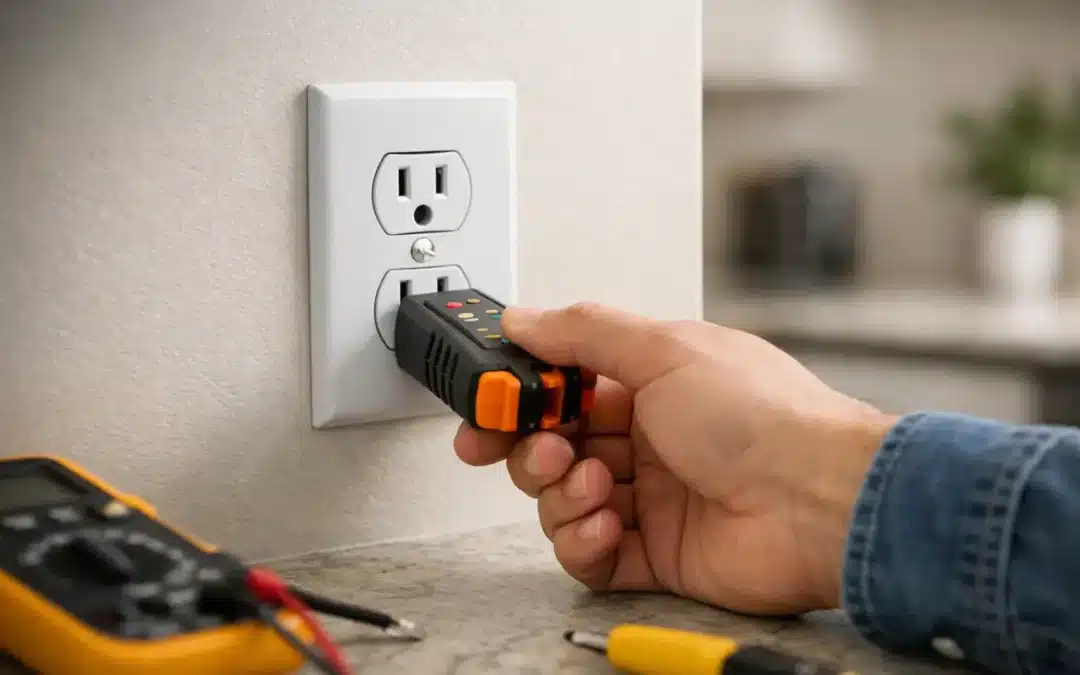
A plug-in GFCI tester can be helpful, but it has limits. These small tools can show whether an outlet appears wired correctly and can often trigger a trip during testing. They are convenient and inexpensive, especially if you want to check several outlets in one afternoon.
Still, they are not a complete diagnostic tool. A plug-in tester cannot catch every wiring condition, and it can create false confidence in some situations. For most homeowners, the built-in TEST and RESET buttons are the first and most important check. If the outlet fails that basic test, a handheld tester will not fix the underlying issue.
How often should you test a GFCI?
Most manufacturers recommend testing monthly. In real life, many homeowners do not keep that schedule, and that is common. A more realistic habit is to test them several times a year, especially before storm season, after any electrical work, or if an outlet serves an outdoor area, garage, kitchen, or bathroom.
Homes in coastal and high-humidity areas may benefit from more frequent checks. Salt air, moisture, and heat can shorten the life of electrical devices over time. If an outlet protects an exterior receptacle or pool-related area, being proactive is wise.
Signs your GFCI outlet may have a problem
Some issues show up during testing. Others appear in everyday use. If a GFCI trips repeatedly, feels warm, looks discolored, or has buttons that feel loose or unresponsive, it should be inspected.
You should also pay attention if outlets in nearby areas lose power unexpectedly. One GFCI can protect multiple outlets downstream, so a trip in the bathroom may affect a garage or patio receptacle depending on how the circuit was installed. That can confuse homeowners who think one outlet failed when the issue actually started elsewhere.
Frequent nuisance trips can mean the outlet is doing its job, but they can also suggest moisture problems, appliance faults, or wiring trouble. It depends on the pattern. A one-time trip after using a damp extension cord outside is different from a kitchen GFCI that trips every few days with normal appliance use.
When not to troubleshoot it yourself
Testing a GFCI is a reasonable homeowner task. Taking the outlet apart is different. If the outlet will not reset, if you see scorching, if the breaker is also tripping, or if the box feels hot, stop there.
That is especially true in older homes or homes that have had remodeling over the years. Miswired line and load connections, shared neutrals, worn receptacles, and hidden moisture can all cause behavior that looks simple on the surface but needs professional diagnosis. Electrical safety devices are not the place to guess.
If you are comfortable checking the breaker panel, you can see whether a tripped breaker needs to be reset. But if the breaker continues to trip or the GFCI still does not function correctly, it is time to have a licensed electrician evaluate the circuit.
Why GFCI testing matters more in Florida homes
In Southwest Florida, electrical systems deal with more than regular daily use. They handle high humidity, storm activity, outdoor living spaces, pool equipment, and seasonal surges in power demand. Those conditions make regular safety checks more valuable, not less.
A GFCI outlet is a small device, but it plays a big role in protecting people from serious injury. If it fails silently and no one tests it, you may not know there is a problem until the outlet is needed most. That is why this simple check deserves a place on your home maintenance list right next to smoke alarm batteries and air filter changes.
If one GFCI controls several outlets
Many homeowners are surprised to learn that one GFCI outlet may protect others on the same circuit. That means the outlet in your garage or guest bath may look dead even though the actual reset point is somewhere else.
If an outlet has no power, look for a nearby GFCI in bathrooms, kitchens, laundry areas, garages, or outside walls. Press RESET there first. If power returns, the issue may have been a simple trip. If not, there may be a broader circuit problem.
This setup is common, but it can make troubleshooting less obvious. It also means one failing GFCI can affect several locations at once.
When replacement is the right move
GFCI outlets do not last forever. Age, repeated trips, environmental exposure, and wear all affect performance. If an outlet is older, inconsistent, or physically damaged, replacement is often the safest option.
A new GFCI outlet is not usually a major project, but proper installation matters. Correct line and load wiring, secure connections, and a full test after installation all matter if you want the device to protect as intended. If there is any uncertainty, professional service is the safer path.
At Infinite Electric & Air, we encourage homeowners to treat GFCI outlets as active safety devices, not background hardware. A quick test can tell you a lot. And if the outlet does not respond the way it should, getting it checked now is a lot easier than dealing with the risk later.
A working GFCI outlet should never be something you have to think twice about. Test it, trust the result if it passes, and if it does not, let that be your sign to get expert help before the next rainy day, kitchen splash, or garage cleanup puts it to the test.