
A little water around your indoor AC unit can turn into a bigger problem fast in Southwest Florida. If you are searching for how to flush AC drain line with vinegar, you are probably trying to stop a small clog before it causes ceiling stains, shutoffs, or moisture issues around the air handler.
That is a smart place to start. A condensate drain line carries away the water your AC pulls from the air, and in our humid climate, that line works hard for much of the year. Over time, algae, slime, and debris can build up inside it. Vinegar can help with light organic buildup, but it is not a fix for every blockage. Knowing the difference matters if you want to protect your system instead of just delaying a service call.
When flush AC drain line vinegar actually helps
Using vinegar in an AC drain line is a maintenance step, not a cure-all. It works best when the line has early organic growth or minor buildup and water is still draining slowly. In those cases, vinegar can help break down some of the slime that forms in the pipe and reduce odors coming from the drain.
It is less helpful when the clog is thick, packed, or caused by heavy sludge deeper in the line. If the drain pan is already overflowing, if your system keeps shutting off, or if water is backing up quickly, pouring vinegar into the line may not clear the obstruction. That usually calls for stronger mechanical cleaning, often with a wet/dry vacuum or professional service.
This is where homeowners sometimes get frustrated. They hear that vinegar is the answer, try it once, and assume something is seriously wrong when the issue comes back. In reality, vinegar is a useful maintenance tool, but only when the problem is still small.
How to flush AC drain line with vinegar safely
Before you start, turn off your AC system at the thermostat and, if possible, at the breaker. That extra step is about safety and protecting the equipment while you work around the drain area.
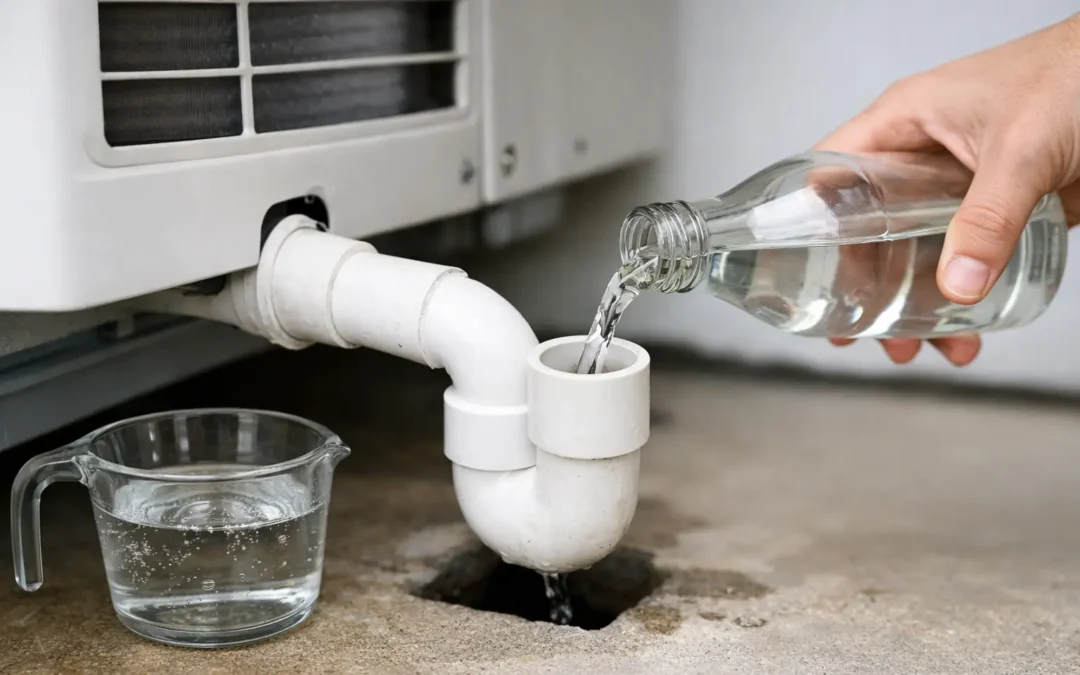
Most indoor air handlers have a condensate drain line with a small access point or cap near the unit. This is usually a T-shaped vent in the PVC pipe. Remove the cap carefully. If you already see standing water in the opening, the clog may be more advanced.
Pour about 1 cup of distilled white vinegar into the access opening. Let it sit for 30 minutes to help loosen light buildup inside the pipe. After that, check the outdoor drain termination to see whether water begins to move through. Some homeowners follow with a small amount of water to help rinse the line, but you do not want to force too much into a blocked pipe if it is not draining.
Once you are done, replace the cap securely and restore power to the system. Then keep an eye on the drain pan area and your AC operation over the next day or two. If the line was only lightly restricted, this may improve drainage. If water returns or the system trips a safety switch again, the clog likely needs more than vinegar.
Where homeowners go wrong
The biggest mistake is using the wrong opening. Some people pour vinegar directly into the drain pan instead of the cleanout access. That may reach the line eventually, but it is less direct and can make it harder to judge whether the line is actually clearing.
Another issue is using bleach or harsh chemical drain cleaners. Bleach is often recommended online, but it can be hard on components and is not always the best choice around HVAC equipment. Chemical cleaners are even riskier. They can damage piping, create fumes, and cause more problems than they solve.
There is also a timing issue. If your AC has already stopped cooling because a float switch shut it down, or if water damage has started, you are past the stage where a simple maintenance flush is the main answer. At that point, the priority is clearing the blockage completely and making sure the safety controls and drainage path are working properly.
Signs the drain line is clogged beyond a vinegar flush
A slow drain can often be managed early. A true blockage usually gives clearer warning signs. You might notice water around the indoor unit, a full secondary drain pan, musty smells, or your AC turning off unexpectedly even though the thermostat is calling for cooling.
In some homes, especially attics and closets where the unit is out of sight, the first sign is a stain on the ceiling or damp drywall nearby. In Florida homes that run air conditioning for long stretches, that kind of hidden moisture can create a much more expensive repair than a simple drain cleaning.
If you try vinegar and the line still does not drain, do not keep repeating the same step for days. A clogged condensate line can lead to water overflow, mold growth near the unit, and interruption of cooling when you need it most.
Why AC drain lines clog so often in Florida
Humidity is the main reason. Your air conditioner removes a lot of moisture from indoor air, and all of that water has to travel through the condensate system. Warm weather, long cooling cycles, and constant moisture create the right conditions for algae and biofilm to form inside the drain line.
That is why Florida homeowners often deal with this issue more than people in drier climates. It does not necessarily mean the AC is failing. It usually means the system needs routine maintenance that fits how hard it works here.
A neglected drain line can also be a sign of a broader maintenance gap. Dirty filters, poor airflow, and deferred tune-ups do not directly cause every drain clog, but they can contribute to conditions that make the system less efficient and more prone to moisture-related issues.
How often should you flush an AC drain line with vinegar?
For many homes, a preventive vinegar flush about once a month during heavy cooling season can be helpful. Others may do well with less frequent treatment, especially if the system is newer, the drain line is easy to monitor, and professional maintenance is done regularly.
It depends on your home, your indoor humidity levels, and how often the AC runs. A household with pets, high occupancy, or a unit that rarely gets downtime may need more attention than a lightly occupied seasonal home.
The key is not just the calendar. It is whether the drain system is staying clear. If you are repeatedly dealing with slow drainage, there may be a design issue, a trap problem, a partial blockage that needs to be vacuumed out, or a maintenance need elsewhere in the system.
Vinegar vs. professional drain line cleaning
Vinegar is inexpensive, accessible, and useful for basic maintenance. That makes it a good homeowner step when everything is still functioning and you are trying to prevent buildup.
Professional drain line cleaning does more. A technician can inspect the drain pan, trap, float switch, pipe routing, and termination point. They can clear a stubborn clog with the right equipment, confirm proper drainage, and check whether there is an underlying reason the problem keeps coming back.
That distinction matters. If your goal is simple prevention, vinegar may be enough. If your goal is solving a recurring clog, stopping water damage, or restoring a shut-down system, professional service is the better fit.
For homeowners in Cape Coral, Fort Myers, North Fort Myers, Lehigh Acres, Punta Gorda, or Estero, that can be especially important during the hottest part of the year. A clogged drain line rarely picks a convenient time.
A better way to think about drain line care
The best approach is to treat the condensate line like any other working part of your AC system. It is small, easy to ignore, and capable of causing an outsized mess when maintenance falls behind.
A monthly check, a careful vinegar flush when appropriate, and regular AC service can go a long way toward preventing the usual drainage headaches. And if the line is already backed up, there is no prize for wrestling with it longer than necessary. Getting it cleared correctly is often the fastest way to protect both your cooling system and your home.
If you are ever unsure whether you are dealing with simple buildup or a more serious blockage, trust what the system is telling you. A little preventive care helps, but quick action is what keeps a drain line issue from becoming a water damage issue.