
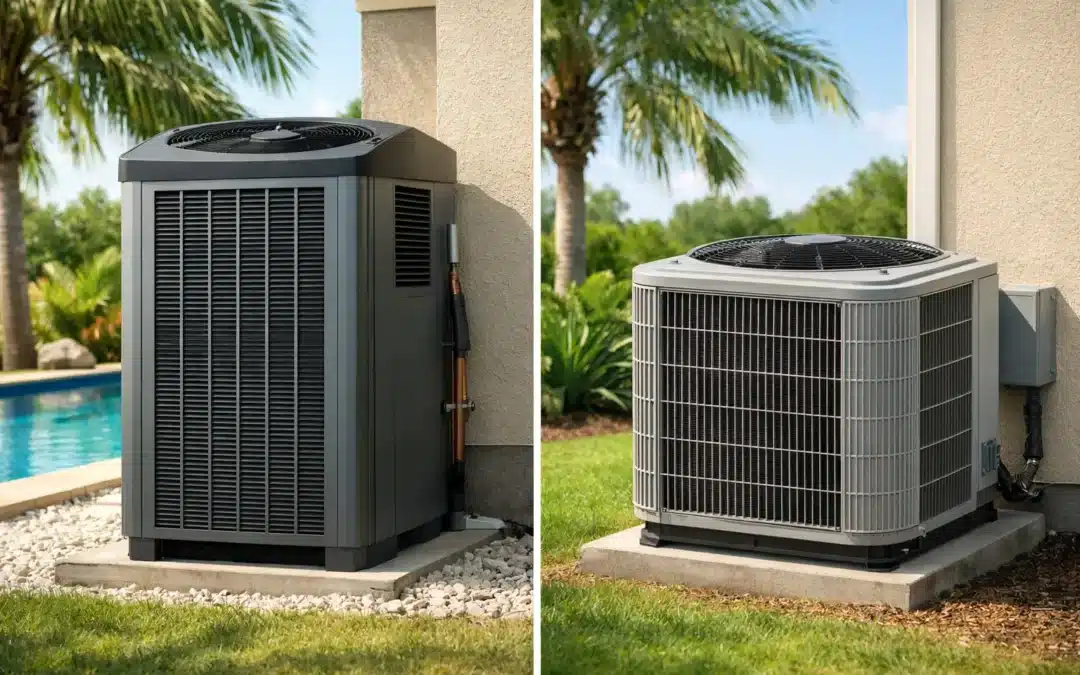
If your AC is struggling through another Southwest Florida summer, replacing it is not a small decision. For many homeowners, the real question is heat pump vs air conditioner Florida – which system makes more sense for your home, your comfort, and your energy bills?
The answer is not as simple as saying one is always better. Florida is a different kind of HVAC market. We spend far more time cooling than heating, humidity matters almost as much as temperature, and winter usually means a few chilly mornings rather than months of freezing weather. That changes the math.
Heat pump vs air conditioner Florida homeowners should compare carefully
A standard air conditioner cools your home and works with a separate heating system, often electric heat strips or a furnace in other parts of the country. A heat pump cools in summer and reverses operation to provide heat in winter. In cooling mode, they work very similarly.
That is why this comparison can feel confusing. On a hot August afternoon in Cape Coral or North Fort Myers, a heat pump and an air conditioner can keep your house comfortable in much the same way. The real difference shows up when temperatures drop and when you look at total annual operating costs.
For Florida homes, a heat pump often has a built-in advantage because our heating demand is relatively light. Instead of generating heat the way electric resistance heat does, a heat pump moves heat from outdoor air into your home. In a mild climate, that is usually a much more efficient way to stay warm.
How each system performs in Florida weather
Cooling performance is usually the first concern, and rightly so. Your system will spend most of its life removing heat and humidity. In that role, both systems can perform very well if they are properly sized and installed.
A common mistake is focusing only on equipment type and ignoring installation quality. An oversized heat pump can short cycle and leave humidity behind. An oversized air conditioner can do the same. In Florida, that sticky indoor feeling is often a sizing or airflow issue, not proof that one category of equipment is automatically better.
Where a heat pump starts to stand out is winter efficiency. On the cooler nights we get in Fort Myers, Estero, or Punta Gorda, a heat pump can usually warm the home efficiently without relying heavily on backup electric heat. That can lead to lower heating costs compared with a traditional AC paired with straight electric heat strips.
Still, there are trade-offs. During unusually cold snaps, a heat pump may need auxiliary heat to keep up, depending on the model and the home. If your existing setup already includes electric heat strips, the operating difference may be smaller than you expect during those short colder periods.
Cost matters, but so does what you are comparing
When homeowners ask which costs less, they usually mean two different things: purchase price and monthly operating cost. Those are not always aligned.
In many cases, a heat pump costs a little more upfront than a straight air conditioner with comparable cooling performance. But because it provides both cooling and primary heating, it may reduce annual energy use. In Florida, where heating needs are modest but not nonexistent, that efficiency can be worthwhile.
The right comparison is not heat pump versus AC in isolation. It is heat pump versus AC plus whatever is heating the home now. If your current air conditioner is paired with inefficient electric resistance heat, moving to a heat pump can be a practical upgrade. If you already have a newer, efficient setup and rarely use heat, the savings may be more modest.
Repair costs also deserve a realistic look. Heat pumps run year-round because they handle both cooling and heating, so they can see more wear than a straight cool system. That does not mean they are unreliable. It means maintenance matters. Regular service, clean coils, proper refrigerant charge, and healthy electrical components are what keep either system dependable.
Heat pump vs air conditioner Florida choices depend on your home
The best system for your neighbor may not be the best one for you. Older homes, duct conditions, insulation levels, shade, ceiling height, and even which rooms get afternoon sun can affect the decision.
If your home has comfort issues now, replacing the outdoor unit alone may not solve them. Uneven cooling, high indoor humidity, or hot bedrooms can point to duct leakage, restricted airflow, poor return design, or thermostat placement problems. In those cases, the equipment choice matters, but the whole system matters more.
A heat pump can be a smart fit for homeowners who want one efficient system for both seasons. It is especially appealing in Florida because winters are generally mild. You get strong cooling performance and an efficient source of heat without needing a separate fuel source.
A straight air conditioner can still make sense if your existing heating arrangement works well, if upfront budget is the main concern, or if your home rarely needs more than occasional supplemental heat. Some homeowners prefer to keep things simple and stick with the system type they know.
What about humidity and comfort?
In Southwest Florida, comfort is not just about setting the thermostat to 74. It is also about how dry the air feels inside. A home that is technically cool but still humid will never feel quite right.
Both heat pumps and air conditioners can manage humidity effectively when they are correctly sized and matched to the home. Higher-efficiency systems with variable-speed air handlers or multi-stage operation can often do a better job of longer, steadier run times, which helps with moisture removal.
This is one reason the cheapest replacement is not always the best value. Better comfort, lower humidity, quieter operation, and more even temperatures can matter just as much as the utility bill. For homeowners planning to stay in the house for years, those quality-of-life improvements are worth considering.
Efficiency ratings are helpful, but not the whole story
You will likely see terms like SEER2 and HSPF2 when comparing options. SEER2 relates to cooling efficiency. HSPF2 measures heating efficiency for heat pumps. Higher numbers generally mean better efficiency, but they do not guarantee lower bills on their own.
Actual performance depends on installation quality, ductwork, thermostat settings, insulation, filter maintenance, and how airtight the home is. A premium system installed poorly can underperform a mid-range system installed correctly.
That is why homeowners benefit from a contractor who evaluates the full picture instead of simply recommending the most expensive unit. Load calculations, duct inspection, and a clear explanation of options matter. So does transparent pricing. If you are replacing HVAC equipment, you should understand what you are paying for and why it fits your home.
When a heat pump is usually the better choice
For many Florida homeowners, a heat pump is the more practical option if they want efficient heating without giving up cooling performance. It is often the better fit when the current heating source is expensive to run, when energy efficiency is a priority, or when the goal is to simplify the home to one all-in-one HVAC system.
It can also make sense for newer homes or major HVAC upgrades where the homeowner wants improved comfort features, better humidity control, and lower winter operating costs.
When an air conditioner may still be the right call
A straight air conditioner may be the right choice if your home already has a heating setup you are satisfied with, if your winter heating demand is minimal, or if upfront cost needs to stay as low as possible. It can also make sense in replacement situations where changing system type would add complexity without much practical benefit.
The key is not assuming cheaper today means cheaper long term. It means looking at your actual usage, not a generic recommendation.
The smartest next step before you replace anything
Before choosing equipment, have the home evaluated as a system. That means checking sizing, duct condition, airflow, electrical compatibility, and the condition of the indoor and outdoor components. In older Florida homes, those details can have a major impact on comfort and efficiency.
A good HVAC recommendation should feel specific to your house, not copied from a brochure. If a contractor can explain why a heat pump or air conditioner fits your needs, what the trade-offs are, and what kind of performance to expect in our climate, you are much more likely to be happy with the result.
For homeowners in places like Fort Myers, Lehigh Acres, and Cape Coral, the best HVAC choice is usually the one that handles long cooling seasons reliably, keeps humidity in check, and does not surprise you with winter energy costs. If you are weighing your options, getting clear answers now can save you from years of discomfort later.
When your system is near the end of its life, the goal is not just replacing a box outside. It is choosing the kind of comfort your home will live with every day.