
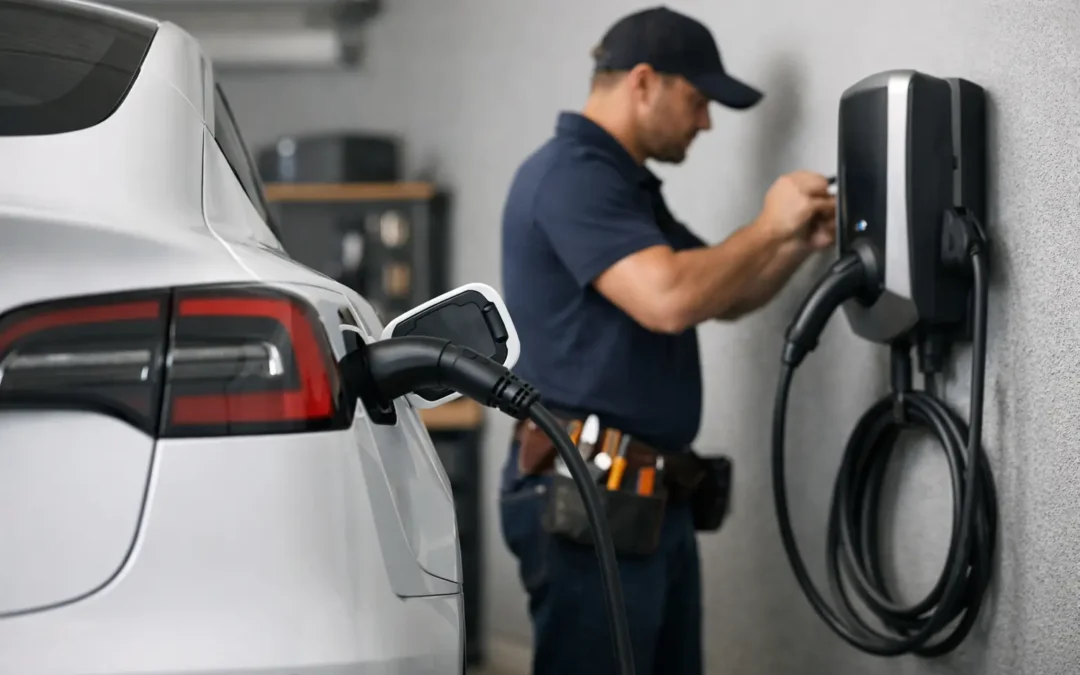
Pulling into your garage and plugging in your vehicle should feel simple. But ev charger installation for home garage spaces is one of those upgrades that looks straightforward until you get into panel capacity, circuit sizing, permits, and where the charger should actually go.
For homeowners, the right setup is not just about charging faster. It is about protecting your electrical system, avoiding nuisance breaker trips, and making sure the equipment fits the way you park, drive, and use your home. In Southwest Florida, it also means thinking about heat, humidity, and storm-related power issues that can affect long-term reliability.
What ev charger installation for home garage really involves
A home EV charger installation is more than mounting a box on the wall. In most cases, a Level 2 charger is the goal because it charges much faster than a standard 120-volt outlet. That usually means adding a dedicated 240-volt circuit, verifying your panel can support the load, and making sure the installation meets current electrical code.
The best installations start with a few practical questions. Where do you park? Which side of the vehicle is the charge port on? How long is the charging cable, and will it reach without becoming a tripping hazard? Do you want the charger hardwired, or do you prefer a receptacle-based setup? Those details affect convenience every single day.
There is also a safety side that should never be treated as an afterthought. EV charging draws a significant continuous load for hours at a time. If the circuit is undersized, the panel is already near capacity, or the wiring path is not planned well, problems can show up quickly. A professional evaluation helps prevent those issues before the charger is ever turned on.
Choosing the right charger for your garage
Not every homeowner needs the highest-amperage charger on the market. In fact, bigger is not always better. The right charger depends on your vehicle, your daily mileage, and the electrical capacity available in your home.
If you drive modest distances and charge overnight, a lower-amperage Level 2 charger may be more than enough. If you have a longer commute or more than one EV in the household, you may want a setup that can deliver more power or support scheduled charging. Some chargers also include smart features like usage tracking, app controls, and load management.
Those features can be helpful, but they are not essential for every home. A reliable charger with the correct electrical support behind it is more important than a long list of app functions. Homeowners sometimes focus on the charger brand first, when the real deciding factor should be whether the home electrical system can support the charger they want.
Hardwired vs. plug-in chargers
This is one of the most common decision points. A hardwired charger is directly connected to the electrical circuit. A plug-in charger connects through a 240-volt receptacle.
Hardwired units are often preferred for a permanent installation because they reduce one point of connection and can be a cleaner-looking solution. They may also be required for certain higher-amperage configurations. Plug-in chargers offer some flexibility if you think you may replace or relocate the unit later. The trade-off is that the receptacle and plug must be properly rated and installed for the load.
A licensed electrician can help determine which option fits your garage layout, charging needs, and local code requirements.
The panel matters more than most homeowners expect
One of the biggest factors in ev charger installation for home garage projects is your electrical panel. Even if you have space for another breaker, that does not automatically mean the panel has enough capacity for EV charging.
A load calculation helps determine whether your current service can handle the additional demand. This is especially important in homes that already run large electrical loads, such as air conditioning systems, pool equipment, electric water heaters, dryers, or ovens. In Florida homes, AC often carries a large share of the electrical demand, so it is smart to look at the whole picture instead of assuming the panel can take more.
Sometimes the answer is simple – the panel can support the new circuit with no issue. Sometimes a panel upgrade is the safer long-term choice. In other cases, load management equipment may allow EV charging without a full service upgrade. That is why a one-size-fits-all recommendation rarely works.
If your panel is older, full, or already showing signs of wear, adding a continuous high-load circuit is not the place to cut corners. This is where experience and proper evaluation matter.
Garage placement affects daily convenience
The charger location can make the difference between a setup you love and one that becomes irritating every week. It should be close enough to the vehicle connection point to avoid stretching the cable, but not so close that it limits how you park or move around the garage.
Wall space, stud access, existing wiring routes, and proximity to the panel all affect placement. So does how the garage is used. If it doubles as a workshop, storage area, or laundry space, the charger should be positioned to stay accessible without interfering with other routines.
In some homes, the shortest wiring run is not the best final location. Paying a bit more for better placement can be worth it over the life of the charger. Homeowners feel that difference every day, not just on installation day.
Florida conditions are worth planning for
Garage installations in Southwest Florida should account for heat and humidity. While most quality chargers are designed for demanding environments, placement still matters. A charger installed in a spot with less direct heat exposure and better protection from moisture will generally have an easier life.
Storm season is another consideration. Whole-home surge protection and a properly grounded electrical system can help protect sensitive electronics, including EV charging equipment. If your home has experienced storm-related electrical issues before, it is smart to bring that up during the estimate.
Permits, code, and why DIY is risky
Homeowners are often tempted to treat an EV charger like a simple appliance installation. It is not. A Level 2 charger adds a substantial electrical load and needs to be installed to code, usually with permits and inspection requirements depending on the jurisdiction.
DIY work or unlicensed installation can create safety issues that are not obvious right away. Improper wire sizing, incorrect breaker selection, poor terminations, or inadequate grounding can all lead to overheating or unreliable charging. Even if the charger seems to work at first, that does not mean the installation is safe.
There is also the practical issue of insurance, resale, and future service. A permitted, code-compliant installation gives homeowners more confidence that the work was done properly and can help avoid complications later.
What affects the cost of installation
The charger itself is only part of the total cost. Installation pricing depends on the electrical work needed to support it.
If your panel has available capacity and the garage is close by, the project may be fairly straightforward. If the panel is full, the run is long, or the home needs a service or panel upgrade, the price will increase. Wall construction, attic access, conduit requirements, and whether you choose a hardwired setup or a receptacle can also affect the final cost.
Transparent pricing matters here because homeowners should understand what they are paying for. A lower quote is not always the better value if it leaves out necessary upgrades or code requirements. It is better to know up front what the installation requires than to get surprised once the work starts.
How to prepare before scheduling installation
Before you book the work, it helps to have a few details ready. Know your vehicle model, whether you already own a charger, and where you typically park in the garage. If possible, take note of your panel location and whether you have noticed any previous electrical concerns like flickering lights, warm breakers, or frequent trips.
It is also useful to think about future needs. If you expect to buy a second EV later, mention that early. In some cases, planning for future charging now can save money compared to reworking the installation later.
A good contractor will walk you through your options, explain any trade-offs, and recommend a setup that fits both your vehicle and your home. That is especially valuable when the answer is not simply yes or no, but it depends on panel capacity, garage layout, and long-term plans.
For homeowners who want dependable charging without guessing at electrical safety, working with a licensed local team makes the process much easier. Infinite Electric & Air helps homeowners make smart decisions about electrical upgrades with safety, code compliance, and transparent pricing at the center of the job.
A home charger should make life easier every time you pull into the garage. If the setup is planned well from the start, that is exactly what it will do.