
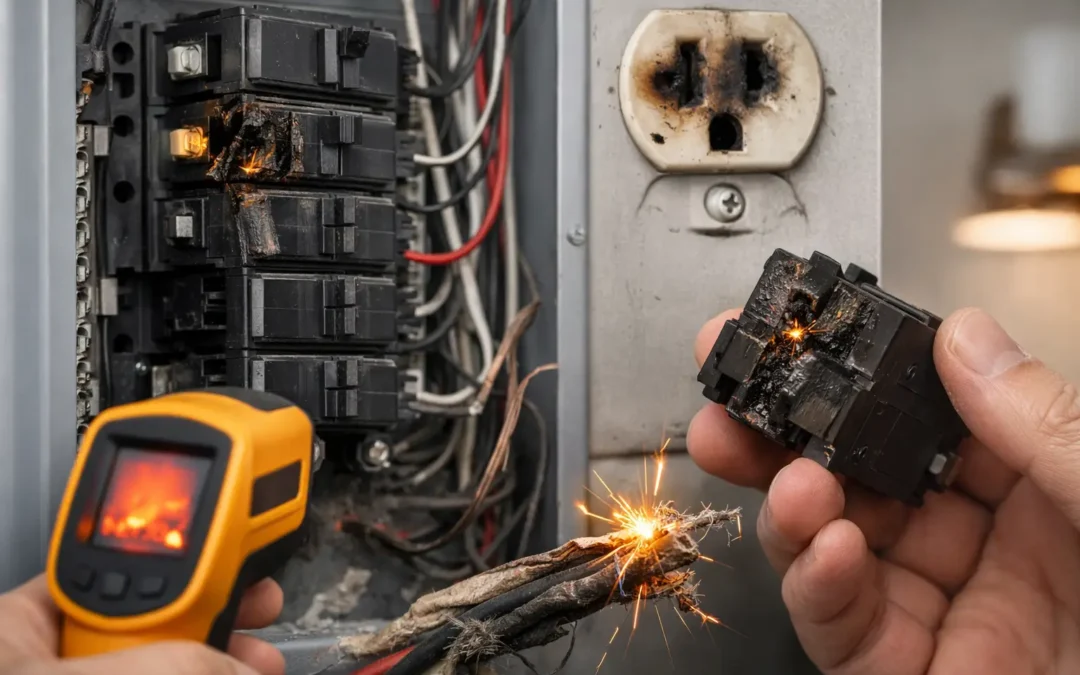
If your lights dim when the AC kicks on or a breaker trips every time you use the microwave and toaster together, those may be electrical panel replacement warning signs – not just everyday annoyances. Your panel is the control center for your home’s electrical system, and when it starts struggling, the issue can affect safety, comfort, and the way your home handles modern power demands.
In Southwest Florida, that matters even more. Homes here often work harder electrically because of heavy air conditioning use, storm-related surges, pool equipment, and added appliances. A panel that once seemed adequate can become outdated faster than many homeowners realize.
Why your electrical panel matters more than most homeowners think
Your electrical panel takes incoming power and distributes it safely throughout the house. It is designed to manage electrical loads, protect circuits from overload, and shut off power when something is wrong. When the panel is in good condition and sized correctly, most people never think about it.
When it is aging, damaged, undersized, or simply no longer suitable for your home’s needs, problems start to show up in small ways first. The trouble is that those small signs are easy to dismiss. A nuisance trip here, a flicker there, maybe a warm panel door that seems odd but not urgent. Over time, those symptoms can point to a larger issue that should be evaluated by a licensed electrician.
8 electrical panel replacement warning signs to watch for
Some panel problems can be repaired. Others point to a panel that is no longer safe or practical to keep. These are the signs that deserve attention.
1. Breakers trip often
A breaker that trips once in a while can be doing its job. A breaker that trips regularly is telling you something is wrong. It could mean a circuit is overloaded, a breaker is failing, or the panel can no longer handle the home’s electrical demand.
This is especially common in older homes that were not built for today’s usage. Large TVs, home offices, newer kitchen appliances, EV chargers, and high-efficiency HVAC systems all add load. If resetting breakers has become part of your routine, it is time to look deeper.
2. Lights flicker or dim when appliances turn on
If your lights dip when the air conditioner starts or flicker when another large appliance runs, that can indicate your electrical system is under strain. Sometimes the issue is isolated to one circuit. Sometimes it points back to the panel, especially if it happens in multiple parts of the home.
In Florida homes, air conditioning systems place serious demands on the electrical system for much of the year. A panel that is marginally sized or deteriorating may struggle to keep voltage stable under load.
3. You smell something burning or notice heat around the panel
This is one of the clearest signs that you should stop and call a professional right away. A burning smell, scorched marks, or unusual warmth around the panel can mean loose connections, overheating breakers, or internal damage.
Electrical components are not supposed to smell hot. If the panel cover feels warm or you notice discoloration around breakers, do not ignore it. This is not a wait-and-see situation.
4. The panel is outdated or uses obsolete equipment
Age alone does not always mean a panel must be replaced, but some older panels have known safety concerns or are simply no longer reliable. If your home still has a fuse box, or if your panel brand has a history of failure issues, replacement is often the safer long-term choice.
Even when an older panel appears to be working, replacement can make sense if parts are hard to find, breakers no longer perform consistently, or the system has limited capacity. An inspection can help determine whether a repair is reasonable or whether replacement is the better investment.
5. You hear buzzing or crackling sounds
Your panel should not make noise. A faint hum from electrical equipment in some situations can be normal, but buzzing, sizzling, or crackling near the panel is a warning sign. These sounds can point to arcing, loose wiring, or breakers that are not making solid contact.
That kind of issue can worsen quickly. If you hear unusual sounds from the panel, it is worth having it checked promptly before it turns into a bigger hazard.
6. You are adding major appliances or remodeling
Sometimes the warning sign is not a failure. It is a change in the home’s electrical demand. If you are installing a new HVAC system, hot tub, EV charger, pool equipment, workshop circuits, or a major kitchen upgrade, your existing panel may not have enough capacity.
This is where homeowners can get caught off guard. The panel may seem fine because it has not failed yet, but once new loads are added, weaknesses show up fast. A panel upgrade or replacement before the work is finished can prevent overloads and recurring electrical issues later.
7. There is rust, corrosion, or water damage
Moisture and electrical equipment are a bad combination. In coastal and humid areas like Cape Coral, Fort Myers, and nearby communities, corrosion can become a real concern, especially in garages, exterior-mounted equipment, or panels exposed to damp conditions.
Rust inside or around the panel may indicate water intrusion, and that can damage breakers, bus bars, and connections. Corrosion does not always mean the entire system is failing, but it does mean the panel needs professional evaluation. In many cases, replacement is the safest path.
8. Your home still relies on extension cords and power strips everywhere
This one surprises people. If you constantly use power strips because you do not have enough outlets or usable circuits where you need them, your electrical system may be behind the way you actually live. While the panel is not always the only issue, an outdated or undersized panel often goes hand in hand with an older layout that no longer fits modern needs.
A panel replacement can be part of a broader electrical update that gives your home more usable, safer power where it matters.
When a repair may be enough and when replacement makes more sense
Not every electrical problem means you need a brand-new panel. In some cases, a single bad breaker, a loose connection, or a circuit issue can be repaired without replacing the entire panel. That is why a proper diagnosis matters.
Replacement becomes more likely when the panel has multiple recurring issues, visible damage, outdated components, insufficient amperage, or signs of internal wear. It also makes sense when repair costs start piling up on a system that still does not meet your home’s needs.
For many homeowners, the real question is not just “Can this be fixed?” It is “Will this panel be safe and reliable for the next several years?” That is where an honest evaluation and transparent pricing make a difference.
What to expect from an electrical panel evaluation
A licensed electrician will typically look at the panel’s age, condition, amperage, brand, breaker performance, wiring connections, and how well it matches the home’s electrical load. They may also ask about symptoms you have noticed, such as tripping breakers, flickering lights, or recent additions like a new air conditioner or generator connection.
If replacement is recommended, that does not automatically mean your whole home’s wiring needs to be redone. In many homes, the panel itself is the primary issue. In others, there may be a few related upgrades needed to bring the system up to current code and improve performance.
The right recommendation depends on the home, the panel, and the electrical demands you place on it. There is no one-size-fits-all answer, which is why it helps to work with licensed professionals who understand both electrical safety and the local conditions that affect Florida homes.
Why Florida homes deserve extra attention
Electrical panels in Southwest Florida face a little more stress than many homeowners realize. Long cooling seasons, lightning activity, storm surges, humidity, and high-demand appliances all add up. If you have lived in your home for years without thinking much about the panel, that is understandable. But these environmental factors can shorten the margin for error when a panel is already outdated or struggling.
That is one reason homeowners often pair panel work with surge protection or generator planning. If your panel is being replaced, it can be a smart time to look at how your home will handle storms, outages, and modern electrical loads as a complete system.
Do not wait for a small issue to become an emergency
Most serious panel problems do not appear out of nowhere. They usually give off signals first. The challenge is recognizing those signals for what they are. If your home has repeated breaker trips, flickering lights, panel heat, strange odors, or an older system that has not been evaluated in years, it is worth taking seriously.
At Infinite Electric & Air, we believe homeowners should get clear answers, safe recommendations, and work that holds up in real Florida conditions. If something about your panel feels off, trust that instinct and have it checked. A little attention now can prevent a much bigger problem later.
A good electrical panel should quietly do its job in the background. If yours keeps asking for attention, it may be telling you it is time for a change.