
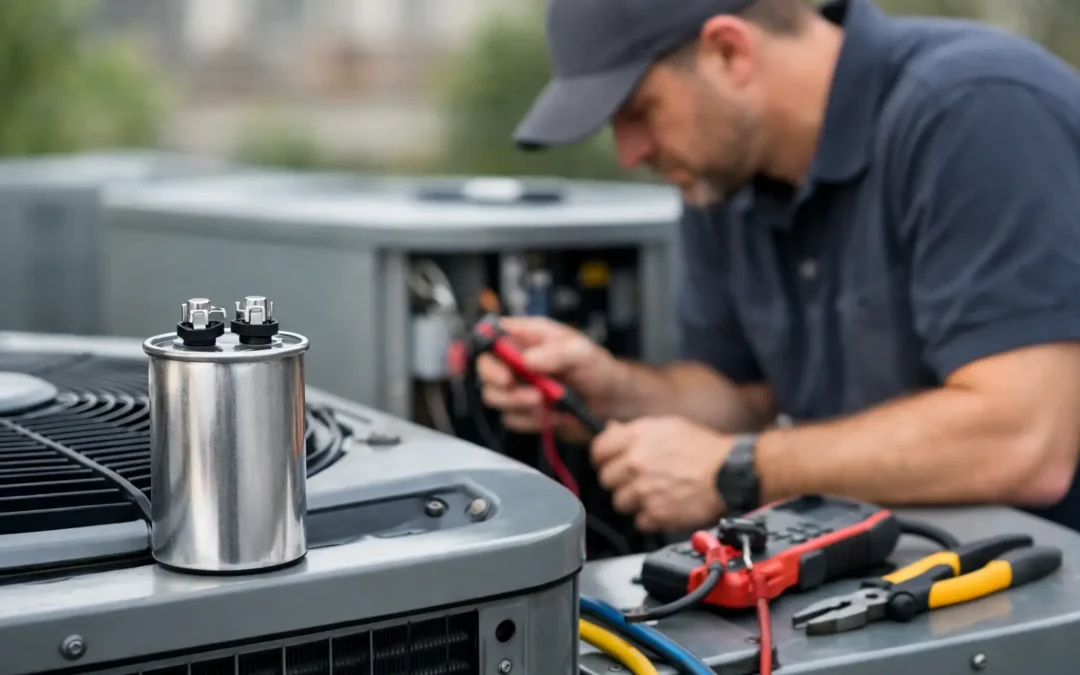
When your AC starts humming but the fan will not spin, or it struggles to kick on during a Southwest Florida heat wave, one small part may be the problem. The cost to replace ac capacitor is usually far lower than the cost of a major air conditioning repair, but timing matters. Catch it early, and you may be looking at a straightforward service call. Wait too long, and that failed capacitor can put extra strain on other components.
A capacitor helps start and run key AC motors, including the compressor and fan motor. In simple terms, it stores and releases electrical energy so the system can start properly and keep operating. In Florida, where AC systems work hard for long stretches and face heat, humidity, and storm-related power issues, capacitors tend to wear out faster than many homeowners expect.
Cost to Replace AC Capacitor
For most residential systems, the cost to replace ac capacitor typically falls somewhere between about $120 and $400, depending on the type of capacitor, the service call, and whether the repair happens during regular business hours or after hours. In many cases, the part itself is not the most expensive piece of the job. Labor, diagnostics, and emergency scheduling often make up a large part of the final bill.
If your system uses a standard run capacitor and the repair is completed during a normal service visit, the lower end of that range is more likely. If the unit needs a specialized part, the condenser is harder to access, or the repair happens on a weekend when your house is already heating up fast, the total can move higher.
That range is broad for a reason. HVAC pricing is rarely one-size-fits-all, especially when the issue shows up in the middle of peak cooling season.
What affects the price?
The biggest factor is the type of capacitor your system needs. Some units use a single capacitor, while others use a dual run capacitor that supports more than one motor. Capacity rating, voltage rating, and brand compatibility all matter. A capacitor must match the system’s electrical requirements. Installing the wrong one can shorten equipment life or create a repeat failure.
Labor is the next piece. Replacing a capacitor is not the longest HVAC repair, but a technician still needs to confirm that the capacitor is the actual problem. A system that will not start could also be dealing with a failed contactor, damaged wiring, a bad fan motor, compressor issues, or a tripped breaker. Paying for proper diagnosis is worth it because replacing a capacitor that is not actually the root issue will not solve much.
Timing also changes the price. An air conditioner that quits at 2 p.m. on a weekday is different from one that fails on a Sunday evening in August. Emergency service is often more expensive, and that is true across HVAC repair in general.
Your equipment age can play a role as well. On an older system, a failed capacitor may be a simple isolated repair, or it may be one sign that multiple electrical components are wearing down. In that situation, a trustworthy technician should explain the trade-offs clearly instead of pushing you toward a larger repair without context.
Signs your AC capacitor may be failing
Some capacitor failures are sudden. Others give warning signs first. A common symptom is an outdoor unit that hums but does not fully start. You may also notice that the AC takes longer than usual to turn on, shuts off unexpectedly, or struggles to maintain indoor temperature.
Weak airflow can sometimes show up if the blower motor or condenser fan is not getting the support it needs from the capacitor. In other cases, the outdoor fan may stop spinning even though the system is trying to run. Homeowners sometimes hear clicking, buzzing, or a strained startup sound before the unit finally kicks on.
Higher electric bills can also be part of the picture. If the system has to work harder to start or run, efficiency drops. That does not automatically mean the capacitor is at fault, but it is one possible clue.
Why capacitor problems are common in Florida
Capacitors do not love heat, and Southwest Florida gives them plenty of it. Long cooling seasons, high outdoor temperatures, and heavy daily use all put wear on AC electrical components. Add voltage fluctuations from summer storms and power disturbances, and it is not hard to see why this repair comes up often.
That does not mean every capacitor issue is preventable. These parts do wear out. But regular maintenance can help catch a weak capacitor before it leaves you without cooling. During a tune-up, a technician can test capacitor readings and compare them to manufacturer specifications. That kind of check can be especially valuable before peak summer heat arrives.
Is it safe to replace an AC capacitor yourself?
This is one repair that should stay in professional hands. Even when the power is off, a capacitor can hold an electrical charge. Improper handling creates a real shock hazard. Beyond safety, there is also the issue of selecting the correct replacement. Matching the wrong microfarad rating or voltage can damage motors and create more expensive problems.
There is another layer to consider. If a capacitor failed because of an underlying issue, such as overheating, power quality problems, or a struggling motor, a do-it-yourself replacement may only treat the symptom. A licensed HVAC technician can check the rest of the system and make sure the new part is not being set up to fail again.
Repair now or wait?
If your system is still running, it can be tempting to wait a few days. Sometimes that works out. Sometimes it turns a small repair into a larger one.
A weak capacitor can force motors to start under strain. That extra stress may affect the compressor or fan motor over time, and those are far more expensive repairs. If you notice startup issues, unusual sounds, or intermittent cooling, it is usually smarter to have the system checked sooner rather than later.
That said, every situation depends on the condition of the unit. On a newer AC in otherwise good shape, replacing a capacitor is often a very reasonable repair. On an aging system with repeated breakdowns, it may make sense to look at the bigger picture, including the likelihood of additional repairs in the near future.
How to avoid surprise capacitor failures
No maintenance plan can guarantee a capacitor will never fail, but routine service does improve your odds of catching wear early. During professional maintenance, the technician can inspect electrical components, test performance, clean the system, and spot signs of stress before they become urgent.
Homeowners can help by paying attention to early changes. If the AC sounds different, takes longer to start, or struggles in the hottest part of the day, do not ignore it. Small symptoms often show up before full failure.
It also helps to keep the outdoor unit clear and the system working efficiently overall. Restricted airflow, dirty coils, and heavy strain on the equipment can contribute to higher operating temperatures, and excess heat is hard on electrical parts.
What to expect from a service visit
A good service call should include more than swapping a part and leaving. The technician should inspect the capacitor, verify readings, check related components, and confirm the system is operating correctly after the repair. You should also get straightforward pricing before work begins.
That matters because homeowners deserve clarity. If the capacitor replacement is all that is needed, the repair should be explained simply. If there are signs of broader wear, you should hear that too, along with the practical options. Transparent recommendations make it easier to decide whether a quick repair is the right move or whether your system needs more attention.
For homeowners in places like Cape Coral, Fort Myers, and North Fort Myers, fast AC response is not just a convenience during summer. It is part of protecting your comfort and your home. When cooling problems start, getting the issue diagnosed promptly can prevent unnecessary downtime and help control repair costs.
If your AC is showing signs of a bad capacitor, the best next step is a professional inspection from a licensed team you trust. A relatively small repair handled at the right time can keep your system running safely, efficiently, and when you need it most.