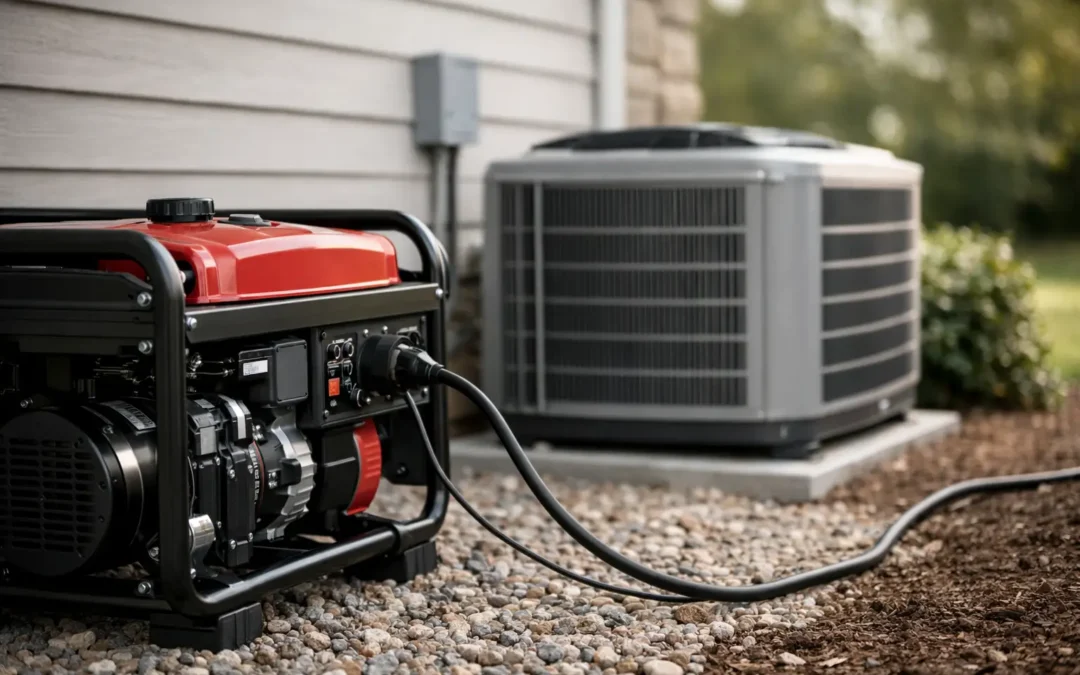
When the power goes out in Southwest Florida, the question gets real fast: can a generator power central AC? The short answer is yes, sometimes – but only if the generator is properly sized, the electrical setup is correct, and the air conditioner’s startup demand is taken seriously.
That last part matters more than many homeowners expect. Central air does not just need power to run. It also needs a burst of extra power when the compressor starts. If your generator can handle the running load but not the startup load, the AC may fail to start, trip a breaker, or put unnecessary strain on both systems.
Can a Generator Power Central AC in a Typical Home?
In many homes, yes. But whether it works depends on your specific AC system, your generator capacity, and what else you want running at the same time.
A small portable generator usually will not power a full central AC system. It may be able to support a few essentials like lights, a refrigerator, and some outlets, but central air is a larger electrical load. A whole-home standby generator has a better chance, especially if it was selected with the AC in mind.
The biggest issue is that air conditioners are not all the same. A smaller, newer high-efficiency unit may have a lower electrical demand than an older system with a larger compressor. Your home’s square footage does not tell the full story. The unit’s tonnage, age, SEER rating, and starting amperage all affect whether generator power is realistic.
Why Central AC Is Harder to Power Than It Looks
Many homeowners look at the AC unit and see one appliance. Electrically, it is more demanding than that.
Your central air system includes an outdoor condenser and an indoor air handler or furnace blower, depending on the setup. The outdoor compressor is usually the biggest power draw. When it kicks on, it can require significantly more wattage for a few seconds than it uses during normal operation.
That is why generator sizing cannot be based on running watts alone. A generator that looks large enough on paper may still struggle if it cannot handle the locked rotor amps, also called LRA, during startup.
This is one reason professional load calculations matter. The goal is not just to get the AC to turn on once. The goal is to keep it operating safely without overloading the generator or causing voltage drops that can damage equipment.
What Size Generator Do You Need?
There is no one-size-fits-all answer, but there are some practical ranges.
Many central AC systems need somewhere between 3,000 and 6,000 running watts, with startup demand that can be much higher. Larger systems can exceed that. If you also want to run a refrigerator, lights, internet equipment, and perhaps a well pump or water heater, your generator capacity needs rise quickly.
For that reason, a portable generator in the 5,000 to 7,500 watt range often is not enough for whole-home comfort with central air. Some larger portable models may support a small AC system under controlled conditions, but that is usually a limited setup, not a dependable whole-house solution.
Standby generators in the 14kW to 24kW range are much more common for homes that want central AC during an outage. Even then, sizing depends on whether you want to run one AC unit or more than one, and whether the generator must support the entire home or only selected circuits.
A properly designed system may use load management to prioritize major equipment. That means the generator can power central air, but not necessarily every large appliance at the same time.
One AC Unit vs. the Whole House
This is where expectations need to be realistic. Some homeowners hear “whole-home generator” and assume everything in the house will run exactly as normal during an outage. Sometimes that is true. Often, it depends on generator size and electrical planning.
If your home has one central AC unit and moderate overall demand, a standby generator may keep the house operating with little interruption. If your home has two systems, a pool pump, electric water heater, and other large loads, you may need either a larger generator or a strategy that staggers those loads.
The Role of Soft Starters
If your generator is close to the threshold needed for central AC, a soft starter can make a big difference.
A soft starter reduces the startup surge from the compressor. It does not lower your AC’s normal running demand by much, but it can reduce the initial inrush current enough to let a generator handle the startup more comfortably.
This can be especially helpful when a homeowner wants backup cooling without moving to an oversized generator. It is not a universal fix, and it needs to be compatible with the equipment, but it is often worth considering.
In storm-prone areas like Fort Myers and Cape Coral, where backup power is more than a convenience, soft starters can be part of a smarter and more cost-effective generator plan.
Portable Generator or Standby Generator?
For central AC, standby generators are usually the better fit.
A portable generator can be useful in an emergency, but it comes with limitations. Fuel storage, manual setup, extension cords, transfer equipment, and limited capacity all make it less ideal for powering central air. Even if the wattage seems close, many portable units are not designed to manage large HVAC startup loads consistently.
A standby generator is permanently installed, connected through a transfer switch, and designed to restore power automatically when the utility fails. It is safer, more convenient, and better suited for larger residential loads.
That said, standby generators cost more upfront. If your main goal is simply to keep food cold and a few fans running, a portable generator may make sense. If your goal is to keep your home cool, safe, and livable during long summer outages, standby power is usually the stronger long-term option.
Safety Matters More Than Convenience
Trying to power central AC without the right electrical setup is not a shortcut worth taking.
A generator should never be connected to a home without a proper transfer switch or approved interlock setup. Backfeeding power into your electrical panel is dangerous and can put utility workers, your home, and your equipment at risk.
There is also the issue of panel capacity, breaker sizing, and voltage stability. If your electrical panel is outdated or already near its limit, adding generator backup for central air may require upgrades before the system can be installed safely.
This is one of those jobs where professional evaluation is not just helpful – it is essential. A licensed electrician and HVAC professional can verify the AC load, review your panel, and recommend a generator that actually matches your home.
Common Mistakes Homeowners Make
The most common mistake is underestimating startup demand. A homeowner may buy a generator based on a rough wattage estimate, only to find that the AC will not start.
Another mistake is assuming the generator rating tells the whole story. Not all generators perform the same way under heavy motor loads. Quality, fuel type, altitude, maintenance condition, and transfer setup all affect real-world performance.
It is also easy to overlook the rest of the house. Even if the generator can power central AC, adding a microwave, clothes dryer, or electric range at the wrong time may push the system past its limit.
Finally, some homeowners focus only on the generator and forget about the AC itself. If the air conditioner is older, inefficient, or already struggling, it may need attention before it makes sense to build a backup power plan around it.
So, Can a Generator Power Central AC Reliably?
Yes – if the system is designed for it.
That usually means matching the generator to the AC’s real electrical demands, accounting for startup surge, and deciding what else the home needs to run during an outage. In some homes, that points to a whole-home standby generator. In others, it may mean a smaller backup plan with selective loads and a soft starter.
The right answer is rarely based on a generic chart or a guess from the hardware store. It comes from looking at your home, your electrical system, and your comfort priorities.
If staying cool during outages is a priority, especially during Florida’s hottest months, it helps to plan before the next storm warning shows up. A well-sized generator should give you confidence, not surprises.