
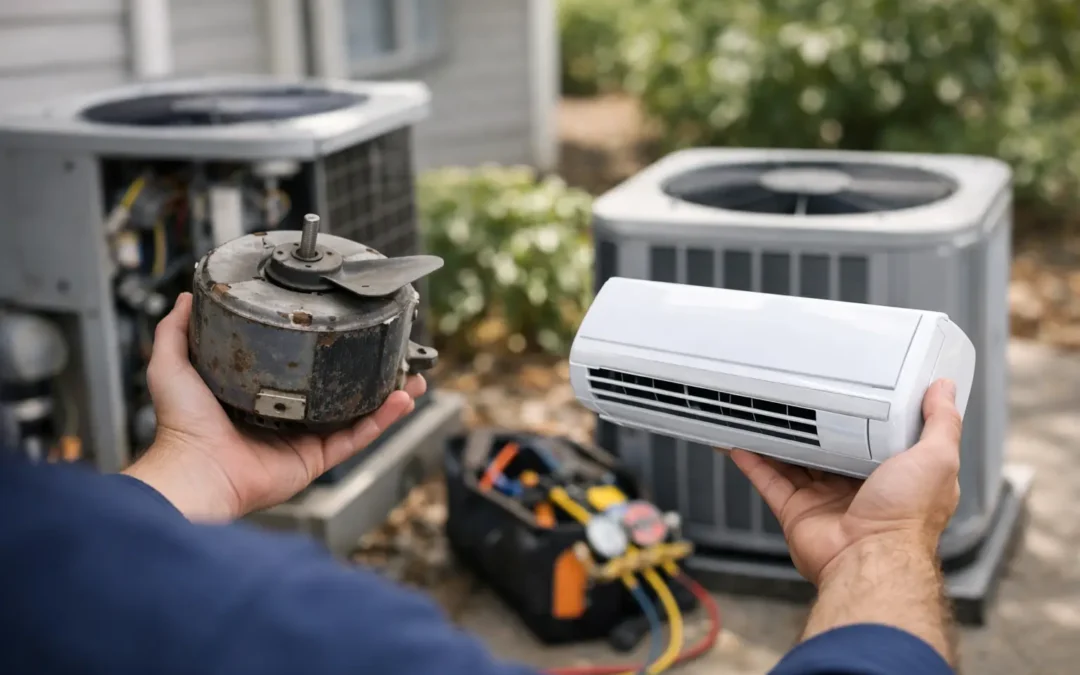
When your air conditioner starts struggling in the middle of a Southwest Florida summer, the ac repair or replace decision stops being theoretical very quickly. One day it is making a strange noise or blowing warm air. The next, your house feels sticky, your energy bill jumps, and you are trying to decide whether fixing the unit is the smart move or just money poured into an aging system.
For most homeowners, this is not just about today’s repair bill. It is about reliability, long-term cost, comfort, and whether your current system can keep up with the heat and humidity that put so much strain on AC equipment in this part of Florida.
How to make the AC repair or replace decision
A good decision starts with looking at the whole picture, not just the immediate symptom. A capacitor, contactor, thermostat, or clogged drain line can often be repaired cost-effectively. Those are common problems, and many of them do not mean the entire system is at the end of its life.
The conversation changes when the issue is bigger, repeated, or tied to overall system wear. If the compressor is failing, the evaporator coil is leaking, or major parts are wearing out one after another, repair may restore operation for now without solving the bigger problem. In that case, replacement can be the more predictable and cost-effective path.
The right answer depends on five main factors: system age, repair cost, efficiency, repair history, and comfort performance. Each one matters, and none should be considered in isolation.
Age matters more than many homeowners think
Air conditioners do not all fail on the same day, but age is still one of the clearest indicators. If your unit is under 10 years old and has been maintained well, repair is often reasonable, especially if the issue is isolated. You may still have meaningful life left in the equipment.
Once a system moves into the 10 to 15 year range, the decision gets more nuanced. At that point, even if a repair is possible, you have to ask whether the unit is becoming less dependable and less efficient. In Southwest Florida, where AC systems run hard for much of the year, wear tends to show up faster than it might in milder climates.
If your system is 15 years old or older, replacement often deserves serious consideration. That does not mean every older unit must be replaced immediately. It means the risk of future repairs, reduced efficiency, and inconsistent cooling usually becomes much higher.
Repair cost should be weighed against what comes next
Homeowners naturally focus on the repair estimate in front of them. That makes sense, but the smarter question is whether that repair is likely to buy you dependable performance or only a little more time.
A modest repair on a newer unit is usually easier to justify. A major repair on an older system is different. If you are spending a significant amount on a compressor, coil, or refrigerant-related issue in a unit that is already near the end of its expected life, you may be delaying replacement rather than avoiding it.
Many HVAC professionals use a version of the old rule of thumb that multiplies the unit’s age by the repair cost. If the result is high, replacement starts to make more financial sense. It is not a perfect formula, but it helps frame the decision in practical terms.
Signs your AC repair or replace decision is leaning toward replacement
Sometimes the system itself tells the story. If you are calling for service once every season, that pattern matters. Frequent breakdowns are more than an inconvenience. They are often a sign that multiple components are aging together.
Uneven temperatures are another clue. If some rooms stay warm, the system runs constantly, or the house still feels humid even when the thermostat says the temperature is fine, the problem may be bigger than one failed part. Older systems can lose their ability to remove moisture effectively, and in Florida that can make a home feel uncomfortable even when it is technically cool.
Energy bills also deserve attention. If your usage habits have not changed but your cooling costs keep climbing, your system may be losing efficiency. Older units typically require more electricity to deliver the same comfort, and that gap can become expensive over time.
There is also the refrigerant issue. If your system uses R-22, often called Freon, repairs can become more expensive because that refrigerant has been phased out. Even if the equipment can still be repaired, the long-term practicality of keeping it running is usually weaker.
When repair is still the right call
Replacement is not automatically the best choice just because a unit has a problem. In many cases, repair is still the responsible and cost-conscious option.
If your system is relatively new, has a solid maintenance history, and has not needed frequent repairs, fixing a failed part is often the sensible move. The same is true if the repair is minor and the rest of the system is performing well. Good airflow, stable humidity control, and normal energy use all suggest the equipment may still be serving your home effectively.
Repair can also make sense if you need time to plan. Sometimes a homeowner is not ready for full replacement that week, and a safe, worthwhile repair can keep the home comfortable while a longer-term plan is put in place. The key is transparency. You should know whether the repair is expected to provide reliable service or simply short-term relief.
Efficiency and comfort are part of the AC repair or replace decision
One of the biggest reasons homeowners replace an air conditioner is not total failure. It is the realization that the current system is doing a poor job compared with what a newer system can provide.
Modern air conditioners are generally more efficient than older models, but efficiency is only part of the story. Properly selected and installed equipment can also improve humidity control, indoor comfort, airflow, and system reliability. That matters in an area where high heat and moisture are a daily reality for much of the year.
If your current AC seems to run all the time, leaves the house muggy, or struggles during the hottest afternoons, replacing it may improve your day-to-day comfort in ways that are hard to measure on a repair invoice. Homeowners often think they are only buying a new machine. In reality, they may be buying quieter operation, more even cooling, and less stress during the hottest months.
That said, replacement only pays off when the system is sized and installed correctly. Bigger is not always better. An oversized unit can short cycle, waste energy, and leave humidity behind. A professional evaluation matters because the goal is not just to replace equipment, but to solve the comfort problem properly.
Questions worth asking before you decide
Before approving either repair or replacement, ask a few direct questions. Is this the first major issue or part of a pattern? How much life is realistically left in the system? Will this repair address the problem fully, or is another major failure likely soon? Has the unit been maintaining humidity and cooling the home evenly? Is the system still using outdated refrigerant?
You should also ask what replacement would improve besides basic cooling. In many homes, the answer includes lower operating costs, better moisture control, quieter performance, and fewer service interruptions.
A trustworthy recommendation should not feel rushed or one-sided. You should understand the condition of the equipment, the expected value of the repair, and the practical benefits of replacement if that is the better route.
Why local conditions affect the answer
In Southwest Florida, air conditioners do more than cool. They manage moisture, support indoor air quality, and protect your home from the effects of prolonged humidity. Because systems here run so often, age and wear can show up sooner and more aggressively than homeowners expect.
Salt air in coastal areas, heavy seasonal demand, and long cooling seasons all put added pressure on outdoor equipment. That does not mean every repair should turn into a replacement recommendation. It does mean the ac repair or replace decision should be made with local operating conditions in mind, not just generic national averages.
For homeowners in places like North Fort Myers, Cape Coral, and nearby communities, the best choice is usually the one that gives you reliable comfort through the hottest months without repeated surprises. At Infinite Electric & Air, that means looking at the equipment honestly, explaining the options clearly, and helping homeowners make a decision based on safety, performance, and real long-term value.
If your AC is giving you reasons to question it, the goal is not to panic or automatically replace it. It is to get a clear assessment and make the choice that leaves you more comfortable, more confident, and less likely to face the same problem again when the weather is least forgiving.