
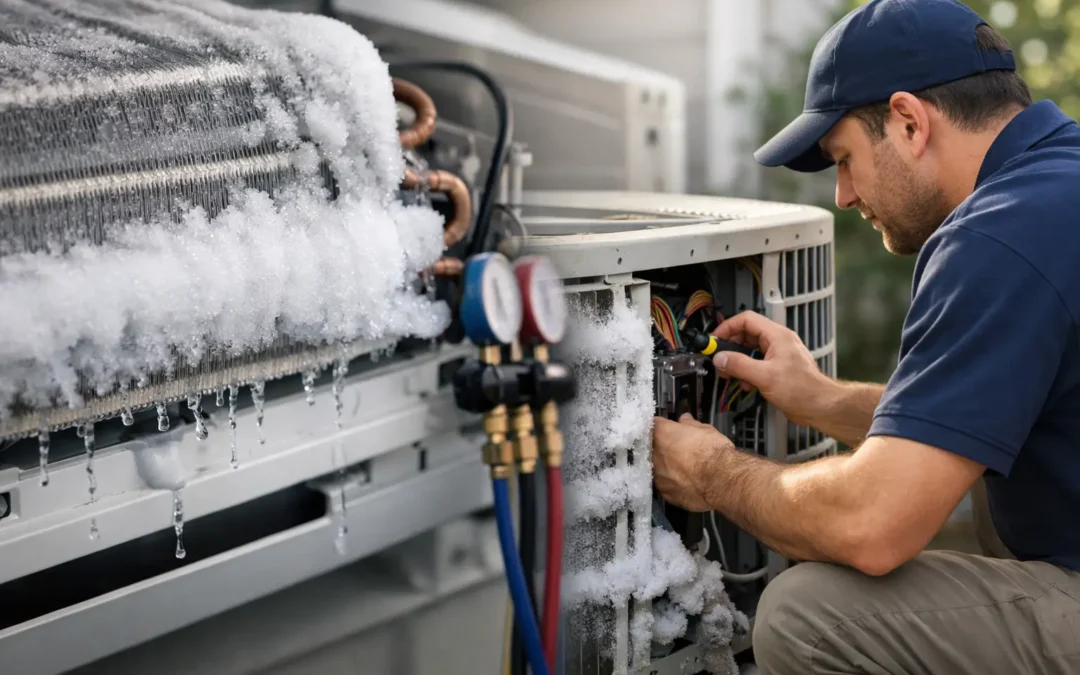
A frozen air conditioner is more than an inconvenience when Southwest Florida temperatures are pushing into the 90s. If you are asking, “why does AC freeze,” the short answer is that the indoor evaporator coil has become too cold for the moisture around it. That moisture turns to ice, blocks airflow, and can leave your home warmer even though the system seems to be running.
The ice may appear on the copper refrigerant line near the outdoor unit, inside the air handler, or across the evaporator coil itself. Whatever you can see, the visible frost is usually only part of the problem. Continuing to run a frozen system can strain the compressor and turn a manageable repair into a more expensive one.
Why Does AC Freeze in the First Place?
Your AC removes heat from indoor air as it passes across a cold evaporator coil. For that process to work properly, the system needs two things: enough warm air moving across the coil and the correct refrigerant pressure inside it.
When airflow drops too low, the coil does not receive enough heat to keep its surface above freezing. When refrigerant pressure is too low, the refrigerant can become colder than intended. In either situation, humidity in the air condenses on the coil and freezes layer by layer.
Florida humidity can make the problem appear quickly. A small amount of frost can become a solid sheet of ice after a few hours, especially during a long cooling cycle. The ice then restricts airflow even further, creating a cycle that gets worse until the unit is shut down and allowed to thaw.
Restricted Airflow Is a Common Cause
A clogged air filter is one of the most common and easiest-to-address reasons an AC freezes. A filter full of dust, pet hair, or construction debris limits the air reaching the coil. The equipment may still run, but it is no longer operating under the conditions it was designed for.
Check the filter first, particularly if it has been more than 30 to 90 days since the last replacement. Homes with pets, frequent guests, renovations, or high seasonal use may need more frequent changes. Use the filter size and rating recommended for your system. An overly restrictive filter can also create airflow problems, even when it is clean.
Other airflow restrictions require a closer look. Closed supply vents, blocked return grilles, crushed or disconnected ductwork, and a dirty indoor coil can all reduce circulation. Furniture, curtains, or stored items should never block return vents. A return grille is not just another vent – it is the pathway that brings warm household air back to the AC for cooling.
A Failing Blower Can Create the Same Problem
The blower motor in your air handler moves conditioned air through the home. If it is running slowly, cycling improperly, or failing altogether, the coil can freeze even with a clean filter.
You may notice weak airflow from multiple vents, unusual humming or rattling near the indoor unit, or rooms that no longer cool evenly. Electrical components such as capacitors, relays, and control boards can affect blower performance as well. These issues should be diagnosed by a qualified HVAC technician rather than guessed at from the thermostat.
Low Refrigerant Usually Means There Is a Leak
Refrigerant does not get used up like fuel. If your system is low, it generally has a leak that needs to be located and repaired. Low refrigerant pressure can make the evaporator coil extremely cold, causing ice to form even if airflow is otherwise normal.
Signs of a possible refrigerant issue include a frozen copper line, air that is not as cool as usual, longer run times, hissing sounds near refrigerant lines, or a noticeable increase in electric bills. Some systems may also struggle to keep the home comfortable during the hottest part of the afternoon.
Simply adding refrigerant without addressing the leak is not a dependable solution. It may restore cooling briefly, but the refrigerant will continue escaping and the system may freeze again. A proper service call includes checking system pressures, inspecting for leaks, repairing the source when possible, and charging the system to manufacturer specifications.
Dirty Coils and Drainage Problems Can Add to the Issue
The evaporator coil is hidden inside the air handler, so homeowners often do not know it is dirty until performance declines. Dust, biological growth, and airborne contaminants can coat the coil and insulate it from the air moving over it. That reduces heat transfer and contributes to freezing.
The outdoor condenser coil matters, too. It releases the heat collected from inside your home. Grass clippings, leaves, dirt, and landscaping growth around the outdoor unit can interfere with this process. Keep the area around the condenser clear, but avoid using harsh pressure or bending the delicate coil fins.
A clogged condensate drain does not always directly cause a frozen coil, but it can be part of a broader maintenance problem. In Florida’s humid climate, your air conditioner removes a significant amount of water from the air. If the drain line backs up, it can trigger a float safety switch, cause water damage, or point to a system that needs cleaning and inspection.
What to Do When Your AC Is Frozen
First, turn the thermostat from cooling to off. Do not keep lowering the temperature in an attempt to force the system to catch up. That will only encourage more ice buildup.
If your thermostat allows you to run the fan separately and the blower is operating normally, set the fan to “on.” Room-temperature air can help thaw the coil more quickly. If you suspect the blower is not working, leave the entire system off and schedule service.
Do not chip ice off the refrigerant line or try to pry it from the indoor coil. Coil fins and refrigerant tubing are easy to damage. A full thaw can take several hours, and a heavily frozen system may take most of a day. Place towels around the air handler if water could drip during thawing, and watch for a drain pan overflow.
While the unit is off, replace a visibly dirty filter and make sure supply vents and return grilles are open and unobstructed. You can also remove loose leaves and debris from around the outdoor unit. These are safe homeowner checks, but they will not solve a refrigerant leak, failed blower, dirty internal coil, or control problem.
Once the ice is gone, avoid treating a return to cooling as proof that everything is fixed. If the system freezes again, cools poorly, or has weak airflow, turn it off and arrange a professional inspection. Repeated freezing can damage the compressor, which is one of the costliest AC components to replace.
When to Call an HVAC Professional
A technician should inspect the system if you see ice return after changing the filter, the air handler is leaking water, the outdoor unit runs but the home is not cooling, or airflow is weak throughout the house. Service is also the right choice if the breaker trips, you smell something burning, or you hear persistent electrical buzzing or grinding.
At Infinite Electric & Air, a trained technician can identify whether the root cause is airflow, refrigerant pressure, electrical controls, ductwork, or a combination of issues. Clear findings and transparent recommendations matter because AC freezing is a symptom, not a one-size-fits-all repair.
Preventing a Frozen AC During Florida Heat
Regular maintenance gives a technician the opportunity to check filter condition, blower operation, electrical connections, drain performance, coil cleanliness, and refrigerant levels before a small concern becomes a no-cooling call. For many homes, scheduling maintenance before the heaviest cooling season is a practical way to reduce surprises.
Between visits, replace filters on schedule, keep vents open, clear the area around the outdoor unit, and pay attention to changes in airflow or cooling time. A healthy air conditioner should cool your home steadily without ice, unusual sounds, or constant thermostat adjustments.
When an AC freezes, acting early protects both your comfort and your equipment. Shut it down, let it thaw safely, address the simple airflow checks, and have recurring problems evaluated before the next hot afternoon puts the system under even more stress.